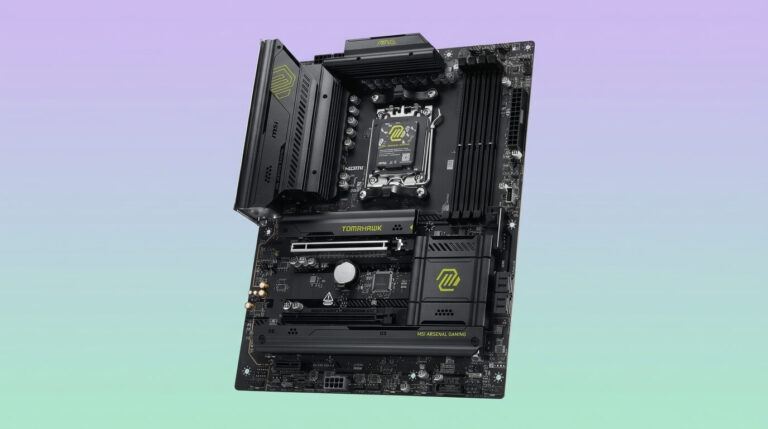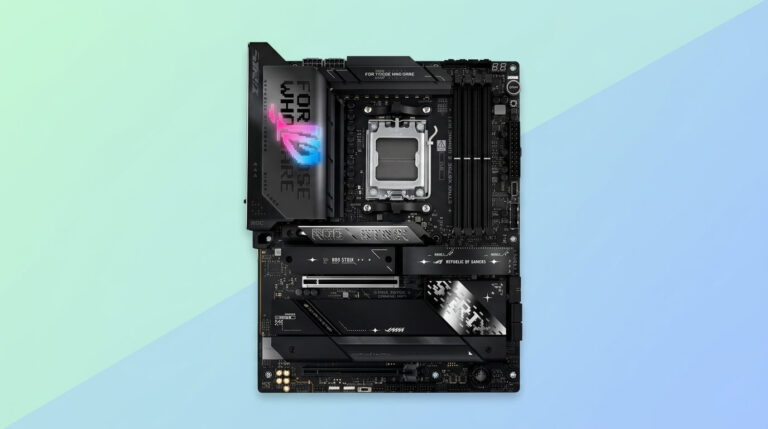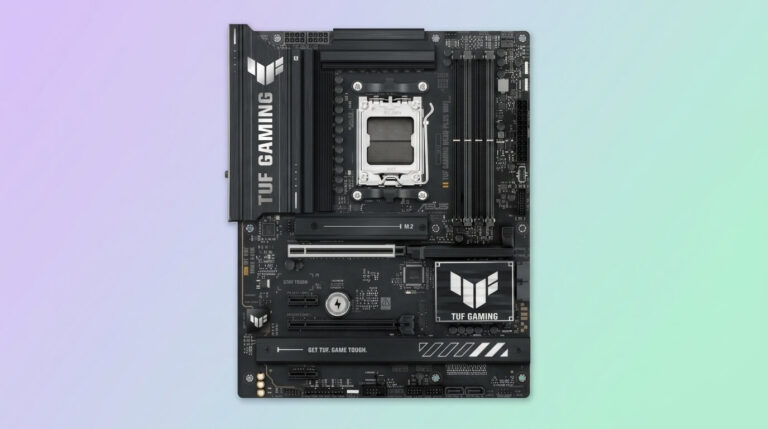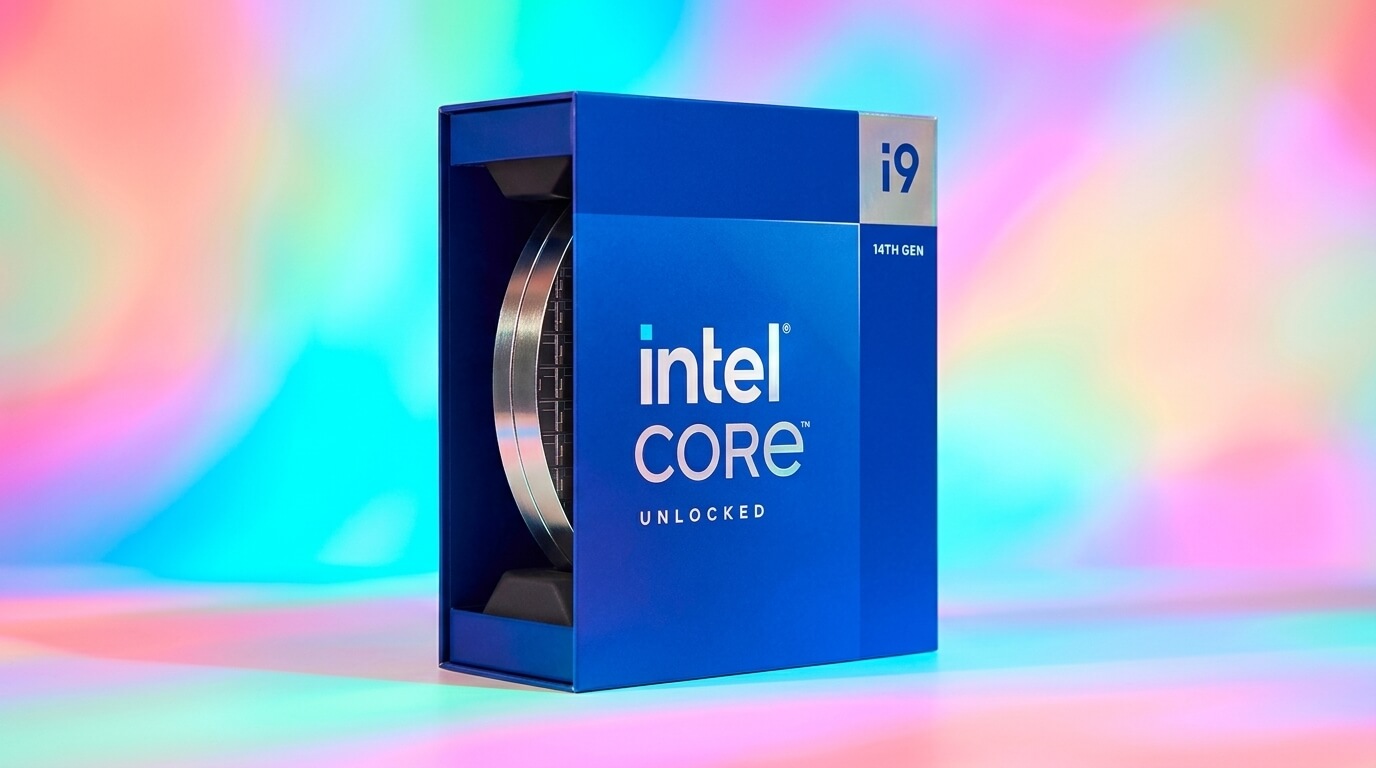
Gaming performance in 2027 depends on cache architecture, core layout, and platform maturity rather than raw core count alone. AMD’s 3D V-Cache lineup continues to set the pace for frame rates, while Intel’s Arrow Lake Refresh chips close the value gap and Nova Lake prepares to reset the desktop roadmap. Motherboard platforms remain split between AMD’s AM5 socket, now in its fourth year of support, and Intel’s LGA1851 socket, which is approaching the end of its lifecycle as LGA-1954 arrives.
This guide reviews ten CPUs relevant to a 2027 gaming build: five 3D V-Cache Ryzen chips, one non-cache Ryzen flagship, two Arrow Lake Refresh “Plus” processors from Intel, and Intel’s upcoming Nova Lake generation. Each entry covers specifications, motherboard compatibility, and how the chip compares against the others on this list for gaming workloads specifically.
Selection criteria for this list include gaming-specific cache technology, socket longevity, memory support, and confirmed or credibly leaked specifications. Processors built primarily for server or workstation use are excluded, as are chips without verifiable specification data.
Pricing reflects U.S. dollar manufacturer suggested pricing and street pricing as of September 2026. Prices fluctuate by region and retailer and should be confirmed before purchase.
Best CPUs for Gaming To Buy
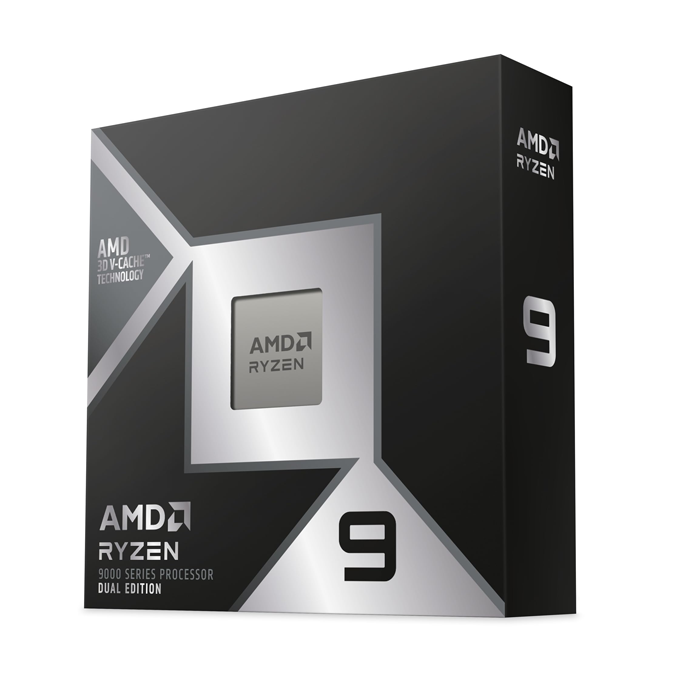
AMD Ryzen 9 9950X3D2
CHECK PRICE
PROS
CONS
| Specification | AMD Ryzen 9 9950X3D2 |
|---|---|
| Architecture | Zen 5 (Granite Ridge) |
| Cores / Threads | 16 / 32 |
| Base / Boost Clock | 4.3 GHz / 5.6 GHz |
| L3 Cache | 192 MB |
| Total Cache | ~206 MB |
| TDP / PPT | 200 W / 270 W |
| Socket | AM5 |
| Memory | DDR5-5600, up to 256 GB |
| PCIe | 5.0, 28 lanes |
| Release Date | April 22, 2026 |
| MSRP | $899 |
The AMD Ryzen 9 9950X3D2 is AMD’s dual-V-Cache flagship desktop processor for gaming and content creation, released on April 22, 2026. It is the first consumer CPU in which both core complex dies (CCDs) carry AMD’s 3D V-Cache stacking, rather than only one.
Specifications. The 9950X3D2 uses the Zen 5 “Granite Ridge” architecture with 16 cores and 32 threads. Base clock speed is 4.3 GHz, with boost clock reaching up to 5.6 GHz. Total cache reaches approximately 206 MB, including 192 MB of L3 cache split across both V-Cache-equipped CCDs. TDP is rated at 200 W, with a maximum package power (PPT) of 270 W. The processor supports DDR5 memory up to 5600 MHz and 256 GB total capacity across two channels, along with PCIe 5.0 connectivity at up to 28 lanes. Integrated AMD Radeon graphics run at a 2200 MHz boost clock.
Motherboard compatibility. The 9950X3D2 uses AMD’s AM5 socket and is compatible with X870E, X670E, and B650E motherboards, provided the board manufacturer has released an AGESA firmware update supporting the chip. Because the 9950X3D2 draws more power than earlier AM5 chips, a motherboard with a robust VRM design and adequate cooling is required to sustain its 270 W PPT ceiling.
Comparison with other CPUs. Against the standard Ryzen 9 9950X3D, the 9950X3D2 adds V-Cache to the second CCD, which benefits applications and games that scale across more than eight cores and can address both cache pools. In single-threaded and lightly threaded games, the performance gap between the two chips narrows, since the Windows scheduler still favors the cache-equipped cores. The 9950X3D2 costs roughly $200 more than the 9950X3D, positioning it as a chip for buyers who also run heavy multi-threaded workloads alongside gaming rather than a pure gaming upgrade.
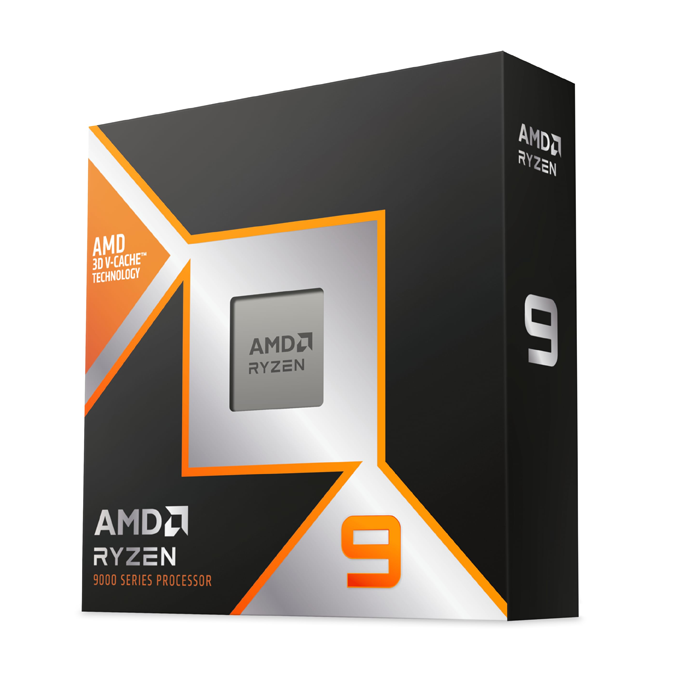
AMD Ryzen 9 9950X3D
CHECK PRICE
PROS
CONS
| Specification | AMD Ryzen 9 9950X3D |
|---|---|
| Architecture | Zen 5 (Granite Ridge) |
| Cores / Threads | 16 / 32 |
| Base / Boost Clock | 4.3 GHz / 5.7 GHz |
| L3 Cache | 128 MB |
| Total Cache | ~144 MB |
| TDP | 170 W |
| Socket | AM5 |
| Memory | DDR5, up to 256 GB |
| PCIe | 5.0 |
| Release Date | March 12, 2025 |
| MSRP / Street Price | $699 / ~$585-600 |
The AMD Ryzen 9 9950X3D is a 16-core flagship desktop processor released on March 12, 2025, combining high core count with AMD’s second-generation 3D V-Cache technology on one of its two CCDs.
Specifications. Built on the Zen 5 architecture, the 9950X3D carries 16 cores and 32 threads with a 4.3 GHz base clock and a 5.7 GHz boost clock. One CCD includes 3D V-Cache, bringing total L3 cache to 128 MB and combined cache (L2 and L3) to roughly 144 MB. TDP is rated at 170 W. The processor supports DDR5 memory up to 256 GB across two channels and PCIe 5.0 connectivity, along with integrated AMD Radeon graphics.
Motherboard compatibility. The 9950X3D uses the AM5 socket and works with X870E, X670E, B650E, and other AM5 chipsets after an AGESA firmware update. AM5 motherboards support the chip’s 170 W TDP without requiring the reinforced VRM designs needed for the 9950X3D2.
Comparison with other CPUs. In gaming workloads, the 9950X3D performs close to the 8-core 9800X3D and 9850X3D, since only one CCD carries V-Cache and most games do not benefit from the second, cache-less CCD. Its advantage over the 8-core X3D chips appears in mixed workloads that combine gaming with rendering, compiling, or streaming. Compared with the non-cache Ryzen 9 9950X, the 9950X3D trades some peak multi-threaded throughput for a substantial gaming uplift from the larger cache pool.
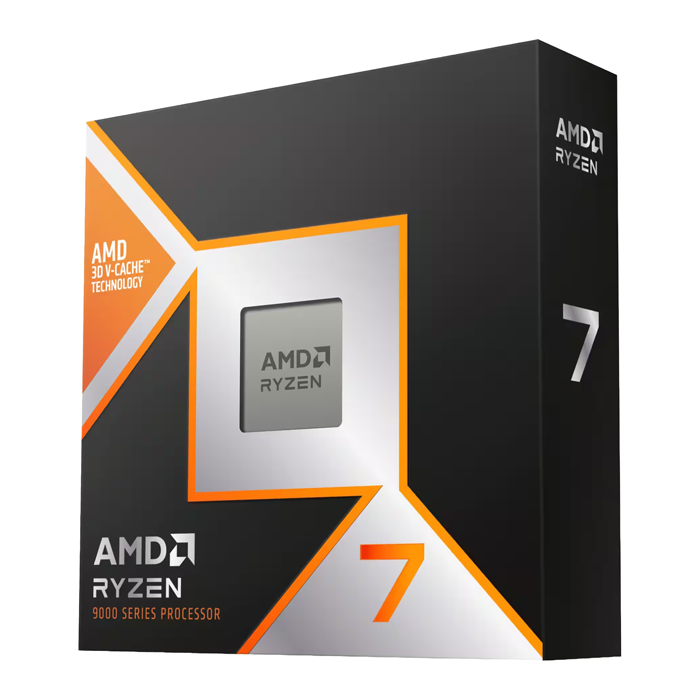
AMD Ryzen 7 9850X3D
CHECK PRICE
PROS
CONS
| Specification | AMD Ryzen 7 9850X3D |
|---|---|
| Architecture | Zen 5 (Granite Ridge) |
| Cores / Threads | 8 / 16 |
| Base / Boost Clock | 4.7 GHz / 5.6 GHz |
| L3 Cache | 96 MB |
| Total Cache | 104 MB |
| TDP | 120 W |
| Socket | AM5 |
| Memory | DDR5, entry-level kits supported |
| Release Date | January 29, 2026 |
| MSRP | $499 |
The AMD Ryzen 7 9850X3D is AMD’s fastest single-CCD gaming processor, released on January 29, 2026, as a higher-clocked successor to the Ryzen 7 9800X3D.
Specifications. The 9850X3D is an 8-core, 16-thread processor on the Zen 5 architecture, with a 4.7 GHz base clock and a 5.6 GHz boost clock, 400 MHz higher than the 9800X3D. Total cache is 104 MB, including 96 MB of L3 cache (32 MB on-die plus 64 MB of 3D V-Cache). TDP is rated at 120 W. AMD states the processor performs reliably with entry-level DDR5 memory kits due to its 3D V-Cache design, reducing the need for high-frequency memory.
Motherboard compatibility. The 9850X3D uses the AM5 socket and is compatible with the same X870E, X670E, and B650 motherboard range as other Ryzen 9000 X3D chips, following an AGESA firmware update.
Comparison with other CPUs. AMD reports the 9850X3D delivers gaming performance roughly 27% ahead of Intel’s Core Ultra 9 285K, compared with a 24% advantage previously claimed for the 9800X3D, indicating a generational gaming gain of under 3% in typical scenarios. Against the 16-core 9950X3D and 9900X3D, the 9850X3D matches or slightly exceeds gaming frame rates at a lower price and power draw, since gaming workloads rarely benefit from the additional cores on the larger chips.
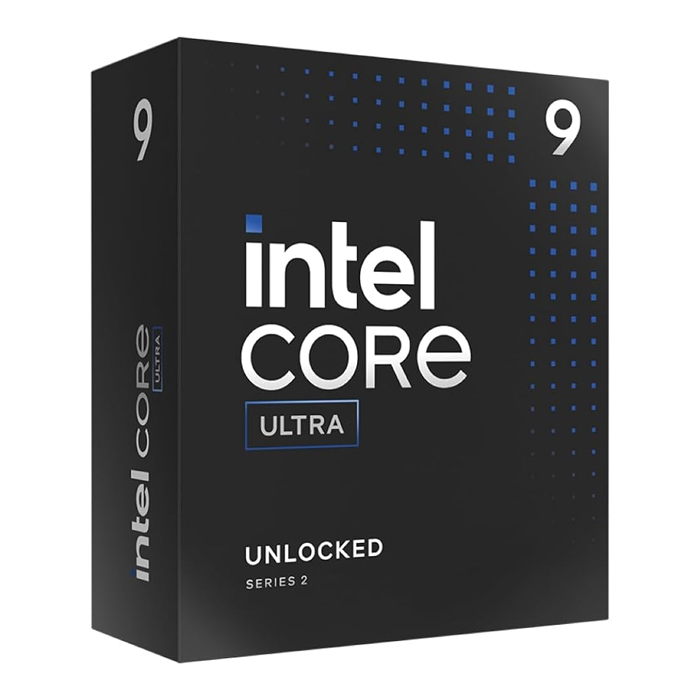
Intel Core Ultra 400 / Nova Lake
CHECK PRICE
PROS
CONS
Intel Core Ultra 400, internally codenamed Nova Lake, is Intel’s next desktop CPU generation succeeding Arrow Lake. As of September 2026, the lineup has not launched; it is included here as an upcoming platform relevant to gaming purchases through 2027.
Specifications. Leaked roadmaps and Intel statements describe Nova Lake as built on new Coyote Cove performance cores and Arctic Wolf efficiency cores, plus four low-power efficiency (LPE) cores integrated into the I/O die. The flagship configuration is expected to reach 52 cores (16 performance, 32 efficiency, 4 LPE). Intel is reportedly developing a large last-level cache technology, referred to as bLLC, intended to compete directly with AMD’s 3D V-Cache in gaming workloads. The platform introduces a new LGA-1954 socket and DDR5 memory with wider CUDIMM support. A maximum PL2 power limit near 474 W has circulated for the top dual-tile model.
Motherboard compatibility. Nova Lake requires new Z990 and Z970 motherboards built around the LGA-1954 socket, which is not compatible with existing LGA1851 boards used by Arrow Lake and Arrow Lake Refresh processors. This is a full platform change rather than a drop-in upgrade.
Comparison with other CPUs. Because Nova Lake has not launched, no independent gaming benchmarks exist as of this writing. If Intel’s bLLC cache technology delivers gaming gains comparable to AMD’s 3D V-Cache, Nova Lake would compete directly with the Ryzen 9950X3D2 and 9850X3D rather than the current Arrow Lake Refresh “Plus” chips. Reported launch timing is staggered across 2027, with 28-core models expected between January and March 2027, unlocked K-series 28-core models between March and April 2027, and the 52-core flagship arriving as late as September 2027.
| Specification | Intel Core Ultra 400 / Nova Lake (reported) |
|---|---|
| P-Cores | Coyote Cove |
| E-Cores | Arctic Wolf |
| LPE Cores | 4 |
| Max Core Count | Up to 52 (16P + 32E + 4 LPE) |
| Cache Technology | bLLC (reported) |
| Socket | LGA-1954 |
| Motherboards | Z990, Z970 |
| Memory | DDR5, wider CUDIMM support |
| Max Reported Power | ~700 W PL4 (dual-tile models) |
| Expected Launch | Staggered, January-September 2027 |
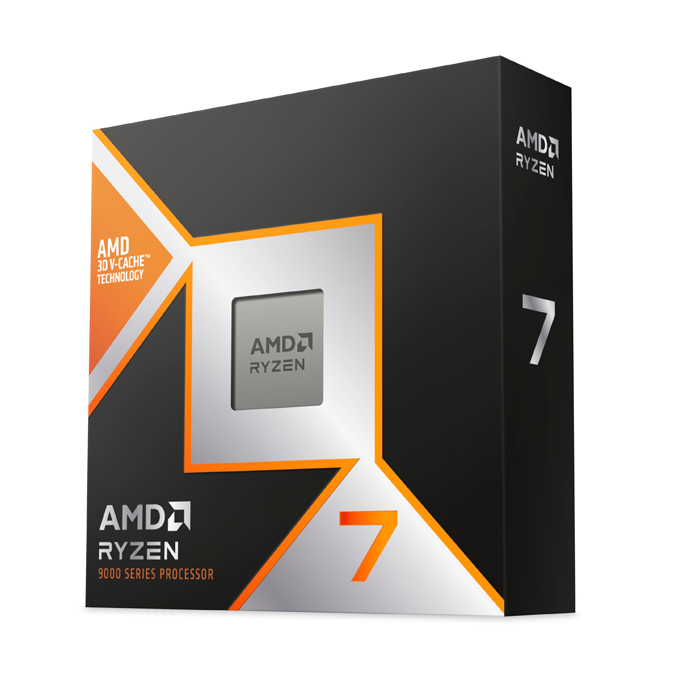
AMD Ryzen 7 9800X3D
CHECK PRICE
PROS
CONS
| Specification | AMD Ryzen 7 9800X3D |
|---|---|
| Architecture | Zen 5 (Granite Ridge) |
| Cores / Threads | 8 / 16 |
| Base / Boost Clock | 4.7 GHz / 5.2 GHz |
| L3 Cache | 96 MB |
| Total Cache | ~104 MB |
| TDP | 120 W |
| Socket | AM5 |
| Release Date | November 7, 2024 |
| MSRP / Street Price | $479 / ~$389+ |
The AMD Ryzen 7 9800X3D is an 8-core gaming processor released on November 7, 2024, and remains a widely used benchmark for gaming price-to-performance on the AM5 platform.
Specifications. The 9800X3D is built on Zen 5 with 8 cores and 16 threads, a 4.7 GHz base clock, and a 5.2 GHz boost clock. It carries 96 MB of L3 cache from AMD’s second-generation 3D V-Cache, for approximately 104 MB of total cache. TDP is rated at 120 W. AMD’s second-generation V-Cache design places the cache die beneath the core complex rather than above it, allowing the chip to run at higher clocks than earlier X3D generations without the thermal penalty of previous stacking approaches.
Motherboard compatibility. The 9800X3D uses the AM5 socket and is supported across X870E, X670E, and B650 motherboards, including older AM5 boards after a BIOS update. Some early users reported CPU failures linked to specific motherboard BIOS versions on certain boards, later addressed through manufacturer BIOS fixes.
Comparison with other CPUs. Against the 9850X3D, the 9800X3D trades a 400 MHz lower boost clock for a lower price, with street pricing around $389 as of mid-2026 compared with roughly $428 or more for the 9850X3D. Against the 16-core 9950X3D and 12-core 9900X3D, the 9800X3D delivers comparable gaming frame rates at a lower cost, since additional cores provide little benefit in most game engines. The 9800X3D remains a reference point for gaming value among 3D V-Cache processors.
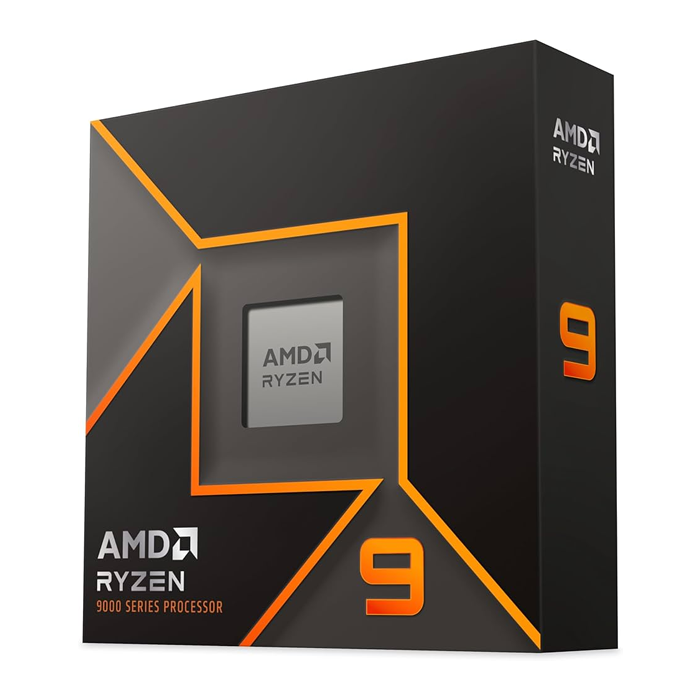
AMD Ryzen 9 9950X
CHECK PRICE
PROS
CONS
| Specification | AMD Ryzen 9 9950X |
|---|---|
| Architecture | Zen 5 (Granite Ridge) |
| Cores / Threads | 16 / 32 |
| Base / Boost Clock | 4.3 GHz / 5.7 GHz |
| L3 Cache | 64 MB |
| Total Cache | ~80 MB |
| TDP | 170 W |
| Socket | AM5 |
| Release Date | August 2024 |
| MSRP | $649 |
The AMD Ryzen 9 9950X is a 16-core, non-V-Cache flagship desktop processor released in August 2024, built for high clock speeds and multi-threaded throughput rather than gaming-specific cache.
Specifications. The 9950X uses the Zen 5 architecture with 16 cores and 32 threads, a 4.3 GHz base clock, and a 5.7 GHz boost clock, matching the 9950X3D’s clock speeds. Total cache is approximately 80 MB, including 64 MB of L3 cache, without 3D V-Cache stacking. TDP is rated at 170 W. The processor supports DDR5 memory and PCIe 5.0 connectivity in line with other AM5 Ryzen 9000 chips.
Motherboard compatibility. The 9950X uses the AM5 socket and is compatible with the full range of AM5 motherboards, including X870E, X670E, and B650 boards, without the firmware requirements specific to X3D chips.
Comparison with other CPUs. Without 3D V-Cache, the 9950X trails the 9800X3D, 9850X3D, 9900X3D, and 9950X3D in gaming frame rates, particularly in cache-sensitive titles. Its advantage over the X3D chips appears in workloads unrelated to gaming, such as rendering and compiling, where higher sustained clocks across all 16 cores outweigh the benefit of extra cache. For a build prioritizing gaming performance specifically, the X3D-equipped chips on this list outperform the 9950X despite its comparable core count and clock speed.
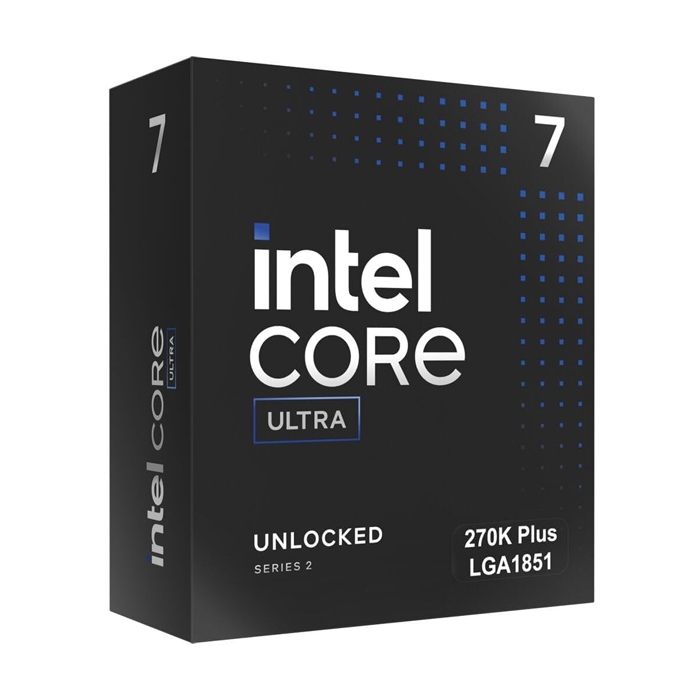
Intel Core Ultra 7 270K Plus
CHECK PRICE
PROS
CONS
| Specification | Intel Core Ultra 7 270K Plus |
|---|---|
| Cores (P+E) | 8 + 16 |
| Threads | 24 |
| Base Clock (P / E) | 3.7 GHz / 3.2 GHz |
| Boost Clock (P / E) | 5.4 GHz / 4.7 GHz |
| L3 Cache | 36 MB |
| L2 Cache | 40 MB |
| TDP / MTP | 125 W / 250 W |
| Socket | LGA1851 |
| Memory | DDR5-7200, up to 256 GB |
| Release Date | March 26, 2026 |
| MSRP | $299 |
The Intel Core Ultra 7 270K Plus is part of Intel’s Arrow Lake Refresh, marketed as the “Core Ultra 200S Plus” line, released March 26, 2026, to compete with AMD’s mid-range processors on price and multi-threaded performance.
Specifications. The 270K Plus pairs 8 performance cores with 16 efficiency cores for 24 threads total. Performance cores run at a 3.7 GHz base clock and up to 5.4 GHz boost; efficiency cores run at a 3.2 GHz base clock and up to 4.7 GHz boost. Cache totals 36 MB of L3 and 40 MB of L2. The processor carries a 125 W base TDP with a maximum turbo power (MTP) of 250 W. Officially supported memory reaches DDR5-7200, compared with 6400 MT/s on the non-Plus Core Ultra chips, and total memory capacity reaches 256 GB.
Motherboard compatibility. The 270K Plus uses Intel’s LGA1851 socket and requires an Intel 800-series motherboard. It is not compatible with the newer LGA-1954 socket planned for Nova Lake, making it the final major refresh on the current Intel desktop platform.
Comparison with other CPUs. Intel reports the 270K Plus performs up to 17% faster than the Core Ultra 7 265K it replaces across tested games. Against AMD’s X3D chips, gaming performance sits closer to the Ryzen 7 9700X than to cache-equipped models such as the 9800X3D or 9850X3D. In multi-threaded productivity workloads, the 270K Plus performs competitively with the higher-priced Ryzen 9 9950X, reflecting Intel’s positioning of the chip toward mixed productivity and gaming use rather than pure gaming performance.
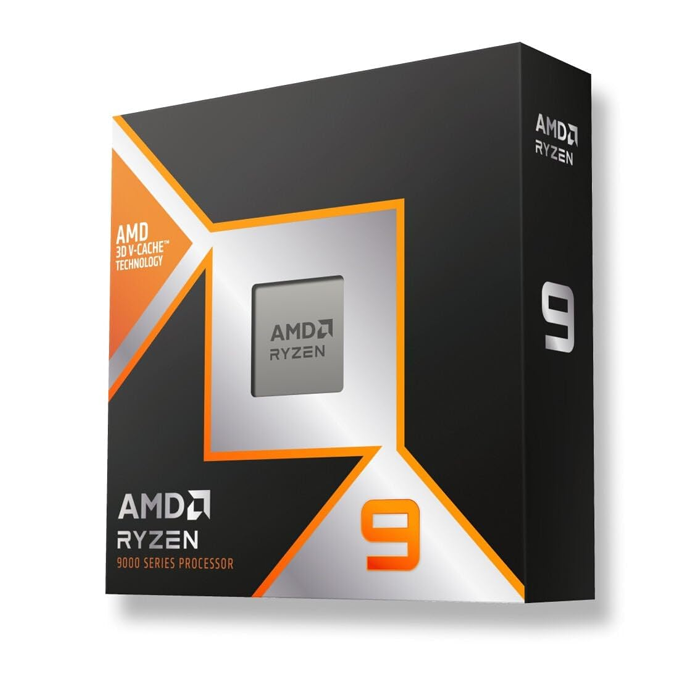
AMD Ryzen 9 9900X3D
CHECK PRICE
PROS
CONS
| Specification | AMD Ryzen 9 9900X3D |
|---|---|
| Architecture | Zen 5 (Granite Ridge) |
| Cores / Threads | 12 / 24 |
| Base / Boost Clock | 4.4 GHz / 5.5 GHz |
| L3 Cache | 128 MB |
| Total Cache | ~140 MB |
| TDP | 120 W |
| Socket | AM5 |
| Release Date | March 12, 2025 |
| MSRP | $599 |
The AMD Ryzen 9 9900X3D is a 12-core processor released alongside the 9950X3D on March 12, 2025, positioned between AMD’s 8-core and 16-core X3D gaming chips.
Specifications. The 9900X3D uses the Zen 5 architecture with 12 cores and 24 threads, a 4.4 GHz base clock, and a 5.5 GHz boost clock. One of its two CCDs carries 3D V-Cache, bringing L3 cache to 128 MB and total cache to approximately 140 MB. TDP is rated at 120 W, matching the 8-core X3D chips rather than the 170 W rating of the 9950X3D. The processor supports DDR5 memory up to 5600 MHz, PCIe 5.0 connectivity, and integrated AMD Radeon graphics.
Motherboard compatibility. The 9900X3D uses the AM5 socket and is compatible with X870E, X670E, and B650 motherboards after the same AGESA firmware updates required for other Ryzen 9000 X3D chips.
Comparison with other CPUs. Because only one CCD carries V-Cache, the 9900X3D’s gaming performance sits close to the 9800X3D and 9850X3D rather than scaling with its additional four cores. Its advantage over the 8-core X3D chips appears in workloads that use more than 8 cores, such as streaming while gaming or background rendering. Compared with the 16-core 9950X3D, the 9900X3D offers a lower TDP and lower price with a smaller reduction in multi-threaded headroom than the drop from 16 to 8 cores would suggest.
Intel Core Ultra 5 250K Plus
CHECK PRICE
PROS
CONS
| Specification | Intel Core Ultra 5 250K Plus |
|---|---|
| Cores (P+E) | 6 + 12 |
| Threads | 18 |
| Base Clock (P / E) | 4.2 GHz / 3.3 GHz |
| Boost Clock (P / E) | 5.3 GHz / 4.6 GHz |
| L3 Cache | 30 MB |
| L2 Cache | 30 MB |
| TDP | 125 W |
| Socket | LGA1851 |
| Memory | DDR5-7200, up to 256 GB |
| Release Date | March 26, 2026 |
| MSRP | $199 |
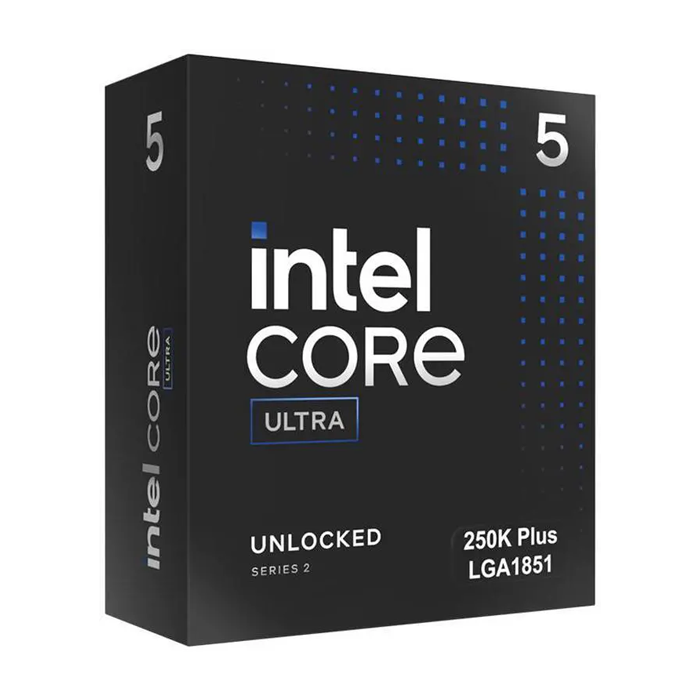
The Intel Core Ultra 5 250K Plus is the entry point of Intel’s Arrow Lake Refresh “Plus” lineup, released March 26, 2026, aimed at budget-conscious gaming and productivity builds.
Specifications. The 250K Plus pairs 6 performance cores with 12 efficiency cores for 18 threads total. Performance cores run at a 4.2 GHz base clock and up to 5.3 GHz boost; efficiency cores run at a 3.3 GHz base clock and up to 4.6 GHz boost. Cache totals 30 MB of L3 and 30 MB of L2. The processor carries a 125 W base TDP. It supports DDR5-7200 memory and up to 256 GB total capacity, along with PCIe 5.0 connectivity at up to 20 lanes and Intel Arc integrated graphics.
Motherboard compatibility. The 250K Plus uses the LGA1851 socket and requires an Intel 800-series motherboard, the same platform used by the Core Ultra 7 270K Plus and earlier Arrow Lake chips.
Comparison with other CPUs. Independent testing places the 250K Plus ahead of AMD’s Ryzen 5 9600X at a comparable price point in overall performance. Against AMD’s X3D gaming chips on this list, including the Ryzen 7 7800X3D and 9850X3D, the 250K Plus trails in gaming frame rates, reflecting the continued gaming advantage of 3D V-Cache at this price tier. Its strength lies in productivity performance per dollar rather than peak gaming output.
AMD Ryzen 7 7800X3D
CHECK PRICE
PROS
CONS
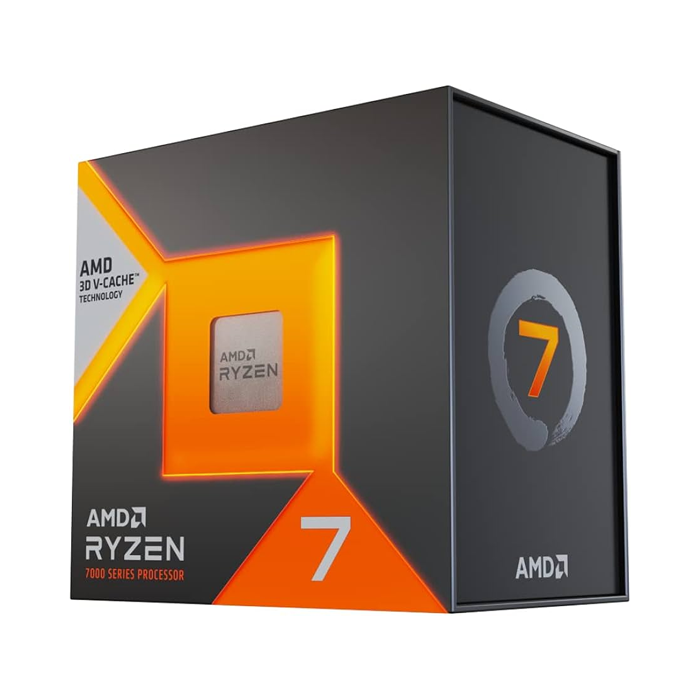
The AMD Ryzen 7 7800X3D is an 8-core gaming processor released in April 2023 and remains available as a lower-cost entry point into AMD’s 3D V-Cache gaming lineup.
Specifications. The 7800X3D is built on the Zen 4 architecture with 8 cores and 16 threads, a 4.2 GHz base clock, and a 5.0 GHz boost clock. It carries 96 MB of L3 cache from AMD’s first-generation 3D V-Cache design, in which the cache die sits above the core complex rather than beneath it. TDP is rated at 120 W. The processor supports DDR5 memory and PCIe 5.0 connectivity on the AM5 platform.
Motherboard compatibility. The 7800X3D uses the AM5 socket and is compatible with the full range of AM5 motherboards released since 2022, including X870E, X670E, and B650 boards, without requiring the newer firmware updates specific to Ryzen 9000 X3D chips.
Comparison with other CPUs. The 7800X3D’s first-generation V-Cache placement, with the cache die above the core complex, limits its clock speeds compared with the second-generation design used in the 9800X3D and 9850X3D, resulting in lower gaming frame rates than its Zen 5 successors. Against the current Intel Arrow Lake Refresh chips, however, the 7800X3D’s cache advantage still delivers strong gaming performance, and Tom’s Hardware has cited it alongside the 9850X3D as a benchmark that Intel’s Core Ultra 5 250K Plus does not match in gaming workloads. Its primary appeal is price: as the oldest X3D chip on this list, it typically carries the lowest cost among AMD’s cache-equipped gaming processors.
| Specification | AMD Ryzen 7 7800X3D |
|---|---|
| Architecture | Zen 4 (Raphael) |
| Cores / Threads | 8 / 16 |
| Base / Boost Clock | 4.2 GHz / 5.0 GHz |
| L3 Cache | 96 MB |
| TDP | 120 W |
| Socket | AM5 |
| Release Date | April 2023 |
How to Choose a CPU for Gaming
A gaming CPU should be chosen primarily on gaming-specific cache capacity, followed by motherboard platform longevity, core count for the intended workload, and price relative to frame-rate gains, since these four factors have the largest measurable effect on gaming performance and long-term value.
Cache capacity determines how much game-relevant data the processor keeps close to its cores, which directly affects frame rates in cache-sensitive titles. AMD’s 3D V-Cache processors, including the Ryzen 7 7800X3D, 9800X3D, 9850X3D, and the 16-core 9950X3D and 9950X3D2, consistently outperform non-cache chips of similar or higher core count in gaming benchmarks. Buyers should prioritize a V-Cache-equipped chip when gaming is the primary workload, even over a non-cache CPU with a higher core count or clock speed.
Motherboard platform longevity affects whether a CPU purchase supports future upgrades without a full system rebuild. AMD’s AM5 socket has supported new CPU releases since 2022 and is confirmed through at least 2027, allowing a motherboard bought today to accept later Ryzen 9000-series and successor chips. Intel’s LGA1851 socket, used by the Core Ultra 7 270K Plus and Core Ultra 5 250K Plus, is approaching the end of its life as Nova Lake introduces the LGA-1954 socket, meaning an LGA1851 purchase will not carry forward to Intel’s next generation.
Core count should match the intended workload beyond gaming itself. A gaming-only build benefits most from an 8-core X3D chip such as the 9800X3D or 9850X3D, since most game engines do not scale meaningfully beyond 8 cores. A build that combines gaming with streaming, video editing, or compiling benefits from 12- or 16-core X3D options such as the 9900X3D, 9950X3D, or 9950X3D2, which add cores without sacrificing the V-Cache gaming advantage.
Price relative to frame-rate gains determines value within a given budget tier. At the budget tier, the Intel Core Ultra 5 250K Plus and AMD Ryzen 7 7800X3D offer the lowest entry costs, with the 7800X3D favoring gaming and the 250K Plus favoring mixed productivity use. At the mid tier, the Ryzen 7 9800X3D and 9850X3D deliver AMD’s strongest gaming price-to-performance ratio. At the high end, the Ryzen 9 9900X3D, 9950X3D, and 9950X3D2 add cores and cache for buyers whose workload extends beyond gaming, while Intel’s upcoming Nova Lake platform remains unavailable for direct comparison until its 2027 launch.