
Table of Contents
The RTX 5080 measures 304 mm long, 137 mm tall, and occupies two expansion slots on NVIDIA’s Founders Edition design, while board partner cards commonly extend past 320 mm and occupy three slots. A case built for the RTX 5080 must clear this length without crowding the front intake fans, since restricted intake airflow raises GPU hotspot temperatures under sustained load.
Case selection also depends on power delivery and thermal output. The RTX 5080 carries a 360 W TDP and draws power through a single 16-pin 12V-2×6 connector, and NVIDIA recommends an 850 W power supply for the full system. A chassis with limited airflow forces the GPU’s fan curve to run louder to hold the same temperature, so intake area, exhaust placement, and radiator support directly affect both acoustic output and sustained boost clocks.
Motherboard compatibility, drive bay count, and front-panel connectivity vary widely across mid-tower cases in this class. Some cases prioritize maximum airflow with mesh front panels and multiple pre-installed fans, while others balance airflow against noise, cost, or E-ATX motherboard support. The sections below examine six mid-tower cases suited to an RTX 5080 build: the Lian Li LANCOOL 216, Corsair 5000D Airflow, Fractal Design Torrent, NZXT H7 Flow, ASUS TUF Gaming GT502, and Phanteks Eclipse G500A.
Each case is evaluated on GPU clearance, motherboard support, airflow design, and included hardware, followed by a direct comparison against its closest alternatives. A dedicated buying guide follows the six reviews to help match a case to a specific RTX 5080 build.
THE SHORTLIST
This guide, at a glance
Compare the products covered below, then explore the strengths, limitations, and specifications that matter to you.
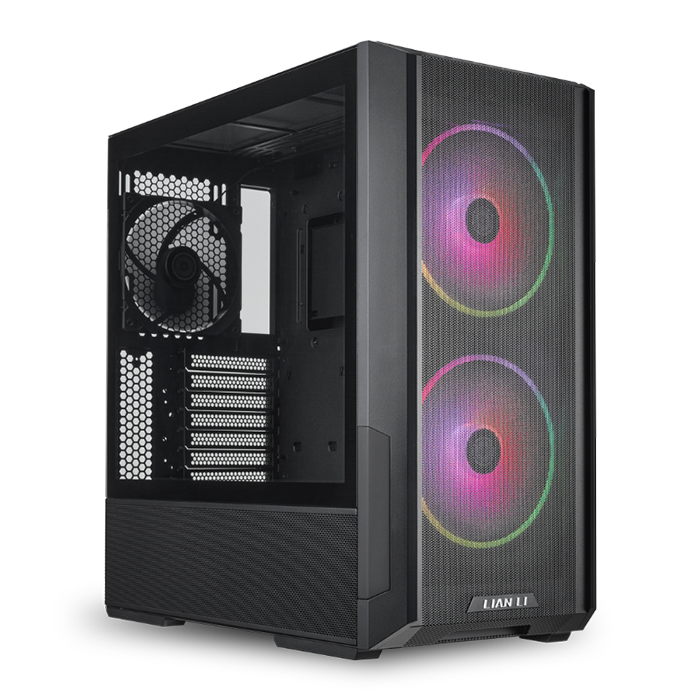 PICK 01Lian Li LANCOOL 216
ATX mid-tower · Mini-ITX, Micro-ATX, ATX, E-ATX (up to 280 mm)
Read the reviewCheck current priceView on Amazon: Lian Li LANCOOL 216 (opens in a new tab)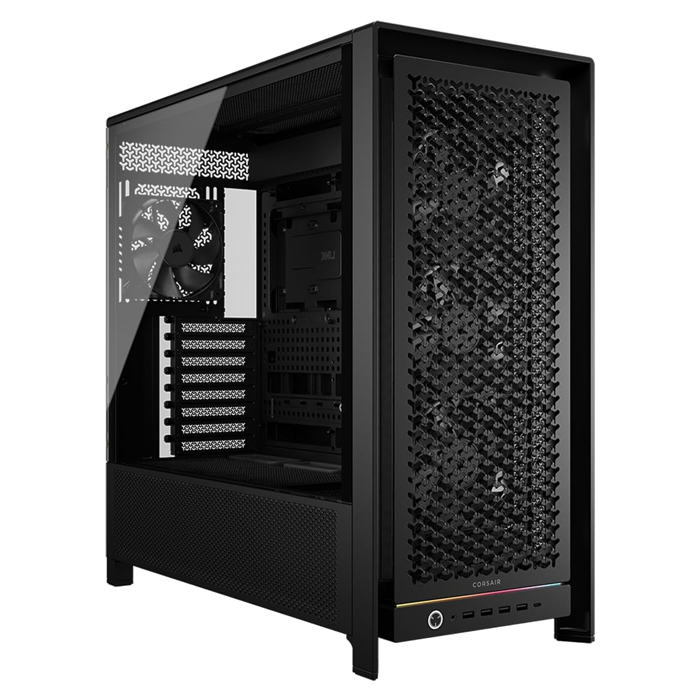 PICK 02Corsair 5000D Airflow
ATX mid-tower · Mini-ITX, Micro-ATX, ATX, E-ATX (up to 305 × 277 mm)
Read the reviewCheck current priceView on Amazon: Corsair 5000D Airflow (opens in a new tab)- PICK 03Fractal Torrent
ATX mid-tower · E-ATX, ATX, Micro-ATX, Mini-ITX, SSI-EEB, SSI-CEB
Read the reviewCheck current priceView on Amazon: Fractal Torrent (opens in a new tab) 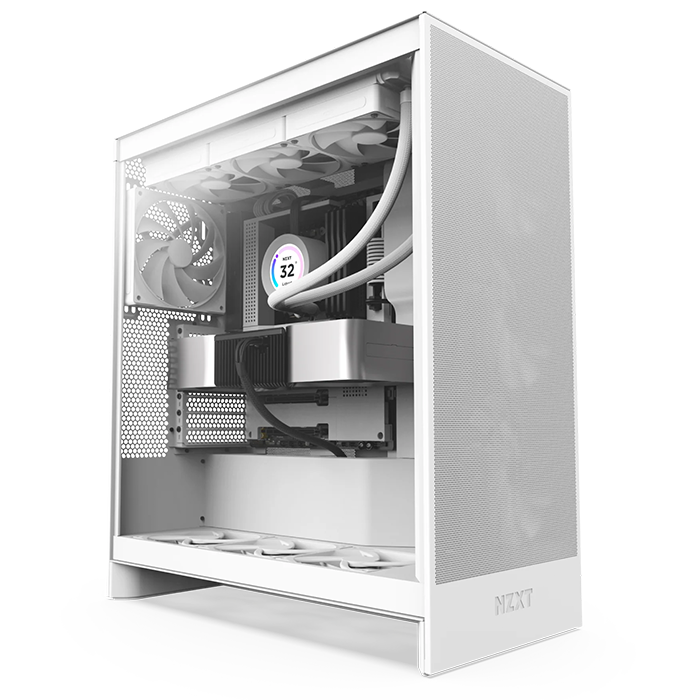 Check current priceView on Amazon: NZXT H7 Flow (opens in a new tab)
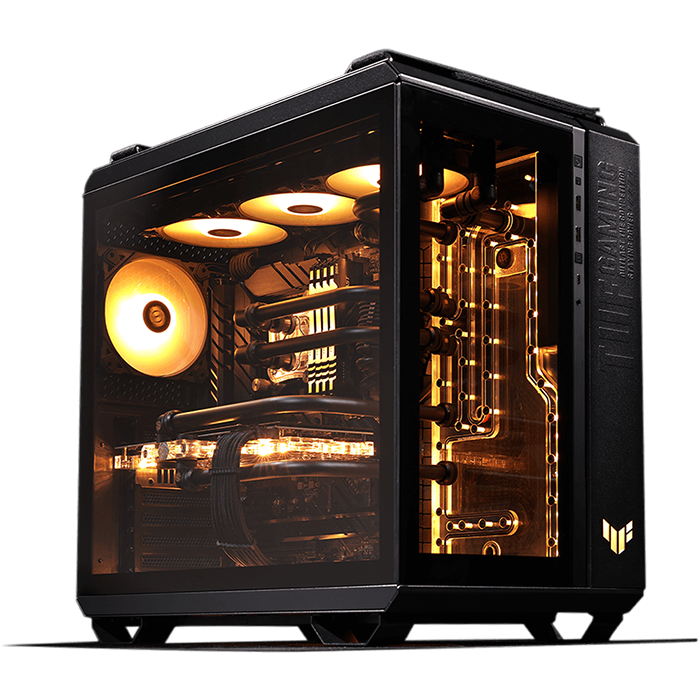 Check current priceView on Amazon: ASUS GT502 (opens in a new tab)
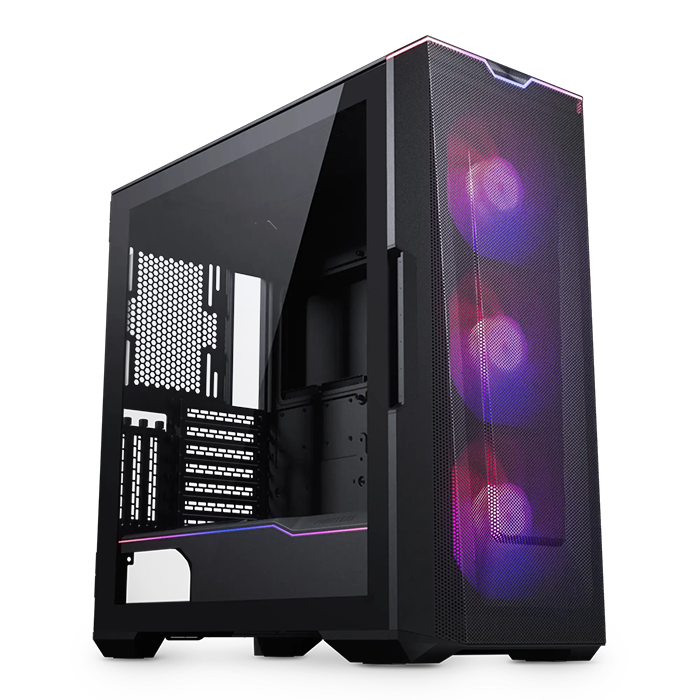 Check current priceView on Amazon: Phanteks G500A (opens in a new tab)
Purchase links open Amazon. Confirm the exact model, price, availability, and seller terms before ordering.
Best PC Casing for RTX 5080 Graphics Card
Lian Li LANCOOL 216
Pricing and availability on Amazon
Pros & cons
Strengths
- The LANCOOL 216 delivers 392 mm of GPU clearance and three pre-installed fans at a retail price near $100.
- The dual 160 mm front intake fans move a larger volume of air per rotation than standard 120 mm or 140 mm fans, reducing the fan speed needed to hold a given GPU temperature.
- Front and top radiator mounts each support up to 360 mm, covering the most common all-in-one liquid cooler sizes.
- Six 2.5-inch drive positions accommodate multiple SSDs without occupying the 3.5-inch cage.
Limitations
- The 392 mm clearance falls short of the Corsair 5000D Airflow's 420 mm and the Fractal Design Torrent's 431 mm figures, which matters for the longest board-partner RTX 5080 cards.
- Adjusting the RGB lighting on the front fans requires a $15 controller that also consumes two motherboard USB headers.
- The standoffs must be manually repositioned during the build, adding a step most competing cases skip.
- E-ATX compatibility requires flipping the internal grommet bar before installation.
Review notes
The following table summarizes the Lian Li LANCOOL 216 specifications relevant to an RTX 5080 build.
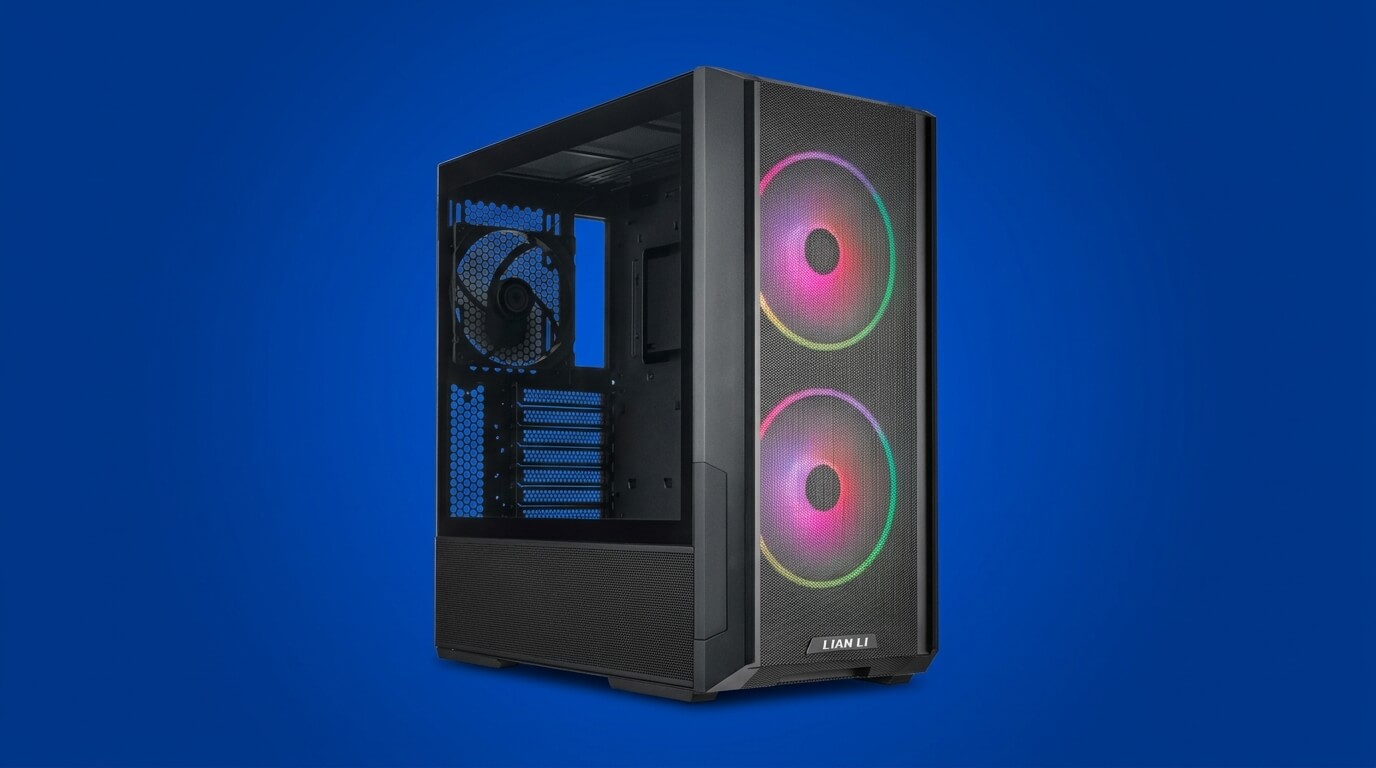
The Lian Li LANCOOL 216 is a mid-tower case built around two 160 mm intake fans and a 392 mm graphics card clearance, positioning it as a budget-focused option for RTX 5080 builds. The chassis uses a dual-chamber layout that separates the motherboard tray from the power supply and drive cage, and the front panel omits a traditional mesh grille in favor of open side vents that feed the two oversized intake fans directly.
The LANCOOL 216 supports Mini-ITX, Micro-ATX, and ATX motherboards natively, and it accepts E-ATX boards up to 280 mm wide once the internal grommet bar is flipped 180 degrees. An RTX 5080 at 304 mm to 320 mm in length fits within the case’s 392 mm GPU clearance with margin remaining for cable headroom near the front fans. The motherboard standoffs ship pre-installed but require repositioning upward during installation, since the default height can pinch PCIe power cables against the graphics card bracket.
Three fans come pre-installed: two 160 mm PWM units at the front and one 140 mm PWM exhaust fan at the rear. The front fans can be swapped for three 120 mm or two 140 mm fans if the builder prefers a radiator in that position instead of the stock 160 mm units. Radiator support extends to 360 mm at both the top and front of the case. Storage capacity totals six 2.5-inch drives, or a mix of two 3.5-inch and up to four 2.5-inch drives using the removable cage beneath the power supply shroud. Front-panel connectivity includes one USB-C 3.2 Gen 2 port and two USB-A ports, with two additional USB-A ports available only if the optional RGB controller is purchased separately.
Compared with the Corsair 5000D Airflow, the LANCOOL 216 costs roughly $65 to $75 less at typical retail pricing but supports a shorter maximum GPU length by about 28 mm and a lower maximum CPU cooler height. Compared with the NZXT H7 Flow, the LANCOOL 216 includes one additional pre-installed fan out of the box and costs less, though the H7 Flow supports a wider range of front and top radiator sizes.
Specs & configuration
| Specification | Lian Li LANCOOL 216 |
|---|---|
| Case type | ATX mid-tower |
| Motherboard support | Mini-ITX, Micro-ATX, ATX, E-ATX (up to 280 mm) |
| Dimensions (W × D × H) | 235 × 480.9 × 491.7 mm |
| Maximum GPU length | 392 mm |
| Maximum CPU cooler height | 180 mm |
| Radiator support | Up to 360 mm (top and front) |
| Included fans | 2× 160 mm front, 1× 140 mm rear |
| Expansion slots | 7 |
| Drive bays | Up to 6× 2.5-inch, or 2× 3.5-inch + 4× 2.5-inch |
| Front I/O | 1× USB-C 3.2 Gen 2, 2× USB-A, audio combo |
| Typical price | $99.99–$109.99 |
Corsair 5000D Airflow
Pricing and availability on Amazon
Pros & cons
Strengths
- The 305 × 277 mm E-ATX allowance covers most workstation and HEDT motherboards without cable-routing conflicts.
- 420 mm of length accommodates the longest board-partner RTX 5080 cards on the market.
- The RapidRoute channel and 25 mm of routing depth simplify cable dressing behind the motherboard tray.
- Support for up to ten 120 mm fans and dual 360 mm radiator positions allows for extensive future cooling upgrades.
Limitations
- Builders targeting maximum airflow will need to purchase three to five additional fans.
- The 360 mm maximum trails the Fractal Design Torrent's 420 mm front and bottom radiator support.
- The 5000D Airflow costs more than the LANCOOL 216 and the ASUS TUF Gaming GT502 at typical retail pricing.
- Builders using reverse-connector boards will need Corsair's newer FRAME 5000D series instead.
Review notes
The table below lists the Corsair 5000D Airflow specifications relevant to an RTX 5080 build.
The Corsair 5000D Airflow is an ATX mid-tower case with 420 mm of GPU clearance and E-ATX motherboard support up to 305 × 277 mm, making it one of the more spacious options in this comparison for an RTX 5080 build. The chassis uses a steel front panel with an airflow-optimized perforation pattern, paired with two rear-mounted AirGuide 120 mm intake fans.
The 5000D Airflow supports Mini-ITX, Micro-ATX, ATX, and E-ATX motherboards, and its 305 × 277 mm E-ATX allowance covers most workstation-class boards without requiring cable-routing modifications. The case measures 520 mm tall, 245 mm wide, and 520 mm deep, giving an RTX 5080 card 420 mm of length clearance and 170 mm of CPU cooler height clearance simultaneously. A maximum PSU length of 250 mm accommodates most ATX power supplies rated 850 W or higher, matching NVIDIA’s recommended PSU wattage for the RTX 5080.
Two AirGuide 120 mm fans with anti-vortex vanes ship pre-installed, and the case supports up to ten 120 mm fans or four 140 mm fans in total across the front, top, and side mounting positions. Radiator support reaches 360 mm at both the front and side, with the side mount enabled by a motherboard tray that can be reconfigured to fit three 120 mm fans. Storage totals six drive bays: two 3.5-inch and four 2.5-inch. Cable management runs through Corsair’s RapidRoute channel, which provides 25 mm of routing space behind the motherboard tray, concealed by a hinged steel door. Front I/O includes one USB-C 3.2 Gen 2 port, two USB-A 3.2 Gen 1 ports, and a combination audio jack.
Compared with the Lian Li LANCOOL 216, the 5000D Airflow supports a longer GPU and a full E-ATX motherboard footprint, but it ships with two fewer pre-installed fans and costs roughly 60% to 75% more at typical retail pricing. Compared with the Fractal Design Torrent, the 5000D Airflow has a smaller maximum radiator size (360 mm versus 420 mm) and includes fewer stock fans, though its footprint is narrower front-to-back by about 24 mm.
Specs & configuration
| Specification | Corsair 5000D Airflow |
|---|---|
| Case type | ATX mid-tower |
| Motherboard support | Mini-ITX, Micro-ATX, ATX, E-ATX (up to 305 × 277 mm) |
| Dimensions (H × W × D) | 520 × 245 × 520 mm |
| Maximum GPU length | 420 mm |
| Maximum CPU cooler height | 170 mm |
| Maximum PSU length | 250 mm |
| Radiator support | Up to 360 mm (front and side) |
| Included fans | 2× 120 mm AirGuide |
| Expansion slots | 7 horizontal + 2 vertical |
| Drive bays | 2× 3.5-inch + 4× 2.5-inch |
| Front I/O | 1× USB-C 3.2 Gen 2, 2× USB-A 3.2 Gen 1, audio combo |
| Typical price | $150–$175 |
Fractal Torrent
Pricing and availability on Amazon
Pros & cons
Strengths
- The bottom-intake layout directs airflow across the graphics card heatsink before it reaches other components, a benefit for a 360 W TDP card like the RTX 5080.
- SSI-EEB and SSI-CEB compatibility extends beyond standard E-ATX to server-class board dimensions.
- 188 mm accommodates nearly every air cooler on the market without modification.
- The stock fan count exceeds every other case in this comparison.
Limitations
- At 544 mm deep and 530 mm tall, the Torrent requires more desk or cabinet space than the other five cases.
- The 431 mm figure with stock fans falls short of the case's advertised 461 mm maximum.
- Typical retail pricing runs $40 to $80 above the LANCOOL 216 and ASUS TUF Gaming GT502.
- The top-mounted power supply compartment requires routing PSU cables further than in cases with a bottom-mounted PSU shroud.
Review notes
The table below summarizes the Fractal Design Torrent specifications relevant to an RTX 5080 build.
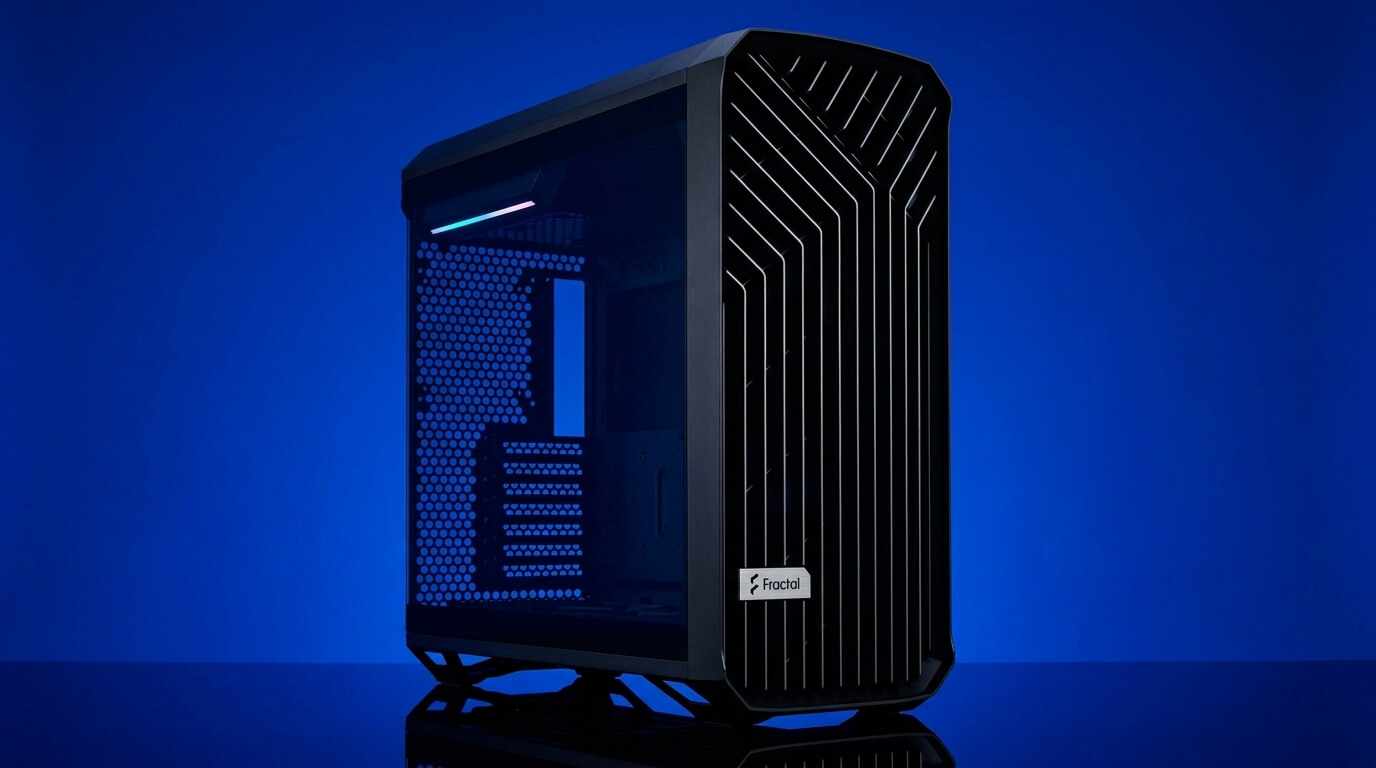
The Fractal Design Torrent is a large ATX mid-tower case built around two 180 mm front intake fans and a floor-mounted fan array, delivering up to 431 mm of GPU clearance with its stock fans installed. The Torrent departs from a conventional front-to-back airflow path: the power supply sits in a separate compartment at the top of the case, freeing the entire floor of the main chamber for intake fans positioned directly beneath the graphics card.
Five fans ship pre-installed: two 180 × 38 mm fans in the floor-mounted bottom intake position and three 140 mm fans at the front. This configuration draws cool air upward through the GPU and floor of the case before exhausting through the top, which Fractal Design markets as an “updraft” layout optimized for high-wattage graphics cards like the RTX 5080. Radiator support at both the front and bottom reaches 420 mm, while the rear supports a single 120 mm or 140 mm radiator. Storage totals two 3.5-inch and four 2.5-inch drive positions. Front I/O includes one USB 3.1 Gen 2 Type-C port, two USB 3.0 Type-A ports, and a combination audio jack.
Compared with the Corsair 5000D Airflow, the Torrent supports a larger front and bottom radiator (420 mm versus 360 mm) and includes three more fans out of the box, but it stands 10 mm taller and requires more desk clearance overall. Compared with the NZXT H7 Flow, the Torrent’s floor-intake design directs airflow more precisely at the GPU, though the Torrent weighs roughly 1 kg less at 10.4 kg to 11.1 kg net depending on the fan configuration.
Who it suits
The Torrent supports E-ATX, ATX, Micro-ATX, Mini-ITX, SSI-EEB, and SSI-CEB motherboards, covering a wider range of form factors than any other case in this comparison. Case dimensions run 544 mm deep, 242 mm wide, and 530 mm tall. With the stock front fans installed, GPU clearance measures 431 mm; removing the front fan bracket extends clearance to roughly 461 mm for builders who do not need front-mounted cooling. CPU cooler height clearance reaches 188 mm, the tallest figure among the six cases reviewed here.
Specs & configuration
| Specification | Fractal Design Torrent |
|---|---|
| Case type | ATX mid-tower |
| Motherboard support | E-ATX, ATX, Micro-ATX, Mini-ITX, SSI-EEB, SSI-CEB |
| Dimensions (D × W × H) | 544 × 242 × 530 mm |
| Maximum GPU length | 431 mm (fans installed), up to 461 mm (fans removed) |
| Maximum CPU cooler height | 188 mm |
| Radiator support | Up to 420 mm (front and bottom), 120–140 mm (rear) |
| Included fans | 2× 180 mm bottom, 3× 140 mm front |
| Expansion slots | 7 |
| Drive bays | 2× 3.5-inch + 4× 2.5-inch |
| Front I/O | 1× USB 3.1 Gen 2 Type-C, 2× USB 3.0 Type-A, audio combo |
| Typical price | $190–$210 |
NZXT H7 Flow
Pricing and availability on Amazon
Pros & cons
Strengths
- The vertical PSU layout frees the case floor for three additional 120 mm fans positioned beneath the GPU.
- A 420 mm maximum at the front accommodates the largest common all-in-one liquid coolers.
- The USB-C 3.2 Gen 2×2 port supports transfer speeds up to 20 Gbps.
- Up to ten fan positions allow substantial airflow expansion beyond the two included units.
Limitations
- The 277 mm E-ATX allowance is narrower than the Corsair 5000D Airflow's 305 mm figure, restricting compatibility with the widest workstation boards.
- Builders wanting the case's full ten-fan capacity must purchase eight additional units.
- The 410 mm maximum trails the Fractal Design Torrent's 431 mm figure.
- NZXT sells the vertical mounting bracket separately, and only kits manufactured in 2024 or later are compatible with this case revision.
Review notes
The table below lists the NZXT H7 Flow specifications relevant to an RTX 5080 build.
The NZXT H7 Flow is an ATX mid-tower case with a perforated mesh front and top panel, offering 410 mm of GPU clearance and 185 mm of CPU cooler height. The 2024 revision of the H7 Flow retains the vertical PSU layout from the original H7 series while widening the front fan mounts from two 140 mm to three 140 mm positions.
The H7 Flow supports Mini-ITX, Micro-ATX, and ATX motherboards natively, plus E-ATX boards up to 277 mm wide. Case dimensions measure 544 mm tall, 244 mm wide, and 468 mm deep. An RTX 5080 at up to 320 mm fits comfortably within the 410 mm GPU clearance, and the case’s vertical PSU compartment leaves the bottom of the main chamber open for three additional 120 mm fans aimed directly at the graphics card.
Two F120Q Airflow fans ship pre-installed at the front, with mounting positions available for a total of three front fans, three top fans, three bottom fans, and one rear fan. Radiator support reaches 420 mm at the front and 360 mm at the top, both larger than the Corsair 5000D Airflow’s 360 mm maximum. Storage totals six bays: four 2.5-inch and two 3.5-inch. A maximum PSU length of 200 mm covers most ATX units up to 850 W. Front I/O includes two USB-A 3.2 ports, one USB-C 3.2 Gen 2×2 port, and a headset jack.
Compared with the Lian Li LANCOOL 216, the H7 Flow supports a longer front radiator (420 mm versus 360 mm) but ships with one fewer pre-installed fan and costs roughly $20 to $30 more at typical retail pricing. Compared with the ASUS TUF Gaming GT502, the H7 Flow includes two fans out of the box while the base GT502 ships with none, though the GT502 supports a slightly narrower motherboard tray footprint.
Specs & configuration
| Specification | NZXT H7 Flow (2024) |
|---|---|
| Case type | ATX mid-tower |
| Motherboard support | Mini-ITX, Micro-ATX, ATX, E-ATX (up to 277 mm) |
| Dimensions (H × W × D) | 544 × 244 × 468 mm |
| Maximum GPU length | 410 mm |
| Maximum CPU cooler height | 185 mm |
| Maximum PSU length | 200 mm |
| Radiator support | Up to 420 mm (front), 360 mm (top), 140 mm (rear) |
| Included fans | 2× 120 mm F120Q Airflow |
| Expansion slots | 7 |
| Drive bays | 4× 2.5-inch + 2× 3.5-inch |
| Front I/O | 2× USB-A 3.2, 1× USB-C 3.2 Gen 2×2, audio combo |
| Typical price | $130 |
ASUS GT502
Pricing and availability on Amazon
Pros & cons
Strengths
- The rear compartment routes the 24-pin and PCIe power cables away from the main chamber, keeping the visible build area clean.
- A 360 mm mounting position in the rear chamber allows radiator installation without competing for main-chamber space.
- The USB-C 3.2 Gen 2 port supports 20 Gbps transfer speeds.
- A vertical mounting bracket ships with the case, though the PCIe extension cable is sold separately.
Limitations
- The base GT502 requires a full fan purchase to reach usable airflow, unlike every other case in this comparison.
- At 163 mm, the GT502 rules out several popular tall air coolers that fit the other five cases.
- Builders using E-ATX motherboards must select a different case from this list.
- At 285 mm, the GT502 offers less side-to-side cable routing space than the Corsair 5000D Airflow or Phanteks G500A.
Review notes
The table below summarizes the ASUS TUF Gaming GT502 specifications relevant to an RTX 5080 build.
The ASUS TUF Gaming GT502 is a dual-chamber ATX mid-tower case that separates the motherboard and GPU cooling zone from a rear compartment housing the power supply and up to three storage drives or a 360 mm radiator. The base GT502 variant ships without pre-installed fans, distinguishing it from the fan-equipped GT502 PLUS.
The GT502 supports Mini-ITX, Micro-ATX, and ATX motherboards, without E-ATX compatibility. Case dimensions measure 285 mm wide, 450 mm deep, and 446 mm tall. Maximum GPU length reaches 400 mm, sufficient for an RTX 5080 Founders Edition card at 304 mm or most board-partner variants extending to 330 mm. The dual-chamber design routes PCIe power cables and the 24-pin motherboard cable through the 90 mm rear compartment, keeping the main chamber visually clear behind the tempered glass side panel.
Because the base GT502 ships without fans, builders must supply their own cooling to reach the case’s rated capacity of up to 13 total 120 mm fan positions. Radiator support at the top reaches 360 mm, with a single 120 mm position at the rear; the rear chamber’s 360 mm bracket offers an additional radiator mounting location isolated from the main chamber. Maximum CPU cooler height is 163 mm, the shortest figure among the six cases in this comparison. Storage totals four combination 2.5-inch/3.5-inch bays. Front I/O includes one USB-C 3.2 Gen 2 port rated for 20 Gbps, two USB-A 3.2 Gen 1 ports, and a headphone/microphone combo jack.
Compared with the NZXT H7 Flow, the GT502 ships without any pre-installed fans while the H7 Flow includes two, making the GT502’s effective cost higher once comparable fans are added. Compared with the Corsair 5000D Airflow, the GT502 supports a shorter CPU cooler (163 mm versus 170 mm) and does not support E-ATX motherboards, though its dual-chamber layout isolates cable clutter more completely from the main build.
Specs & configuration
| Specification | ASUS TUF Gaming GT502 |
|---|---|
| Case type | ATX mid-tower, dual-chamber |
| Motherboard support | Mini-ITX, Micro-ATX, ATX |
| Dimensions (W × D × H) | 285 × 450 × 446 mm |
| Maximum GPU length | 400 mm |
| Maximum CPU cooler height | 163 mm |
| Maximum PSU length | 200 mm |
| Radiator support | Up to 360 mm (top), 120 mm (rear), 360 mm (rear chamber bracket) |
| Included fans | None (base variant) |
| Expansion slots | 8, plus 3 vertical |
| Drive bays | 4× 2.5-inch/3.5-inch combo |
| Front I/O | 1× USB-C 3.2 Gen 2, 2× USB-A 3.2 Gen 1, audio combo |
| Typical price | $150–$170 |
Phanteks G500A
Pricing and availability on Amazon
Pros & cons
Strengths
- At 435 mm, the G500A supports a longer graphics card than any other case in this comparison except the Fractal Design Torrent with fans removed.
- Dedicated color and mode buttons operate the D-RGB lighting without requiring motherboard software or a compatible header.
- Nine dedicated 2.5-inch SSD positions accommodate multi-drive storage configurations without additional brackets.
- A 420 mm maximum matches the Fractal Design Torrent and exceeds the Corsair 5000D Airflow.
Limitations
- Installing the HDD bracket on the motherboard tray reduces GPU clearance from 435 mm to 294 mm.
- The 185 mm limit falls 3 mm short of the Fractal Design Torrent's 188 mm figure.
- Builders must confirm whether a specific retailer listing includes three or four fans before purchase.
- The D-RGB variant costs more than the Lian Li LANCOOL 216 and the base ASUS TUF Gaming GT502.
Review notes
The table below lists the Phanteks Eclipse G500A specifications relevant to an RTX 5080 build.
The Phanteks Eclipse G500A is an ATX mid-tower case with an Ultra-Fine Performance Mesh front and top panel, offering up to 435 mm of GPU clearance when the front fan bracket is mounted at its forward position. The case ships in three configurations: a D-RGB variant with three addressable fans, a Performance variant with three standard fans, and a fanless variant for builders installing their own cooling.
The G500A supports Mini-ITX, Micro-ATX, ATX, and E-ATX motherboards up to 280 mm wide. Case dimensions measure 240 mm wide, 500 mm deep, and 515 mm tall. Maximum GPU clearance reaches 435 mm with the front fan bracket in its forward mounting position; installing the optional HDD bracket on the motherboard tray where the GPU sits reduces this clearance to 294 mm. CPU cooler height clearance reaches 185 mm, matching the NZXT H7 Flow.
The D-RGB variant ships with three M25-140 fans pre-installed: three at the front and configurable placement for a fourth at the rear depending on the retailer’s bundle. Radiator support reaches 420 mm at the front and 360 mm at the top, with a 120 mm position at the rear. Storage capacity totals nine dedicated 2.5-inch SSD locations and up to ten total drive bays when using the cable-cover doors, with two 3.5-inch trays included by default. Front I/O includes a 10 Gbps USB-C port, two USB-A 3.0 ports, a microphone/headphone combo jack, and dedicated D-RGB color and mode buttons that operate without motherboard software.
Compared with the Lian Li LANCOOL 216, the G500A supports E-ATX motherboards and a larger front radiator, but costs roughly $20 to $30 more at typical retail pricing for the D-RGB variant. Compared with the Fractal Design Torrent, the G500A’s 435 mm GPU clearance exceeds the Torrent’s 431 mm figure with fans installed, though the Torrent supports a taller 188 mm CPU cooler versus the G500A’s 185 mm limit.
Specs & configuration
| Specification | Phanteks Eclipse G500A (D-RGB) |
|---|---|
| Case type | ATX mid-tower |
| Motherboard support | Mini-ITX, Micro-ATX, ATX, E-ATX (up to 280 mm) |
| Dimensions (W × D × H) | 240 × 500 × 515 mm |
| Maximum GPU length | 435 mm (front fan bracket forward position) |
| Maximum CPU cooler height | 185 mm |
| Radiator support | Up to 420 mm (front), 360 mm (top), 120 mm (rear) |
| Included fans | 3× M25-140 D-RGB |
| Drive bays | 9× dedicated 2.5-inch, up to 10 total with 2× 3.5-inch included |
| Front I/O | 1× USB-C (10 Gbps), 2× USB-A 3.0, audio combo |
| Typical price | $130–$150 |
How To Choose PC Case for RTX 5080
The right PC case for an RTX 5080 build depends on graphics card length, front intake area, and radiator support matched to the cooling method in use. A case needs at least 320 mm of GPU clearance to accommodate the longest board-partner RTX 5080 cards, at least 850 W of power supply length compatibility to support NVIDIA’s recommended PSU wattage, and front or bottom intake fans positioned to draw air directly across the GPU heatsink.
GPU clearance determines whether a specific card physically fits. The RTX 5080 Founders Edition measures 304 mm, while board-partner cards from ASUS, MSI, and Gigabyte commonly extend to 320–340 mm with triple-fan coolers. Cases in this comparison range from 392 mm (Lian Li LANCOOL 216) to 435 mm (Phanteks Eclipse G500A) or 461 mm (Fractal Design Torrent with front fans removed), all of which clear the longest current RTX 5080 cards with margin remaining for cable connectors at the rear of the graphics card.
Intake fan placement affects sustained boost clocks under load. The RTX 5080’s 360 W TDP generates more heat than previous-generation mid-range cards, so a case that draws cool air directly across the GPU heatsink — such as the Fractal Design Torrent’s floor-mounted fans or the NZXT H7 Flow’s bottom fan mounts — reduces the temperature difference between ambient air and the GPU’s intake, allowing the card to sustain higher clock speeds before thermal throttling.
Radiator support matters only for builders planning liquid cooling. An air-cooled RTX 5080 build can prioritize CPU cooler height and front fan count instead, since no radiator mounting is required. Builders planning a 360 mm or 420 mm all-in-one cooler should confirm the case’s front or top radiator support before purchase, since the Corsair 5000D Airflow and ASUS TUF Gaming GT502 top out at 360 mm while the Fractal Design Torrent and Phanteks G500A support up to 420 mm at the front.
Motherboard form factor narrows the case list before other criteria apply. Builders using an E-ATX motherboard should eliminate the ASUS TUF Gaming GT502, since it supports ATX and smaller boards only. Builders using a standard ATX motherboard can consider any of the six cases reviewed here, since ATX support is universal across this comparison.
JOIN THE CONVERSATION
Leave a comment
Have a question or something to add? Share it with our editorial team. Comments are reviewed privately and are not published automatically.