A motherboard connects the CPU, memory, storage, and expansion cards into a single functioning system, and the brand that designs and builds it directly affects compatibility, stability, and long-term support. The motherboard market includes global manufacturers such as ASUS, MSI, Gigabyte, and ASRock, along with specialized brands such as Biostar and Supermicro that serve narrower segments. Each manufacturer designs boards around specific chipsets, CPU sockets, and price tiers, which creates measurable differences in build quality, feature sets, and firmware support.
This article identifies the leading motherboard manufacturers in 2026, explains how their products differ in chipset support, VRM design, BIOS ecosystems, and warranty coverage, and outlines which brands suit gaming builds, workstations, servers, and budget systems. It also provides a practical framework for matching a manufacturer to a specific CPU platform, budget tier, and region.
The comparisons in this article apply to desktop and server motherboards sold through retail and system-integrator channels. Laptop mainboards, which manufacturers typically design and source separately, fall outside this scope.
What Is a Motherboard Manufacturer?
A motherboard manufacturer is a company that designs, engineers, and produces the printed circuit board that houses a computer’s CPU socket, memory slots, chipset, and expansion interfaces. The manufacturer determines the board’s layout, component selection, power-delivery design, and firmware, which together define how the board performs and how long it remains reliable.
A motherboard manufacturer typically licenses a chipset from Intel or AMD and builds a board around that chipset’s supported CPU socket, memory type, and expansion lanes. The manufacturer also develops the BIOS or UEFI firmware, writes companion software for fan control and overclocking, and manages the board’s warranty and RMA process. Manufacturers range from large multinational companies that produce boards across every price tier to smaller firms that focus on a single segment, such as budget systems or enterprise servers.
Motherboard Manufacturers vs. Assemblers/OEMs
A motherboard manufacturer designs and engineers the board itself, while an assembler or OEM integrates a purchased or licensed board into a finished computer system. The manufacturer controls the printed circuit board layout, component sourcing, VRM design, and firmware development.
An OEM, such as a prebuilt PC brand, generally selects a motherboard from a manufacturer’s catalog or commissions a custom variant, then installs it inside a branded chassis alongside its own cooling, power supply, and software. Some OEMs also design proprietary boards for their own systems and do not sell those boards separately at retail. A retail buyer purchasing a “motherboard brand” is buying directly from the manufacturer, while a buyer purchasing a prebuilt desktop is buying a system that an OEM assembled around a manufacturer’s board or a proprietary equivalent.
Top Motherboard Manufacturers in 2026
The leading motherboard manufacturers in 2026 are ASUS, MSI, Gigabyte, ASRock, Biostar, and Supermicro, with EVGA remaining relevant mainly as a legacy brand. ASUS, MSI, and Gigabyte compete most directly in the mainstream and premium consumer segments, ASRock and Biostar compete on value pricing, and Supermicro focuses on enterprise and data-center hardware.
Each manufacturer maintains its own chipset partnerships, sub-brand structure, and firmware ecosystem, and most produce boards across multiple price tiers rather than a single category. The sections below summarize each manufacturer’s market position and defining characteristics.
ASUS
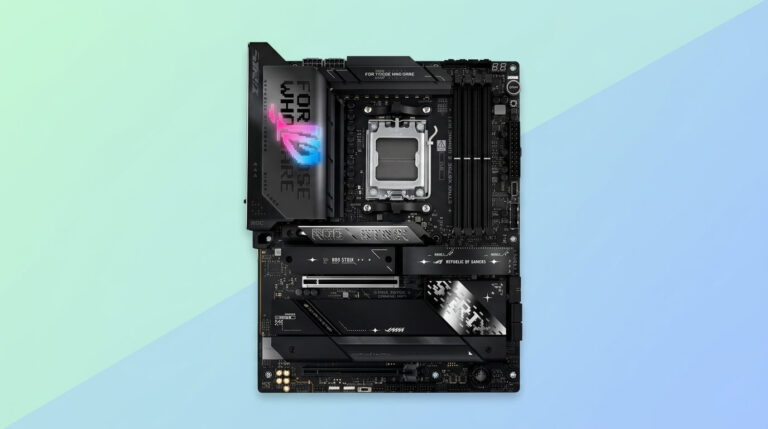
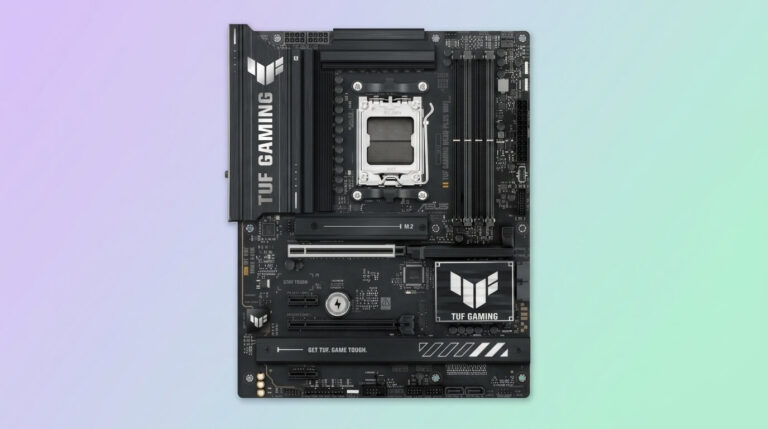
ASUS is a Taiwanese multinational manufacturer and the longtime market leader in global motherboard shipments. The company produces boards across every price tier through its ROG (Republic of Gamers), TUF Gaming, ProArt, and Prime product lines.
ASUS built its market position on its ROG series, which established many features now standard across the industry, including advanced BIOS overclocking tools and reinforced PCIe slots. The TUF Gaming line targets mid-range builders with military-grade component certifications, while ProArt targets content creators with additional connectivity and color-calibration features. ASUS also maintains one of the largest BIOS and software support teams in the industry, which results in frequent firmware updates across current and recent chipset generations.
MSI
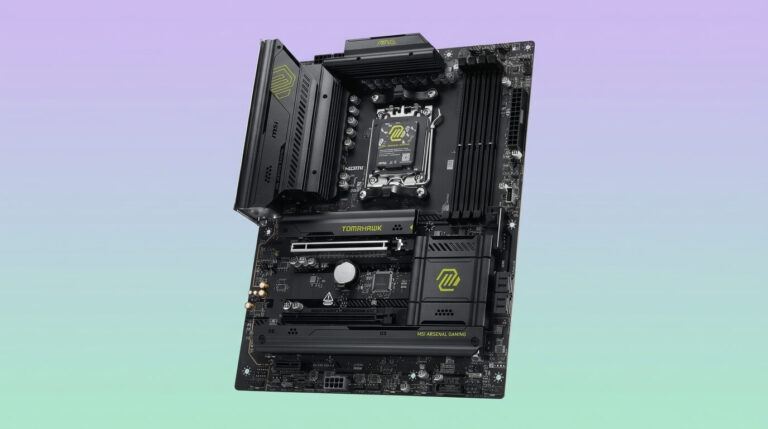
MSI (Micro-Star International) is a Taiwanese manufacturer and the third-largest global motherboard vendor, known for its MEG, MPG, and MAG product families. MEG targets enthusiast and extreme-overclocking builds, MPG addresses mid-range gaming, and MAG covers mainstream builds.
MSI maintains a close co-marketing relationship with AMD for Ryzen-branded launches and frequently ships new AM5 and Intel LGA boards early in a chipset generation. The company differentiates its boards with reinforced expansion slots, integrated lighting hubs, and a unified MSI Center software suite for fan curves, RGB lighting, and BIOS updates. MSI’s product range spans entry-level micro-ATX boards to flagship E-ATX boards for high-end desktop platforms.
Gigabyte
Gigabyte Technology is a Taiwanese manufacturer known for its AORUS gaming line and its cost-optimized mainstream boards, which give it strong volume with system integrators. The company holds one of the largest global market shares alongside ASUS and MSI.
Gigabyte’s AORUS series targets premium gaming and overclocking builds with reinforced VRM heatsinks and direct-touch heat pipes, while its lower-numbered chipset boards (such as B-series models) prioritize value pricing with a reduced but functional feature set. Gigabyte was among the first manufacturers to add Wi-Fi 6E to entry-level chipset boards and has invested in AI-assisted fan-curve tuning within its BIOS. The company also produces server and workstation boards through a dedicated enterprise division.
ASRock
ASRock is a Taiwanese manufacturer, originally spun off from ASUS in 2002, that competes primarily on value pricing and feature density. ASRock frequently ships boards priced 10% to 15% below comparable first-tier competitor models while including features such as PCIe 5.0 M.2 slots and Wi-Fi at lower price points.
ASRock covers the full chipset range from entry-level micro-ATX boards to its Taichi and Aqua flagship series for enthusiast builds. The company has also expanded into pre-built systems, liquid coolers, and graphics cards, broadening its presence beyond motherboards alone. ASRock’s BIOS interface and update cadence have historically lagged the largest three manufacturers, though the company has narrowed this gap on recent chipset generations.
Biostar
Biostar is a Taiwanese manufacturer that specializes in entry-level and budget motherboards for cost-sensitive builds and basic office or home systems. The company has maintained a presence in the value segment for more than two decades by focusing on simplified board designs with reduced feature sets.
Biostar’s boards typically omit premium features such as extensive RGB lighting, high-end audio codecs, and multiple M.2 slots, which keeps manufacturing costs low. The company’s boards see limited adoption in gaming and enthusiast builds but remain a common choice for basic desktops, point-of-sale systems, and other low-demand computing tasks where price outweighs feature depth.
EVGA (legacy/context note)
EVGA is a motherboard brand in legacy status; the company exited the motherboard market in 2022 and no longer develops new boards. EVGA discontinued its motherboard line around the same period it withdrew from the graphics card market, citing changes in its business relationships with component partners.
Existing EVGA motherboard owners can still access EVGA’s customer support and warranty service for previously purchased boards, and the company continues to sell power supplies and other peripherals. EVGA no longer appears as an active option for a new motherboard purchase, and this article references the brand only for historical and support-related context.
Supermicro (enterprise/server focus)
Supermicro (Super Micro Computer, Inc.) is a United States-based manufacturer that focuses on server, workstation, and data-center motherboards rather than consumer desktop boards. The company holds a leading position in AI server and high-density data-center motherboard segments, driven by demand for AI infrastructure hardware.
Supermicro designs boards for multi-socket server configurations, high-core-count CPUs, and dense memory and storage configurations that consumer-focused manufacturers do not typically address. The company sells primarily through enterprise and data-center channels rather than general consumer retail, and its product catalog emphasizes rack-mount compatibility, remote server management (IPMI), and validated support for enterprise operating systems.
Other Notable Manufacturers
Additional manufacturers with a smaller but relevant presence include Colorful, Maxsun, and NZXT, along with Intel, HP, and Dell for proprietary server and workstation boards. Colorful and Maxsun primarily distribute in the Asia-Pacific region and compete on price within the budget and mid-range segments.
NZXT sells motherboards as part of curated component bundles rather than standalone retail products in most markets. Intel, HP, and Dell produce proprietary boards mainly for their own prebuilt desktops and enterprise systems, and these boards are generally not available for standalone retail purchase or third-party chassis compatibility.
How Motherboard Brands Differ From One Another
Motherboard brands differ primarily in chipset and socket support, build quality and power-delivery (VRM) design, BIOS and software ecosystem, and warranty and customer support policies. These four factors determine a board’s compatibility, stability under load, day-to-day usability, and the risk exposure a buyer accepts after purchase.
Two boards built around the same chipset can still differ substantially in VRM component quality, firmware update frequency, and RMA processing time, which makes brand-level comparison useful even within a single chipset generation.
Chipset and Socket Compatibility (Intel vs. AMD)
Motherboard brands differ in which CPU sockets and chipsets they support, since Intel and AMD each require distinct socket designs and chipset licensing. ASUS, MSI, Gigabyte, and ASRock all produce boards for both Intel’s current LGA socket and AMD’s AM5 socket, while Supermicro’s catalog concentrates on server-specific Intel Xeon and AMD EPYC platforms.
A chipset determines which CPU generation a board supports, how many PCIe lanes it exposes, and which memory speeds it validates. Intel’s chipset transitions, such as the move to DDR5-only support on LGA-1851, force manufacturers to retire compatible boards for the prior socket generation. AMD’s AM5 socket has maintained broader backward compatibility across chipset generations, which allows some brands to support multiple CPU generations on a single board through firmware updates alone. A buyer must match the board’s socket and chipset to the intended CPU before comparing any other brand-level differences.
Build Quality and VRM Design
Motherboard brands differ in VRM (voltage regulator module) design, which determines how much stable power a board delivers to the CPU under sustained load. A board with a higher-phase VRM design and larger heatsinks sustains higher CPU power draw without thermal throttling, which matters most for overclocking and high-core-count workloads.
ASUS ROG and MSI MEG flagship boards commonly use reinforced power stages, such as 20+ phase or higher designs with direct-touch heat pipes, to support extreme overclocking and sustained AI-inference or rendering workloads. Gigabyte AORUS and ASRock Taichi boards target a similar tier with comparable phase counts. Entry-level boards from Biostar and lower-tier chipset boards from any manufacturer typically use simplified 6+2+1 phase designs, which suit standard desktop use but limit sustained overclocking headroom. A buyer running a high-core-count CPU at stock or overclocked settings should prioritize a board’s VRM phase count and heatsink design over its sticker price alone.
BIOS/UEFI and Software Ecosystem
Motherboard brands differ in BIOS/UEFI interface design and in the companion software each brand bundles for fan control, lighting, and driver management. ASUS’s AI Suite and BIOS interface receive consistent praise for overclocking depth and update frequency, while MSI Center and Gigabyte’s software suite cover similar functions with different interface layouts.
A brand’s firmware update cadence affects how quickly a board gains support for new CPU releases, security patches, and memory compatibility improvements. Manufacturers issued emergency UEFI firmware patches in December 2025 after a critical vulnerability affected boards across multiple brands, which illustrates the practical importance of a manufacturer’s patch responsiveness. ASRock has narrowed its historical gap in BIOS polish on recent chipset generations, though ASUS, MSI, and Gigabyte generally maintain faster and more frequent firmware releases across their product lines.
Warranty and Customer Support
Motherboard brands differ in warranty length, RMA turnaround time, and regional support infrastructure, which affects the practical cost of a board failure after purchase. Standard consumer motherboard warranties from ASUS, MSI, Gigabyte, and ASRock typically run for three years in most regions, though exact terms vary by product line and country.
Supermicro’s enterprise boards carry separate warranty and service-level agreements tied to data-center support contracts rather than standard consumer RMA processes. EVGA continues to service warranty claims on previously sold motherboards despite exiting the motherboard market, which allows existing customers to complete RMA requests for boards purchased before the exit. A buyer should confirm a manufacturer’s regional RMA process and average turnaround time before purchase, since support quality can vary between a manufacturer’s home market and other regions.
Motherboard Brands by Use Case
The best motherboard brand depends on the intended use case: gaming builds favor ASUS ROG, MSI MEG/MPG, and Gigabyte AORUS boards; workstation and server builds favor Supermicro and select ASUS ProArt or ASRock Rack boards; and budget builds favor ASRock, Biostar, and entry-tier boards from any of the four major consumer brands.
Matching a brand to a use case requires weighing VRM strength, expansion capacity, and firmware maturity against the workload’s actual demands, since a board’s premium features add cost without benefit if the workload does not require them.
Best Brands for Gaming PCs
ASUS ROG, MSI MPG/MEG, and Gigabyte AORUS represent the strongest brand options for gaming PCs, based on their reinforced PCIe and memory slots, gaming-oriented BIOS tools, and sustained VRM performance under overclocking. These lines prioritize the PCIe slot durability and memory overclocking stability that gaming builds require for high-refresh-rate displays and demanding titles.
ASRock’s Taichi and Phantom Gaming series provide a comparable feature set at a lower price point, which suits gamers who want reinforced slots and solid VRM design without paying a premium-brand price. Biostar’s boards generally lack the VRM headroom and BIOS overclocking depth that competitive or high-refresh gaming setups require, which makes the brand a weaker fit for this use case.
Best Brands for Workstations and Servers
Supermicro is the leading brand for server and data-center workstation builds, given its support for multi-socket configurations, high memory density, and remote server management through IPMI. ASUS ProArt and ASRock Rack provide additional options for single-socket workstations that need professional-grade connectivity without full data-center infrastructure.
ASUS ProArt boards add extended display outputs, Thunderbolt connectivity, and color-calibration support suited to content-creation workstations. ASRock Rack extends ASRock’s consumer engineering into server-grade boards for smaller data centers and home-lab server builds. A buyer selecting between these brands should confirm whether the workload requires true server features, such as ECC memory support and IPMI, or whether a high-end consumer workstation board meets the requirement at lower cost.
Best Budget-Friendly Brands
ASRock and Biostar are the strongest budget-focused brands, offering functional boards at lower price points than ASUS, MSI, or Gigabyte’s comparable chipset tier. ASRock frequently includes features such as Wi-Fi and PCIe 5.0 M.2 slots on boards priced below equivalent competitor models, which improves value within the budget segment specifically.
Entry-tier boards from ASUS (Prime), MSI (MAG/PRO), and Gigabyte (base chipset models) also serve budget builds, though they generally cost more than a comparable ASRock or Biostar board with a similar feature set. A buyer prioritizing minimum cost for basic desktop use should consider Biostar or an entry-tier ASRock board, while a buyer who wants brand-standard BIOS support at a lower price should consider ASRock’s mid-range budget lineup.
How to Choose the Right Motherboard Manufacturer
Choosing the right motherboard manufacturer requires matching the brand’s supported CPU platform, price tier, and regional support to the buyer’s specific build requirements. No single manufacturer serves every CPU platform, budget, and region equally well, which makes the selection process dependent on the buyer’s individual constraints rather than a single overall best brand.
The following sections outline the three criteria that most directly affect manufacturer selection.
Match the Brand to Your CPU Platform
A buyer must first confirm which manufacturers produce boards for their chosen CPU socket, since Intel and AMD platforms require different chipsets and physical socket designs. ASUS, MSI, Gigabyte, and ASRock all produce boards for both current Intel and AMD sockets, while Supermicro’s catalog concentrates on server-specific Xeon and EPYC platforms rather than mainstream desktop sockets.
A buyer should confirm the exact chipset generation a board supports before purchase, since a socket match alone does not guarantee compatibility with a specific CPU generation. AMD’s AM5 socket has supported multiple CPU generations through firmware updates on the same physical board, while Intel’s recent socket transitions have required a new board for each major CPU generation.
Match the Brand to Your Budget Tier
A buyer should match the manufacturer and product line to their budget tier, since each major brand produces boards across a wide price range under different sub-brand names. ASRock and Biostar generally offer the lowest entry price for a functional board, while ASUS ROG, MSI MEG, and Gigabyte AORUS occupy the premium tier with correspondingly higher prices.
Within a single manufacturer’s catalog, the sub-brand name typically signals the price tier: ASUS Prime, MSI PRO/MAG, and Gigabyte’s base chipset models represent each company’s budget-to-mainstream range, while ROG, MEG, and AORUS represent the premium range. A buyer should compare boards within the same price tier across manufacturers rather than comparing a budget board from one brand against a premium board from another.
Check Regional Availability and Support
A buyer should confirm that a manufacturer maintains active retail distribution and RMA support in their region before purchase, since availability and support quality vary by country. ASUS, MSI, Gigabyte, and ASRock maintain broad international distribution and regional service centers, while brands such as Biostar, Colorful, and Maxsun have stronger availability in the Asia-Pacific region than in North America or Europe.
Supermicro’s enterprise boards typically sell through authorized data-center resellers and system integrators rather than general consumer retail, which limits direct availability for individual buyers outside enterprise procurement channels. A buyer should verify local warranty terms, RMA turnaround time, and authorized retailer status for a specific manufacturer before finalizing a purchase, since support quality can differ meaningfully between a manufacturer’s home market and other regions.