The AMD Ryzen 5 5600X is a Zen 3 desktop processor with six cores, twelve threads, a 3.7 GHz base clock, a 4.6 GHz boost clock, 32 MB of L3 cache, and a 65 W TDP. It uses the AM4 socket, which spans four motherboard chipsets: A520, B450, B550, and X570. Each chipset changes the CPU’s available PCIe generation, VRM headroom, and connectivity.
A520 and B450 boards run every PCIe lane at Gen 3, regardless of the installed CPU, because the chipset itself does not support PCIe 4.0 switching. B550 and X570 boards expose PCIe 4.0 on the primary graphics slot and the primary M.2 slot, since the Ryzen 5 5600X’s integrated PCIe controller supports Gen 4 signaling. The chipset choice therefore determines whether a PCIe 4.0 GPU or SSD reaches its full bandwidth on this CPU.
VRM quality is the second differentiator. The Ryzen 5 5600X draws moderate current at stock settings, so entry-level A520 boards handle it without issue. Boards built for higher-TDP chips, such as the Ryzen 9 5900X or 5950X, carry more VRM headroom than the 5600X needs, which gives those boards thermal margin for all-core boost and light overclocking of Infinity Fabric and memory.
This guide reviews three motherboards in each AM4 chipset tier, compares their specifications against the Ryzen 5 5600X, and closes with a chipset selection guide for different build priorities.
Best B550 Motherboard for Ryzen 5 5600X
B550 is the recommended chipset tier for the Ryzen 5 5600X. It provides PCIe 4.0 on the primary GPU slot and primary M.2 slot, supports memory overclocking through AMD EXPO or manual DDR4 tuning, and costs less than X570 because the chipset itself uses fewer PCIe 4.0 lanes and needs no active cooling fan.
The three boards below represent three form factors: full ATX (MSI MAG B550 Tomahawk), a value-focused ATX alternative (ASRock B550 Steel Legend), and Mini-ITX (Gigabyte B550I AORUS Pro AX). All three expose PCIe 4.0 to the CPU-connected GPU slot and primary M.2 slot when paired with the Ryzen 5 5600X.
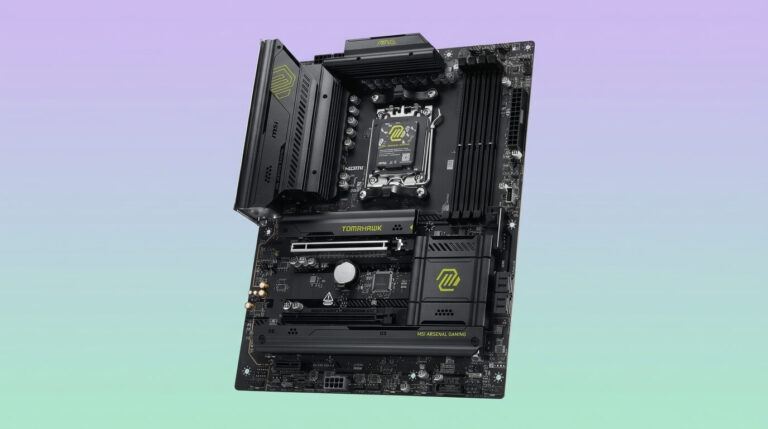
MSI MAG B550 Tomahawk
The MSI MAG B550 Tomahawk is an ATX motherboard built around a 10+2+1 phase VRM rated for 60 A per phase, controlled by a Renesas RAA22904 PWM controller with ISL99360 SPS power stages. This VRM configuration exceeds what the Ryzen 5 5600X’s 65 W TDP requires, leaving thermal headroom even under sustained Cinebench-style loads.
The board supports four DDR4 DIMMs at up to 128 GB total capacity, with memory overclocking rated to 5100 MHz. The Ryzen 5 5600X reaches its practical memory sweet spot around 3600–3800 MHz, so the Tomahawk’s overclocking ceiling covers that range with room to spare.
Expansion consists of one PCIe 4.0 x16 slot and one PCIe 3.0 x16 slot. Storage includes two M.2 slots: the top slot runs at PCIe 4.0 x4 from the CPU, while the second slot runs at PCIe 3.0 x4 from the chipset and shares bandwidth with SATA ports 5 and 6. Six SATA 6 Gb/s ports, a 2.5 Gbps LAN port plus a secondary 1 Gbps LAN port, and Realtek 7.1-channel audio round out connectivity.
Compared with the ASRock B550 Steel Legend, the Tomahawk has a higher-rated VRM (10+2+1 at 60 A versus 14 phases at 60 A, though ASRock’s phase count is higher) and dual LAN ports, but ASRock provides a cleaner M.2/PCIe lane layout that avoids disabling SATA ports. Compared with the Gigabyte B550I AORUS Pro AX, the Tomahawk offers a full ATX layout with four DIMM slots against the Mini-ITX board’s two.
The following table summarizes the MSI MAG B550 Tomahawk’s core specifications.
| Specification | MSI MAG B550 Tomahawk |
|---|---|
| Form factor | ATX |
| Chipset | AMD B550 |
| VRM | 10+2+1 phase, 60 A ISL99360 SPS |
| Memory | 4x DDR4, up to 128 GB, OC to 5100 MHz |
| PCIe slots | 1x PCIe 4.0 x16, 1x PCIe 3.0 x16 |
| M.2 slots | 1x PCIe 4.0 x4, 1x PCIe 3.0 x4 |
| SATA | 6x SATA 6 Gb/s |
| LAN | 2.5 Gbps + 1 Gbps |
| Audio | Realtek 7.1-channel |
Pros:
- VRM headroom: The 10+2+1 phase design keeps temperatures controlled well beyond the Ryzen 5 5600X’s power draw.
- Dual M.2 cooling: Both M.2 slots include metal heatsinks with thermal pads.
- Fan control: Eight 4-pin fan headers support detailed cooling customization.
- Dual LAN: A 2.5 Gbps and a 1 Gbps port cover both high-speed and standard network needs.
Cons:
- Restrictive lane sharing: Populating the second M.2 slot alongside the secondary PCIe slot disables SATA ports 5 and 6.
- HDMI limited to 4K30: The onboard HDMI port does not output 4K at 60 Hz.
- Five rear USB Type-A ports: Fewer rear USB-A ports than some competing B550 boards at the same price.
ASRock B550 Steel Legend
The ASRock B550 Steel Legend is an ATX motherboard with a 14-phase, 60 A VRM built on SiC654 Dr.MOS power stages. This phase count exceeds what the Ryzen 5 5600X draws at stock settings, and ASRock’s own testing shows VRM temperatures in the mid-30s°C under a Ryzen 9 3900X load, a CPU with a substantially higher TDP than the 5600X.
Memory support covers four DDR4 DIMMs at up to 128 GB, with overclocking rated to 4733 MHz. The primary PCIe 4.0 x16 slot runs at full x16 bandwidth from the CPU, and a secondary PCIe 3.0 x16 slot runs from the chipset. Storage includes a Hyper M.2 slot at PCIe 4.0 x4 and a second M.2 slot at PCIe 3.0 x2/SATA, alongside six SATA 6 Gb/s ports.
Networking uses a 2.5GbE Realtek Dragon LAN controller, and audio runs through a Realtek ALC1220 codec. The rear I/O includes seven USB Type-A ports and one USB Type-C port at 10 Gbps, though the board has no onboard Wi-Fi.
Against the MSI MAG B550 Tomahawk, the Steel Legend’s 14-phase VRM has a higher phase count, and its rear I/O carries two additional USB Type-A ports. Against the Gigabyte B550I AORUS Pro AX, the Steel Legend gives up onboard Wi-Fi and the smaller footprint but adds two more DIMM slots and a fuller port selection.
The table below lists the ASRock B550 Steel Legend’s specifications.
| Specification | ASRock B550 Steel Legend |
|---|---|
| Form factor | ATX |
| Chipset | AMD B550 |
| VRM | 14 phase, 60 A SiC654 Dr.MOS |
| Memory | 4x DDR4, up to 128 GB, OC to 4733 MHz |
| PCIe slots | 1x PCIe 4.0 x16, 1x PCIe 3.0 x16 |
| M.2 slots | 1x PCIe 4.0 x4 (Hyper M.2), 1x PCIe 3.0 x2/SATA |
| SATA | 6x SATA 6 Gb/s |
| LAN | 2.5 Gbps (Realtek Dragon) |
| Audio | Realtek ALC1220 |
Pros:
- High phase count: 14 VRM phases deliver low VRM temperatures under sustained load.
- Fanless chipset: No chipset cooling fan reduces noise.
- Strong rear I/O: Seven USB-A ports plus one 10 Gbps USB-C port on the back panel.
- POST-code display: Aids troubleshooting during builds.
Cons:
- No onboard Wi-Fi: Wired networking only, requiring a separate adapter for wireless.
- Second M.2 slot capped at PCIe 3.0 x2: Limits maximum throughput for a secondary NVMe drive.
- Price relative to B450: Costs roughly $50 more than ASRock’s equivalent B450 board for PCIe 4.0 support the Ryzen 5 5600X can only partially use.
Gigabyte B550I AORUS Pro AX
The Gigabyte B550I AORUS Pro AX is a Mini-ITX motherboard with an 8-phase Direct Digital VRM using 90 A smart power stages. Despite the compact form factor, the 90 A-rated phases give the board more current capacity per phase than many full-size B550 boards, which compensates for the lower phase count in a small-form-factor build running the Ryzen 5 5600X.
Memory is limited to two DDR4 DIMMs, with a maximum capacity of 64 GB. This is half the DIMM count of the ATX boards in this tier, a direct consequence of the Mini-ITX form factor. The single PCIe 4.0 x16 slot runs full bandwidth from the CPU, and both M.2 slots run at PCIe 4.0/3.0 x4 with individual Thermal Guard heatsinks, supporting combined sequential read speeds up to 6560 MB/s in RAID.
Networking includes Intel Wi-Fi 6 (802.11ax) with Bluetooth 5, plus 2.5GbE wired LAN. Audio uses a Realtek ALC1220-VB codec with Nichicon audio capacitors. The board includes Q-Flash Plus for BIOS updates without an installed CPU, memory, or graphics card.
Compared with the MSI MAG B550 Tomahawk and ASRock B550 Steel Legend, the AORUS Pro AX trades two DIMM slots and one PCIe slot for a substantially smaller footprint and built-in Wi-Fi 6, a feature neither ATX board in this tier includes.
The table below summarizes the Gigabyte B550I AORUS Pro AX’s specifications.
| Specification | Gigabyte B550I AORUS Pro AX |
|---|---|
| Form factor | Mini-ITX |
| Chipset | AMD B550 |
| VRM | 8 phase, 90 A Direct Digital SPS |
| Memory | 2x DDR4, up to 64 GB |
| PCIe slots | 1x PCIe 4.0 x16 |
| M.2 slots | 2x PCIe 4.0/3.0 x4 with Thermal Guard |
| Wi-Fi | Intel Wi-Fi 6 (802.11ax) + BT 5 |
| LAN | 2.5 Gbps |
| Audio | Realtek ALC1220-VB |
Pros:
- High-current VRM: 90 A power stages give strong headroom relative to the Mini-ITX size class.
- Dual PCIe 4.0 M.2: Both M.2 slots run at full PCIe 4.0 x4 with dedicated cooling.
- Integrated Wi-Fi 6: No separate wireless card required.
- Q-Flash Plus: BIOS updates possible without a CPU installed.
Cons:
- Two DIMM slots only: Caps memory capacity at 64 GB and limits future upgrades.
- Single PCIe slot: No room for a secondary expansion card.
- Higher cost per feature: Mini-ITX AORUS boards typically cost more than ATX equivalents at the same chipset tier.
Best X570 Motherboard for Ryzen 5 5600X
X570 was AMD’s flagship AM4 chipset and is the only AM4 chipset with native PCIe 4.0 lanes running through the chipset itself, not only from the CPU. For the Ryzen 5 5600X, this mainly benefits secondary M.2 slots and additional PCIe 4.0 expansion, since the CPU’s own PCIe 4.0 lanes already cover the primary GPU and M.2 slots on B550.
The three X570 boards below cover a mainstream ATX option with Wi-Fi 6E (MSI MAG X570S Tomahawk MAX WiFi), a mid-range ATX option (Gigabyte X570 AORUS Elite WiFi), and a Mini-ITX option (Asus ROG Strix X570-I Gaming). X570 boards generally cost more than B550 equivalents, and for the Ryzen 5 5600X specifically, the extra chipset-level PCIe 4.0 lanes matter most to builders who plan multiple PCIe 4.0 NVMe drives.
MSI MAG X570S Tomahawk MAX WiFi
The MSI MAG X570S Tomahawk MAX WiFi is an ATX motherboard with an 8+4-pin CPU power configuration and MSI’s Core Boost VRM design, paired with a passively cooled X570S chipset. The “S” designation indicates a fanless chipset heatsink, a change from the original X570 Tomahawk’s active chipset fan.
The board supports four DDR4 DIMMs at up to 128 GB, with memory overclocking rated to 5100 MHz. Expansion includes two PCIe 4.0 x16 slots and two PCIe 3.0 x16 slots, giving more total PCIe 4.0 bandwidth than any B550 board in this guide. Storage includes two M.2 slots at PCIe 4.0 x4 with M.2 Shield Frozr cooling, plus six SATA 6 Gb/s ports.
Networking uses Wi-Fi 6E with Bluetooth, an upgrade over the Wi-Fi 6 found on comparable B550 boards, alongside 2.5GbE wired LAN. Audio runs through a Realtek ALC4080 7.1-channel codec, MSI’s newer audio chip generation compared with the ALC1220 used on the B550 Steel Legend.
Independent testing with a Ryzen 9 5950X, a CPU with more than double the Ryzen 5 5600X’s TDP, showed the board sustaining a 4.4 GHz all-core overclock at roughly 1.25 V without VRM concerns. This indicates comfortable headroom for the Ryzen 5 5600X at stock or lightly tuned settings.
Compared with the Gigabyte X570 AORUS Elite WiFi, the Tomahawk MAX WiFi offers Wi-Fi 6E versus Wi-Fi 6 and a newer audio codec, but Gigabyte’s board uses a higher-rated 12+2 phase VRM. Compared with the Asus ROG Strix X570-I Gaming, the Tomahawk MAX WiFi’s ATX layout provides two more DIMM slots and two more PCIe slots than the Mini-ITX Asus board.
| Specification | MSI MAG X570S Tomahawk MAX WiFi |
|---|---|
| Form factor | ATX |
| Chipset | AMD X570S (passively cooled) |
| VRM | 8+4-pin, Core Boost design |
| Memory | 4x DDR4, up to 128 GB, OC to 5100 MHz |
| PCIe slots | 2x PCIe 4.0 x16, 2x PCIe 3.0 x16 |
| M.2 slots | 2x PCIe 4.0 x4 with M.2 Shield Frozr |
| SATA | 6x SATA 6 Gb/s |
| Wi-Fi | Wi-Fi 6E + BT |
| Audio | Realtek ALC4080 7.1-channel |
Pros:
- Fanless chipset: The X570S design removes the chipset cooling fan found on the original X570 Tomahawk.
- Wi-Fi 6E: Faster and less congested wireless bands than Wi-Fi 6.
- Dual PCIe 4.0 M.2: Both M.2 slots reach full PCIe 4.0 x4 bandwidth.
- Four total PCIe x16 slots: More expansion room than the B550 boards in this guide.
Cons:
- Higher price: Listed around $289.99, roughly $110 more than the MSI MAG B550 Tomahawk.
- VRM not the most robust in its class: Reviewers note the VRM design is adequate rather than class-leading for higher-TDP chips.
- No 20 Gbps USB port: Rear I/O tops out below the fastest available USB-C speeds.
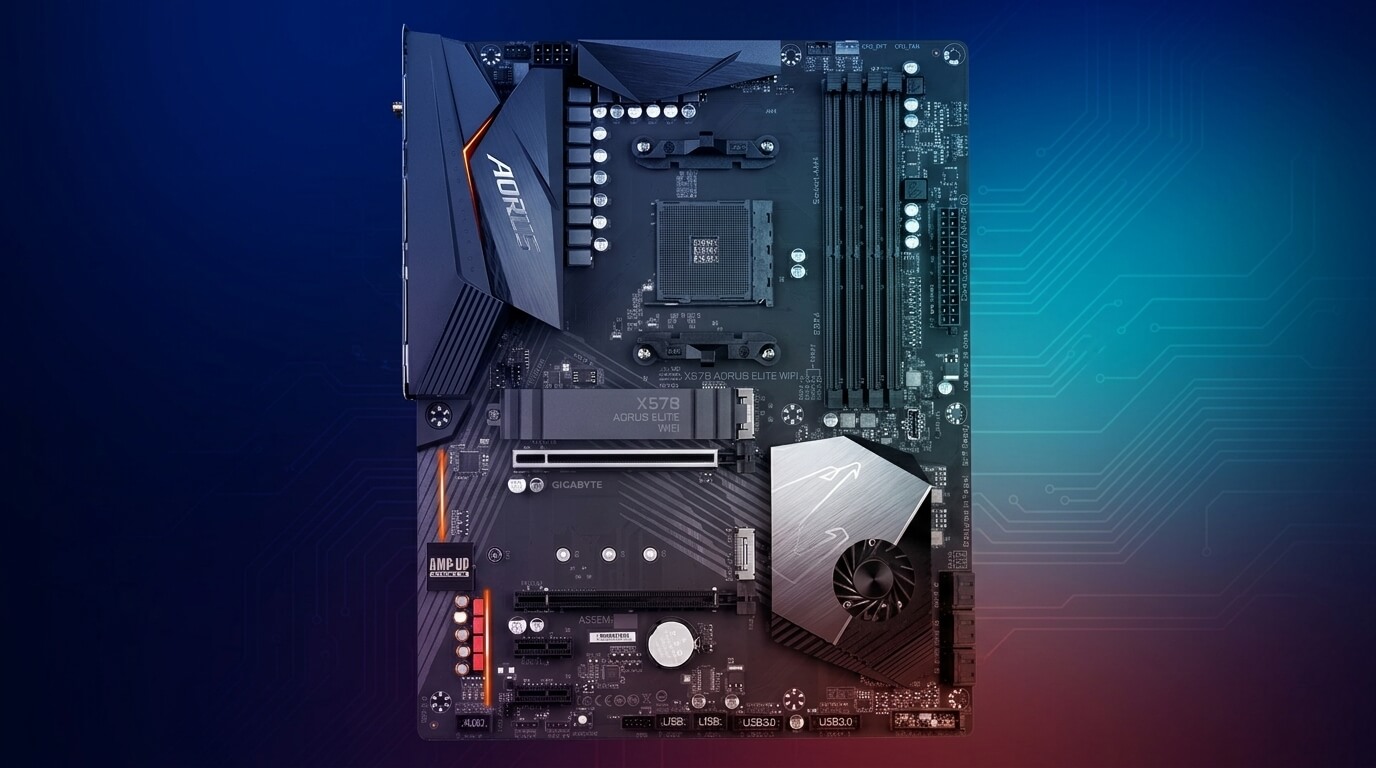
Gigabyte X570 AORUS Elite WiFi
The Gigabyte X570 AORUS Elite WiFi is an ATX motherboard with a 12+2 phase Digital VRM using DrMOS power stages, positioned by Gigabyte as a balance between the flagship AORUS Master and budget X570 boards. The VRM’s phase count and DrMOS components give it comfortable headroom for the Ryzen 5 5600X’s 65 W TDP.
Memory support covers four DDR4 DIMMs at up to 128 GB, with overclocking rated to 4733 MHz. The board includes dual PCIe 4.0 x4 M.2 slots, each with a single thermal guard heatsink, and a full-bandwidth PCIe 4.0 x16 primary graphics slot. Networking pairs Intel Wi-Fi 6 (802.11ax) with Bluetooth 4.2 and Intel Gigabit Ethernet using cFosSpeed traffic prioritization software.
The board includes a front-panel USB 3.1 Gen 2 Type-C header and HDMI 2.0 output rated for 4096×2160 at 60 Hz when paired with an APU. RGB Fusion 2.0 controls onboard and header-connected addressable lighting.
Compared with the MSI MAG X570S Tomahawk MAX WiFi, the AORUS Elite WiFi’s 12+2 phase VRM is more heavily specified on paper, though it uses Wi-Fi 6 rather than Wi-Fi 6E and Intel Gigabit LAN rather than 2.5GbE. Compared with the Asus ROG Strix X570-I Gaming, the AORUS Elite WiFi’s ATX form factor provides two additional DIMM slots and a second PCIe x16 slot.
| Specification | Gigabyte X570 AORUS Elite WiFi |
|---|---|
| Form factor | ATX |
| Chipset | AMD X570 |
| VRM | 12+2 phase Digital VRM, DrMOS |
| Memory | 4x DDR4, up to 128 GB, OC to 4733 MHz |
| PCIe slots | 1x PCIe 4.0 x16 (full x16) |
| M.2 slots | 2x PCIe 4.0 x4 with single Thermal Guard |
| Wi-Fi | Intel Wi-Fi 6 (802.11ax) + BT 4.2 |
| LAN | Intel Gigabit with cFosSpeed |
| Audio | High-quality audio capacitors, LED trace lighting |
Pros:
- 12+2 phase VRM: Comfortable current headroom above the Ryzen 5 5600X’s stock draw.
- Dual PCIe 4.0 M.2: Both storage slots reach full Gen 4 bandwidth.
- Intel networking stack: Intel Wi-Fi and Intel Gigabit LAN are generally regarded as more driver-stable than Realtek equivalents.
- Front-panel USB-C header: Supports modern case front-panel connectors.
Cons:
- Wi-Fi 6, not 6E: Slower theoretical wireless ceiling than the MSI Tomahawk MAX WiFi.
- Gigabit LAN, not 2.5GbE: Lower wired network ceiling than comparable B550/X570S boards released later.
- HDMI limited to APU use: The HDMI port only functions with Ryzen APUs, not with a discrete GPU driving the display.
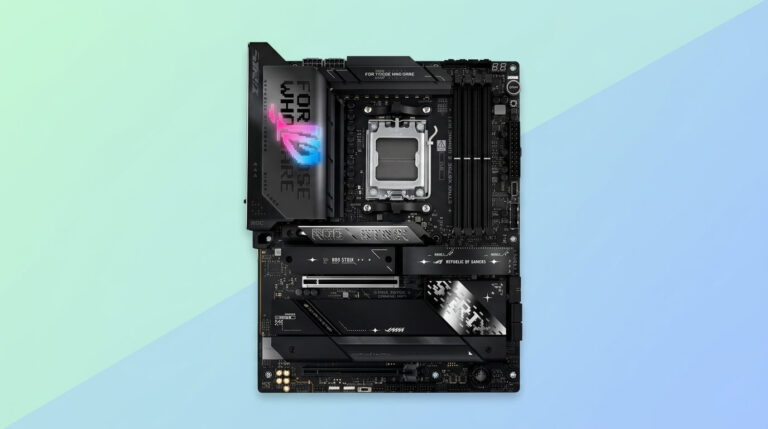
Asus ROG Strix X570-I Gaming
The Asus ROG Strix X570-I Gaming is a Mini-ITX motherboard with an 8+2 power stage VRM fed by a ProCool II power connector, designed to run high-core-count Ryzen chips in a compact chassis. For the Ryzen 5 5600X’s six cores and 65 W TDP, this VRM configuration runs with substantial margin.
Memory is limited to two DDR4 DIMMs at up to 64 GB, overclockable to 4800 MHz. The board includes one PCIe 4.0 x16 slot at full bandwidth and dual PCIe 4.0 M.2 slots supporting drives up to 22110 in length, with NVMe RAID support. Four SATA III ports round out storage connectivity.
Cooling uses an actively cooled VRM and chipset combo heatsink with miniature fans, an embedded chipset heatpipe, an M.2 heatsink, and an aluminum backplate, a more elaborate thermal solution than most ATX boards need because of the reduced surface area in a Mini-ITX layout. Networking pairs Intel Gigabit Ethernet with Wi-Fi 6 (802.11ax) and MU-MIMO support. Audio uses ROG SupremeFX with an S1220A-based codec.
Compared with the MSI MAG X570S Tomahawk MAX WiFi and Gigabyte X570 AORUS Elite WiFi, the Strix X570-I Gaming gives up two DIMM slots and one PCIe x16 slot in exchange for a Mini-ITX footprint with active VRM cooling, a feature neither ATX board includes.
| Specification | Asus ROG Strix X570-I Gaming |
|---|---|
| Form factor | Mini-ITX |
| Chipset | AMD X570 |
| VRM | 8+2 power stages, ProCool II connector |
| Memory | 2x DDR4, up to 64 GB, OC to 4800 MHz |
| PCIe slots | 1x PCIe 4.0 x16 |
| M.2 slots | 2x PCIe 4.0 x4, up to 22110, NVMe RAID |
| SATA | 4x SATA III |
| Wi-Fi | Wi-Fi 6 (802.11ax) + MU-MIMO |
| Audio | ROG SupremeFX S1220A |
Pros:
- Active VRM cooling: Miniature fans on the VRM heatsink reduce temperatures in a compact case.
- Dual PCIe 4.0 M.2 with RAID: Both slots support long 22110 drives and NVMe RAID configurations.
- Intel Gigabit LAN + Wi-Fi 6: A stable, well-supported networking combination.
- Aluminum backplate: Adds structural support and helps balance MOSFET temperatures.
Cons:
- Two DIMM slots only: Caps total memory at 64 GB.
- Four SATA ports: Fewer SATA connections than ATX boards in this tier.
- Active VRM fans add noise: The miniature fans introduce audible noise under sustained load that passively cooled ATX boards do not have.
Best B450 Motherboard for Ryzen 5 5600X
B450 predates the Ryzen 5 5600X by two generations and requires a BIOS update on most boards before the CPU will boot. Once updated, B450 runs every PCIe lane at Gen 3, including the primary GPU and M.2 slots, since the chipset does not support PCIe 4.0 switching regardless of the installed CPU.
The three B450 boards below—MSI B450 Tomahawk MAX II, Asus ROG Strix B450-F Gaming II, and Gigabyte B450 AORUS Elite V2—represent the tier’s typical ATX feature set: single PCIe 3.0 x16 primary slot, a secondary PCIe slot at reduced bandwidth, and one or two M.2 slots capped at PCIe 3.0 x4. B450 suits builders prioritizing lower upfront cost over PCIe 4.0 access.
MSI B450 Tomahawk MAX II
The MSI B450 Tomahawk MAX II is an ATX motherboard built with an extended PWM heatsink and enhanced circuit design for AM4 processors up to 3rd Gen Ryzen at launch, later extended to Ryzen 5000-series chips including the Ryzen 5 5600X through a BIOS update. Builders should update the BIOS before installing a 5600X, since boards shipped before the update were not guaranteed to boot with it.
Memory support covers four DDR4 DIMMs at up to 64 GB, with overclocking rated to 4133 MHz on Ryzen 3000-series and newer CPUs. Expansion includes one PCIe 3.0 x16 slot and one PCIe 2.0 x16 slot, both running at Gen 3 or Gen 2 bandwidth regardless of the installed Ryzen 5000-series CPU. Storage includes a single Turbo M.2 slot at PCIe 3.0 x4 and six SATA 6 Gb/s ports.
Audio uses a Realtek ALC892 7.1-channel codec, and LAN runs through a Realtek 8111H Gigabit controller. The rear I/O includes a USB 3.2 Gen 2 Type-C port and a USB 3.2 Gen 2 Type-A port, both at 10 Gbps.
Compared with the Asus ROG Strix B450-F Gaming II and Gigabyte B450 AORUS Elite V2, the Tomahawk MAX II offers only a single M.2 slot, while both competing boards provide two. All three boards share the B450 chipset’s PCIe 3.0 ceiling.
| Specification | MSI B450 Tomahawk MAX II |
|---|---|
| Form factor | ATX |
| Chipset | AMD B450 |
| Memory | 4x DDR4, up to 64 GB, OC to 4133 MHz |
| PCIe slots | 1x PCIe 3.0 x16, 1x PCIe 2.0 x16 |
| M.2 slots | 1x PCIe 3.0 x4 (Turbo M.2) |
| SATA | 6x SATA 6 Gb/s |
| LAN | Realtek 8111H Gigabit |
| Audio | Realtek ALC892 7.1-channel |
| USB | USB 3.2 Gen 2 Type-C + Type-A (10 Gbps) |
Pros:
- Extended PWM heatsink: Improves VRM heat dissipation relative to earlier B450 Tomahawk revisions.
- BIOS Flash Button: Update the BIOS from a USB drive without installing a CPU.
- Six SATA ports: Ample connectivity for multi-drive storage builds.
- 10 Gbps USB-C: Fast rear-panel connectivity for external storage.
Cons:
- Single M.2 slot: Limits NVMe storage expansion compared with competing B450 boards.
- BIOS update required for 5600X: Older stock may need a BIOS flash before the CPU will post.
- No PCIe 4.0: The chipset caps both PCIe slots at Gen 3 or lower regardless of CPU.
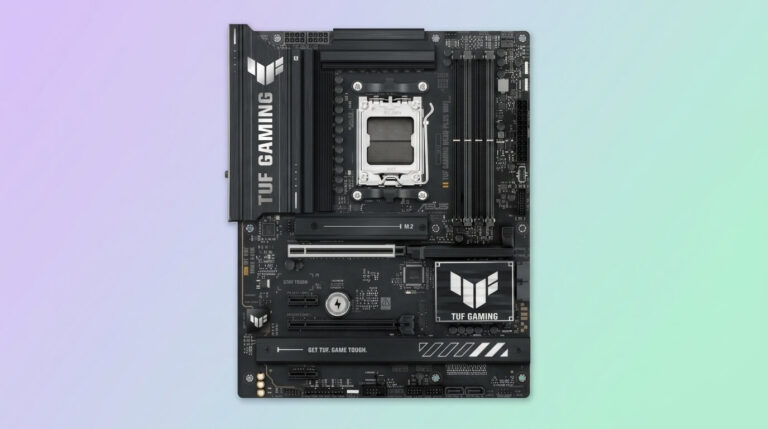
Asus ROG Strix B450-F Gaming II
The Asus ROG Strix B450-F Gaming II is an ATX motherboard with an 8+2 discrete MOS VRM design, combining high-side and low-side MOSFETs and drivers to supply current to the CPU socket. This configuration provides comfortable headroom for the Ryzen 5 5600X’s 65 W TDP.
Memory support covers four DDR4 DIMMs at up to 128 GB, the highest capacity ceiling among the B450 boards in this guide, with overclocking rated to 4400 MHz. Expansion includes a PCIe 3.0 x16 slot, a PCIe 2.0 x16 slot, and a PCIe 2.0 x1 slot, supporting AMD 3-Way CrossFireX. Storage includes dual PCIe 3.0 x4 M.2 slots with NVMe RAID support and six SATA III ports.
Cooling includes VRM and PCH heatsinks along with a rear backplate that helps balance MOSFET temperatures and adds structural reinforcement. Audio uses a SupremeFX S1220A codec with AI noise-cancelling microphone support for voice chat clarity.
Compared with the MSI B450 Tomahawk MAX II, the Strix B450-F Gaming II supports twice the maximum memory capacity and includes a second M.2 slot. Compared with the Gigabyte B450 AORUS Elite V2, both boards offer dual M.2 slots and 128 GB memory ceilings, with the Asus board differentiated by its AI noise-cancelling audio feature and backplate-reinforced VRM cooling.
| Specification | Asus ROG Strix B450-F Gaming II |
|---|---|
| Form factor | ATX |
| Chipset | AMD B450 |
| VRM | 8+2 discrete MOS |
| Memory | 4x DDR4, up to 128 GB, OC to 4400 MHz |
| PCIe slots | 1x PCIe 3.0 x16, 1x PCIe 2.0 x16, 1x PCIe 2.0 x1 |
| M.2 slots | 2x PCIe 3.0 x4, NVMe RAID support |
| SATA | 6x SATA III |
| Audio | SupremeFX S1220A with AI noise-cancelling mic |
Pros:
- 128 GB memory ceiling: Highest supported capacity among the B450 boards in this guide.
- Dual M.2 with RAID: Both slots support PCIe 3.0 x4 NVMe drives in RAID.
- VRM backplate: Helps balance MOSFET temperatures under sustained load.
- AI noise-cancelling mic support: Useful for voice chat during gaming or streaming.
Cons:
- No PCIe 4.0: Shares the B450 chipset’s Gen 3 ceiling.
- CrossFireX only: No official multi-GPU support for NVIDIA SLI configurations.
- 6+2 phase VRM in some listings: Third-party sources report a lower phase count than ASUS’s official 8+2 specification, so builders overclocking heavily should verify current documentation.
Gigabyte B450 AORUS Elite V2
The Gigabyte B450 AORUS Elite V2 is an ATX motherboard with an 8+2 phase Digital Twin Power Design using low RDS(on) MOSFETs, Gigabyte’s refreshed B450 AORUS board aimed at supporting the full Ryzen 5000 lineup, including the Ryzen 5 5600X, without requiring the BIOS update some earlier B450 boards need.
Memory support covers four DDR4 DIMMs at up to 128 GB, with listed overclocking support up to 3600 MHz. Expansion includes a PCIe 3.0 x16 slot running at full x16, a second PCIe slot running at up to x4 that shares bandwidth with one of the PCIe x1 slots, and two additional PCIe 2.0 x1 slots. Storage includes dual M.2 connectors at PCIe 3.0 x4/x2 with one thermal guard, and standard SATA connectivity.
Display outputs include HDMI and DVI-D for Ryzen APUs, and the board integrates Gigabyte’s Ultra Durable armor around the PCIe and memory slots for physical durability. RGB Fusion 2.0 controls onboard and header-connected lighting.
Compared with the original Gigabyte B450 AORUS Elite, the Elite V2 doubles maximum memory capacity from 64 GB to 128 GB and adds more powerful VRM cooling, at the cost of one fewer VRM phase (10 phases on the original Elite versus 8+2 on the V2, per third-party comparisons). Compared with the MSI B450 Tomahawk MAX II and Asus ROG Strix B450-F Gaming II, the Elite V2 matches the dual-M.2 layout of the Asus board while sharing the same PCIe 3.0 ceiling as both.
| Specification | Gigabyte B450 AORUS Elite V2 |
|---|---|
| Form factor | ATX |
| Chipset | AMD B450 |
| VRM | 8+2 phase Digital Twin Power Design |
| Memory | 4x DDR4, up to 128 GB, OC to 3600 MHz |
| PCIe slots | 1x PCIe 3.0 x16, 1x PCIe x4 (shared), 2x PCIe 2.0 x1 |
| M.2 slots | 2x PCIe 3.0 x4/x2 with one Thermal Guard |
| Display | HDMI, DVI-D |
| LAN | Gigabyte Gaming LAN with Bandwidth Management |
Pros:
- 128 GB memory capacity: Doubled from the original B450 AORUS Elite.
- Dual M.2 slots: Both support PCIe 3.0 NVMe storage.
- Ryzen 5000 support without a mandatory BIOS flash on most retail units: Ships with newer BIOS versions that already recognize the Ryzen 5 5600X.
- Ultra Durable armor: Reinforces PCIe and memory slot connectors.
Cons:
- Lower memory OC ceiling: 3600 MHz rated speed trails the 4400 MHz ceiling of the Asus ROG Strix B450-F Gaming II.
- Shared PCIe bandwidth: The secondary PCIe slot drops to x2 mode when the adjacent PCIe x1 slot is populated.
- No PCIe 4.0: Consistent with the B450 chipset limitation shared across this tier.
Best A520 Motherboard for Ryzen 5 5600X
A520 is AMD’s entry-level AM4 chipset. It supports the Ryzen 5 5600X but removes CPU overclocking support, caps every PCIe lane at Gen 3, and typically ships with a lighter VRM than B450 or B550 boards. A520 suits budget builds where the Ryzen 5 5600X runs at stock clocks without CPU-side tuning.
The three A520 boards below—Gigabyte A520M DS3H AC, Asus Prime A520M-A II, and MSI A520M-A Pro—are all micro-ATX. Each pairs adequately with the Ryzen 5 5600X’s 65 W TDP at stock settings, though VRM headroom varies enough between them to affect sustained all-core boost behavior.
Gigabyte A520M DS3H AC
The Gigabyte A520M DS3H AC is a micro-ATX motherboard with a 5+3 phase Pure Digital VRM using low RDS(on) MOSFETs. This phase count is adequate for the Ryzen 5 5600X’s 65 W TDP at stock settings, though A520 does not support CPU overclocking on any board, so the VRM only needs to sustain stock boost behavior rather than a manual overclock.
Memory support covers four DDR4 DIMMs, with speeds up to 4400 MHz on Ryzen 5000-series and 5000G-series processors when using XMP-rated memory. Expansion is limited to a single PCIe 3.0 x16 slot, and storage includes one M.2 connector at PCIe 3.0 x4, both capped by the A520 chipset’s Gen 3 ceiling. The “AC” designation indicates onboard Intel Dual Band 802.11ac Wi-Fi with Bluetooth 4.2, distinguishing it from the wired-only A520M DS3H.
Display outputs include HDMI, DVI-D, and DisplayPort for use with Ryzen APUs. Networking pairs the onboard Wi-Fi with Gigabyte’s Gaming LAN featuring bandwidth management. The board supports Q-Flash Plus for BIOS updates without an installed CPU.
Compared with the Asus Prime A520M-A II and MSI A520M-A Pro, the DS3H AC is the only board in this A520 tier with built-in Wi-Fi, giving it a networking advantage that offsets its otherwise comparable feature set.
| Specification | Gigabyte A520M DS3H AC |
|---|---|
| Form factor | Micro-ATX |
| Chipset | AMD A520 |
| VRM | 5+3 phase Pure Digital, Low RDS(on) MOSFETs |
| Memory | 4x DDR4, OC to 4400 MHz (Ryzen 5000-series) |
| PCIe slots | 1x PCIe 3.0 x16 |
| M.2 slots | 1x PCIe 3.0 x4 |
| Wi-Fi | Intel Dual Band 802.11ac + BT 4.2 |
| Display | HDMI, DVI-D, DisplayPort |
Pros:
- Onboard Wi-Fi: The only A520 board in this guide with built-in wireless networking.
- Four DIMM slots: More memory expansion room than most A520M boards, which often ship with two slots.
- Q-Flash Plus: BIOS updates without needing an installed CPU.
- Multi-display support: HDMI, DVI-D, and DisplayPort cover most APU display setups.
Cons:
- PCIe 3.0 only: The A520 chipset caps both the GPU slot and M.2 slot at Gen 3, unlike the Ryzen 5 5600X’s Gen 4-capable PCIe controller.
- Single M.2 slot: No room for a second NVMe drive without adding a PCIe adapter card.
- No CPU overclocking: A520 chipset restriction applies across every board in this tier.
Asus Prime A520M-A II
The Asus Prime A520M-A II is a micro-ATX motherboard with dual VRM heatsinks and underlying thermal pads that improve MOSFET heat transfer. Combined with 2oz copper PCB layers rated to reduce operating temperature by up to 20°C relative to standard copper thickness, the board targets stable operation for the Ryzen 5 5600X’s stock power draw.
Memory support covers four DDR4 DIMMs at up to 128 GB, the highest capacity ceiling among the A520 boards in this guide, with listed memory frequency support reaching high OC speeds depending on the installed CPU. Expansion is limited to a single PCIe 3.0 x16 slot and two PCIe 3.0 x1 slots. Storage includes one M.2 slot at PCIe 3.0 x4 or SATA mode, supporting drives up to 2280 in length.
Display outputs on the CSM variant include D-Sub and DisplayPort 1.2, with an HDMI-equipped variant also available depending on region. Networking uses a Realtek 1 Gb Ethernet controller, with no onboard Wi-Fi. Audio runs through an ALC887/897 codec.
Compared with the Gigabyte A520M DS3H AC, the Prime A520M-A II supports double the maximum memory capacity (128 GB versus effectively lower practical capacity on many A520M boards) but drops onboard Wi-Fi. Compared with the MSI A520M-A Pro, both boards use four SATA-class connectivity, though the Prime A520M-A II’s VRM heatsink design is more elaborate.
| Specification | Asus Prime A520M-A II |
|---|---|
| Form factor | Micro-ATX |
| Chipset | AMD A520 |
| VRM | Dual heatsinks with thermal pads, 2oz copper PCB |
| Memory | 4x DDR4, up to 128 GB |
| PCIe slots | 1x PCIe 3.0 x16, 2x PCIe 3.0 x1 |
| M.2 slots | 1x PCIe 3.0 x4 or SATA, up to 2280 |
| LAN | Realtek 1 Gb Ethernet |
| Audio | ALC887/897 |
Pros:
- 128 GB memory ceiling: Highest supported capacity among the three A520 boards in this guide.
- 2oz copper PCB: Improves heat dissipation from VRM and chokes.
- Dual VRM heatsinks: Both include thermal pads for improved MOSFET cooling.
- ASUS OptiMem II routing: Reduces memory trace crosstalk for more stable operation at higher frequencies.
Cons:
- No onboard Wi-Fi: Wired networking only.
- Single PCIe 3.0 x16 slot: No secondary full-length expansion slot.
- ALC887/897 audio: A lower-tier codec than the ALC1220-class chips used on higher chipset tiers.
MSI A520M-A Pro
The MSI A520M-A Pro is a micro-ATX motherboard with a 5-phase VRM rated for roughly 50 A, MSI’s most basic AM4 power design in this guide. Independent testing with a Ryzen 5 5600 (a close relative of the Ryzen 5 5600X in TDP class) over a month of use reported no instability or thermal issues, indicating the VRM handles the 5600X’s 65 W TDP at stock settings.
Memory support covers only two DDR4 DIMMs, with a maximum capacity of 64 GB and overclocking rated to 4600 MHz. This is the lowest DIMM count of any board in this guide. Expansion includes one PCIe 3.0 x16 slot and one PCIe 3.0 x1 slot. Storage includes a single M.2 slot at PCIe 3.0 x4 or SATA mode and four SATA III ports.
Networking uses a Realtek RTL8111H Gigabit LAN controller, with no onboard Wi-Fi and no USB Type-C port on the rear panel. Audio runs through a 7.1-channel HD codec. The board includes an integrated I/O shield, a build-quality feature not always present at this price tier.
Compared with the Gigabyte A520M DS3H AC and Asus Prime A520M-A II, the A520M-A Pro has the fewest DIMM slots and the lightest VRM in this A520 tier, making it best suited to a Ryzen 5 5600X running at stock settings without memory overclocking beyond two-DIMM capacity.
| Specification | MSI A520M-A Pro |
|---|---|
| Form factor | Micro-ATX |
| Chipset | AMD A520 |
| VRM | 5 phase, ~50 A |
| Memory | 2x DDR4, up to 64 GB, OC to 4600 MHz |
| PCIe slots | 1x PCIe 3.0 x16, 1x PCIe 3.0 x1 |
| M.2 slots | 1x PCIe 3.0 x4 or SATA |
| SATA | 4x SATA III |
| LAN | Realtek RTL8111H Gigabit |
Pros:
- Integrated I/O shield: A quality-of-life feature not guaranteed at this price point.
- Reliable at stock settings: Extended testing with a similar-TDP Ryzen 5 CPU reported no instability.
- Lower cost: Typically the most affordable board among the A520 options in this guide.
- Click BIOS 5 interface: Rated as one of the more usable budget BIOS implementations.
Cons:
- Two DIMM slots only: The lowest memory expansion room of any board in this guide.
- Lightest VRM in this guide: Not recommended for higher-TDP Ryzen chips or sustained overclocking.
- No Wi-Fi or USB Type-C: Requires external adapters for wireless networking or Type-C connectivity.
How to Choose the Right Motherboard for Ryzen 5 5600X
Choosing the right motherboard for the Ryzen 5 5600X depends on which chipset lanes the build actually needs, how much the VRM must sustain, and how many DIMM and M.2 slots the target case and workload require.
B550 is the balanced choice for most builds. It exposes PCIe 4.0 on the primary GPU and M.2 slots, supports memory overclocking, and costs less than X570 while covering the Ryzen 5 5600X’s full feature set. X570 adds value mainly through additional chipset-level PCIe 4.0 lanes, which benefits builds with two or more PCIe 4.0 NVMe drives or multiple PCIe 4.0 expansion cards; single-GPU, single-SSD builds see little practical difference between B550 and X570 with this CPU.
B450 and A520 both cap every PCIe lane at Gen 3, so neither chipset lets the Ryzen 5 5600X’s Gen 4-capable PCIe controller reach a PCIe 4.0 GPU or SSD at full bandwidth. B450 remains a reasonable choice for builders who already own a B450 board and only need a BIOS update, since most B450 boards match or exceed A520 VRM quality. A520 fits new budget builds that will not overclock memory heavily and do not need a second M.2 slot, since A520 also removes CPU overclocking support entirely.
VRM headroom matters even without CPU overclocking, because the Ryzen 5 5600X still draws its full 65 W under sustained all-core boost. Boards with 8 or more VRM phases rated at 50 A or higher, such as the Gigabyte B550I AORUS Pro AX or ASRock B550 Steel Legend, sustain that load with thermal margin. Boards with 5-phase, 50 A-class VRMs, such as the MSI A520M-A Pro, still support the 5600X reliably at stock settings but leave less margin for extended high-ambient-temperature operation.
Form factor and DIMM count should match the target case and memory plan. Mini-ITX boards in this guide cap memory at two DIMMs and 64 GB, while ATX boards typically support four DIMMs and up to 128 GB. Builders planning 32 GB or more of RAM, or a future memory upgrade, benefit from a four-DIMM ATX board regardless of chipset tier.