The AMD Ryzen 5 3600 is a six-core, twelve-thread desktop processor built on the Zen 2 architecture. It runs on the AM4 socket and operates at a 3.6 GHz base clock with a 4.2 GHz boost clock, inside a 65W TDP envelope. Four AM4 chipsets support the Ryzen 5 3600: B550, B450, X570, and A520. Each chipset changes the processor’s available PCIe bandwidth, VRM headroom, storage options, and connectivity.
B550 and X570 expose PCIe 4.0 lanes from the CPU to the primary graphics slot and at least one M.2 slot, which benefits users pairing the Ryzen 5 3600 with a PCIe 4.0 SSD or a newer graphics card. B450 and A520 restrict the board to PCIe 3.0 regardless of the CPU’s PCIe 4.0 capability, since the chipset itself does not negotiate PCIe 4.0 signaling. This distinction affects storage speed and future GPU upgrades rather than the Ryzen 5 3600’s own gaming or productivity performance, which stays consistent across all four chipsets.
VRM (voltage regulator module) quality varies more between individual motherboards than between chipset tiers. A 65W processor like the Ryzen 5 3600 places modest demand on VRM components, so even budget A520 and B450 boards with 4- to 6-phase power delivery handle it without thermal throttling under normal use. Higher-phase VRM designs on B550, X570, and premium B450 boards add headroom for sustained multi-core workloads and provide a buffer if the same board is later paired with a higher-TDP Ryzen processor.
This guide evaluates three motherboards in each chipset tier for the Ryzen 5 3600: B550, B450, X570, and A520. Each section names the recommended boards for that chipset, followed by individual reviews covering specifications, compatibility with the Ryzen 5 3600, and a comparison against the other boards in the same tier.
Best B550 Motherboard for Ryzen 5 3600
The best B550 motherboards for the Ryzen 5 3600 are the Asus TUF Gaming B550-Plus WiFi II, the MSI MAG B550 Tomahawk, and the Gigabyte B550 AORUS Elite AX V2. All three expose PCIe 4.0 from the CPU to the primary graphics slot and at least one M.2 slot, and each uses a VRM with substantially more phases than the Ryzen 5 3600 requires. The Asus board adds integrated Wi-Fi 6 and Thunderbolt 3 header support, the MSI board prioritizes VRM current capacity and dual Ethernet over wireless connectivity, and the Gigabyte board balances a 12+2-phase VRM with Wi-Fi 6 in a similarly priced package. B550 suits builders who want PCIe 4.0 storage or a clear upgrade path to later Ryzen processors without paying the premium that X570 commands.
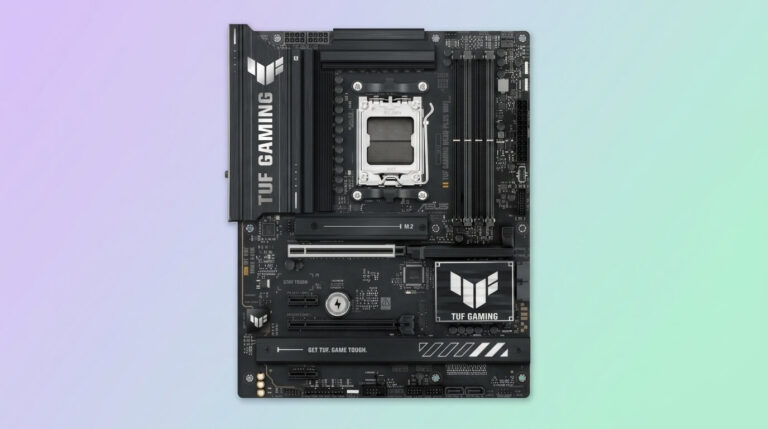
Asus TUF Gaming B550-Plus WiFi II
The Asus TUF Gaming B550-Plus WiFi II is an ATX motherboard built around the AMD B550 chipset with a 10-stage DrMOS VRM configuration, marketed by Asus as an 8+2 power-stage design. The onboard VRM utilizes 8+2 DrMOS power stages that combine high- and low-side MOSFETs and the driver into a single package. The board supports four DDR4 DIMMs at up to 128GB total capacity, with memory speeds reaching up to 4866 MHz (OC). Storage includes two M.2 slots and six SATA 6Gb/s ports, with the primary M.2 slot running at PCIe 4.0 speeds through the CPU. Networking covers 2×2 Wi-Fi 6 and 2.5 Gb LAN, and the rear panel includes USB 3.2 Gen 2 Type-A and Type-C ports alongside a Thunderbolt 3 header.
Paired with the Ryzen 5 3600, the TUF Gaming B550-Plus WiFi II delivers far more VRM current than the processor’s 65W TDP demands, which keeps VRM temperatures low even under sustained all-core loads. The board’s PCIe 4.0 M.2 slot lets the 3600 pair with a fast NVMe SSD, though the CPU itself does not bottleneck a PCIe 3.0 drive either. Built-in Wi-Fi 6 removes the need for a separate wireless card, a feature the MSI MAG B550 Tomahawk omits and the Gigabyte B550 AORUS Elite AX V2 matches.
Compared with the MSI MAG B550 Tomahawk, the Asus board trades some raw VRM phase count for integrated wireless networking and a Thunderbolt 3 header. Compared with the Gigabyte B550 AORUS Elite AX V2, the two boards offer similar Wi-Fi 6 connectivity, but the Gigabyte board runs a higher-rated 12+2-phase VRM against the Asus board’s 10-stage design.
| Specification | Detail |
|---|---|
| Chipset | AMD B550 |
| Form Factor | ATX |
| VRM | 8+2 DrMOS power stages (10 total) |
| Memory | 4x DDR4 DIMM, up to 128GB, up to 4866 MHz (OC) |
| PCIe Slots | PCIe 4.0 x16 (CPU) |
| Storage | 2x M.2 (PCIe 4.0), 6x SATA 6Gb/s |
| Networking | Wi-Fi 6, 2.5 Gb LAN |
| Rear USB | USB 3.2 Gen 2 Type-A and Type-C, Thunderbolt 3 header |
Pros
- Integrated Wi-Fi 6 removes the need for a separate wireless adapter.
- Dual PCIe 4.0 M.2 slots support fast NVMe storage.
- Thunderbolt 3 header adds an upgrade path for external Thunderbolt devices.
- Six SATA ports accommodate multiple hard drives or SATA SSDs.
Cons
- VRM phase count is lower than the MSI and Gigabyte alternatives in this tier.
- Rear I/O does not include USB4 or a dedicated USB 3.2 Gen 2×2 20 Gbps port.
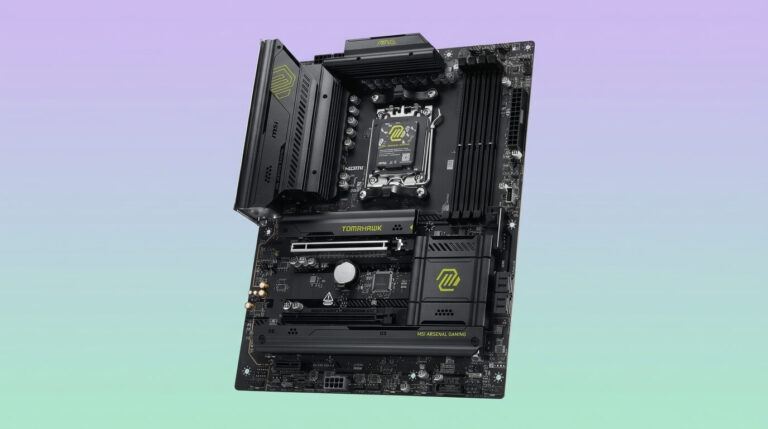
MSI MAG B550 Tomahawk
The MSI MAG B550 Tomahawk is an ATX motherboard built on the AMD B550 chipset, positioned around a 13-phase power design rather than integrated wireless features. The MAG B550 Tomahawk’s highlights include 13-Phase (10+2+1) power delivery, two Ethernet ports (1 GbE and 2.5 GbE), and two M.2 slots each with their own heatsink. Independent testing recorded 10-phase, 60A power bits for the CPU that handled testing without issue, with the hottest VRM point reaching 46 degrees Celsius at stock and 48 degrees Celsius when overclocked to 4.3 GHz. The board supports four DDR4 DIMMs at up to 128GB and includes dual PCIe 4.0 M.2 slots plus six SATA3 ports.
For the Ryzen 5 3600’s 65W TDP, the Tomahawk’s 60A power stages run well below their rated capacity, which keeps VRM temperatures low without active cooling assistance beyond the board’s heatsinks. Assuming the lack of Wi-Fi and a six-port rear USB count are not deal breakers, the MSI B550 MAG Tomahawk deserves consideration if the budget is around the $180 mark. The dual Ethernet ports (1 GbE and 2.5 GbE) give the board an advantage for users who need simultaneous wired connections, a feature neither the Asus nor Gigabyte B550 board in this tier offers.
Compared with the Asus TUF Gaming B550-Plus WiFi II, the Tomahawk drops Wi-Fi and Thunderbolt 3 in favor of dual Ethernet and a higher-rated VRM. Compared with the Gigabyte B550 AORUS Elite AX V2, the Tomahawk again omits wireless networking, but matches it on PCIe 4.0 M.2 storage and DDR4 memory support.
| Specification | Detail |
|---|---|
| Chipset | AMD B550 |
| Form Factor | ATX |
| VRM | 13-phase (10+2+1), 60A power stages |
| Memory | 4x DDR4 DIMM, up to 128GB |
| PCIe Slots | PCIe 4.0 x16 (CPU) |
| Storage | 2x M.2 (PCIe 4.0), 6x SATA3 |
| Networking | 1 GbE + 2.5 GbE (no Wi-Fi) |
| Rear USB | 6x USB ports, USB 3.2 Gen 2 |
Pros
- Strong 60A VRM stages provide ample headroom above the Ryzen 5 3600’s power draw.
- Dual Ethernet ports (1 GbE and 2.5 GbE) support simultaneous wired connections.
- Both M.2 slots include dedicated heatsinks.
Cons
- No integrated Wi-Fi; a separate adapter is required for wireless networking.
- Rear I/O is limited to six total USB ports.
- Uses a Realtek audio codec rated below some competing boards’ premium codecs.
Gigabyte B550 AORUS Elite AX V2
The Gigabyte B550 AORUS Elite AX V2 is an ATX motherboard on the AMD B550 chipset, built around a 12+2 Phases Digital Twin Power Design with 50A DrMOS. Key specifications include an AM4 socket, ATX form factor, 4x DDR4 DIMM slots supporting up to 4733MHz, a 12+2-phase VRM with 50A DrMOS, a PCIe 4.0 x16 primary GPU slot, dual NVMe M.2 storage split between PCIe 4.0 and PCIe 3.0, Wi-Fi 6E, and 2.5GbE networking. The board carries four DDR4 DIMMs supporting up to 128GB and includes 1 PCIe 4.0 x16 slot with reinforced PCIe UD Armor, 1 PCIe 4.0 M.2 slot, 1 PCIe 3.0 M.2 slot, and a mix of USB 3.2 Gen 2 and Gen 1 ports including a front USB-C header.
Against the Ryzen 5 3600, the AORUS Elite AX V2’s 12+2-phase, 50A VRM provides more phases than the Asus and MSI boards in this tier, though at a slightly lower per-phase current rating than the MSI Tomahawk’s 60A stages. Independent testing that paired the board with Ryzen 5000-series CPUs found the VRM quality, networking features, and overall build quality drew consistent praise, with Wi-Fi 6E frequently cited as a deciding factor for buyers who wanted wireless without a separate card. The same testing noted the BIOS is functional but less intuitive than Asus or some MSI implementations.
Compared with the Asus TUF Gaming B550-Plus WiFi II, the Gigabyte board offers a higher-phase VRM and matches the wireless feature set. Compared with the MSI MAG B550 Tomahawk, the Gigabyte board adds Wi-Fi 6E at the cost of a lower per-phase current rating and the loss of dual Ethernet.
| Specification | Detail |
|---|---|
| Chipset | AMD B550 |
| Form Factor | ATX |
| VRM | 12+2 phases, 50A DrMOS |
| Memory | 4x DDR4 DIMM, up to 128GB, up to 4733 MHz (OC) |
| PCIe Slots | PCIe 4.0 x16 (CPU) |
| Storage | 2x M.2 (1x PCIe 4.0, 1x PCIe 3.0), SATA 6Gb/s |
| Networking | Wi-Fi 6E, 2.5 Gb LAN |
| Rear USB | USB 3.2 Gen 2 Type-A, front USB-C header |
Pros
- 12+2-phase VRM provides more phases than either competing B550 board in this tier.
- Wi-Fi 6E offers faster wireless throughput than the Wi-Fi 6 found on the Asus board.
- Reinforced PCIe slot and dual M.2 thermal guards improve physical durability.
Cons
- BIOS navigation is reported as less intuitive than Asus or MSI alternatives.
- Second M.2 slot runs at PCIe 3.0 rather than PCIe 4.0.
- RGB software is described as occasionally inconsistent.
Best B450 Motherboard for Ryzen 5 3600
The best B450 motherboards for the Ryzen 5 3600 are the Asus ROG Strix B450-F Gaming II, the MSI B450 Tomahawk MAX II, and the ASRock B450M Steel Legend. B450 predates PCIe 4.0 support entirely, so all three boards run every slot and M.2 connector at PCIe 3.0 regardless of the Ryzen 5 3600’s own PCIe 4.0 capability. Each board ships with a BIOS already updated for Ryzen 3000-series compatibility, removing the flash-back step some earlier B450 boards required. The Asus and MSI boards use full ATX form factors with six-phase VRM designs, while the ASRock board is a micro-ATX option aimed at compact builds. B450 suits builders who do not need PCIe 4.0 storage and want to spend less than B550 or X570 requires.
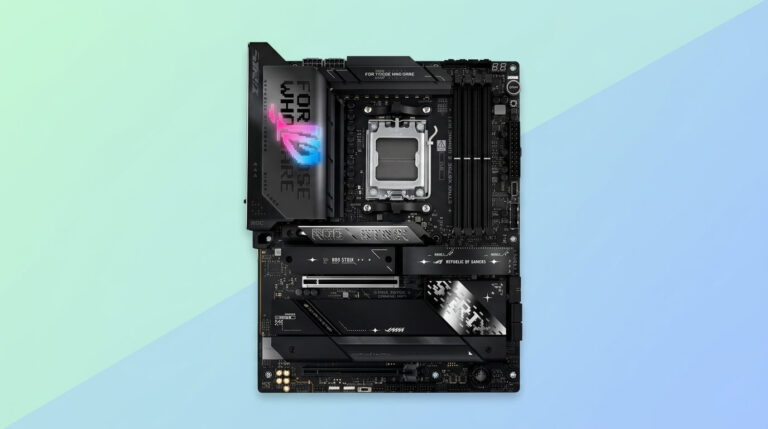
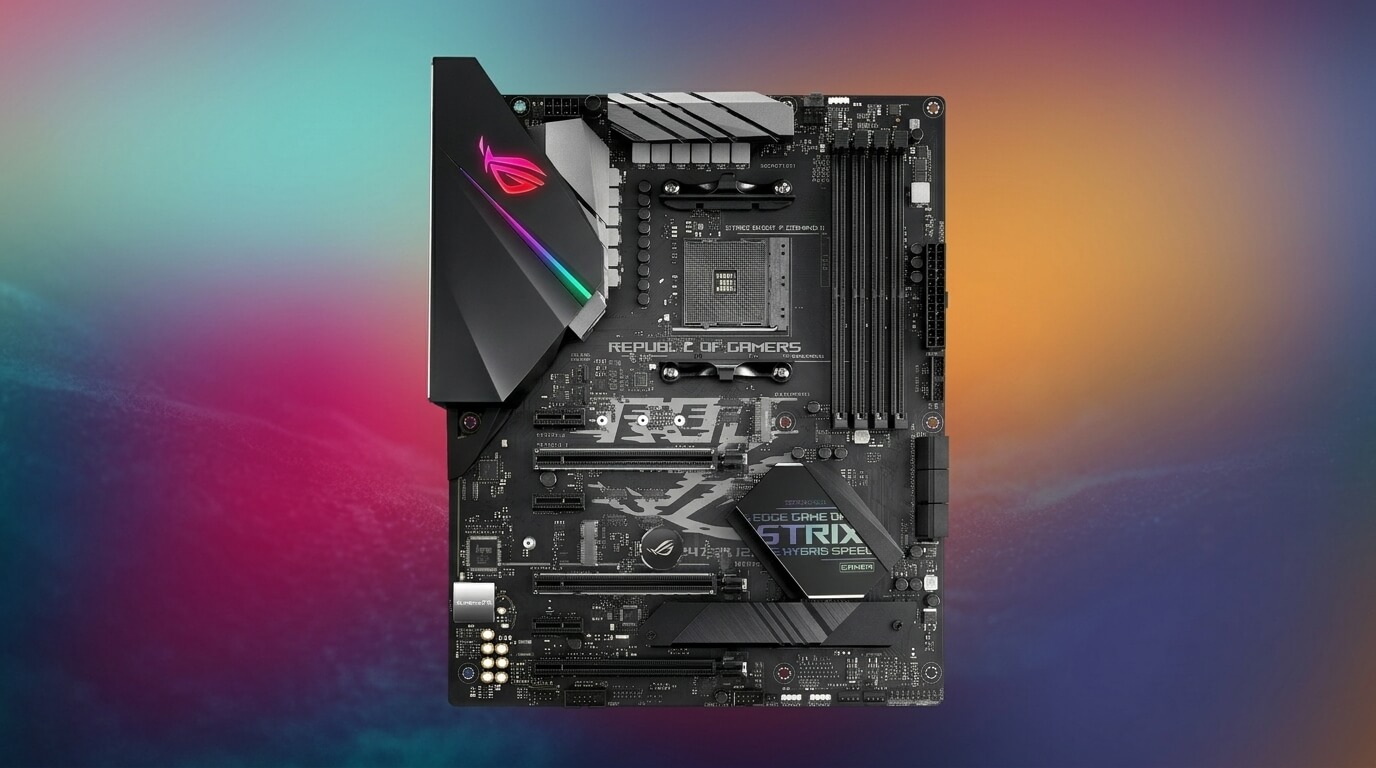
Asus ROG Strix B450-F Gaming II
The Asus ROG Strix B450-F Gaming II is an ATX motherboard on the AMD B450 chipset with a 6-phase VRM configuration using a parallel, or “teamed,” power-stage design, driven by an MPI uP9505 controller, with discrete MOSFETs on all six phases. Asus markets the same VRM as 8+4 discrete MOS combining high-side and low-side MOSFETs for power and efficiency. The board supports 4x DDR4 DIMMs at up to 128GB, with speeds up to 4400 MHz (OC), across 3rd/2nd/1st Gen AMD Ryzen and Ryzen with Radeon Vega Graphics processors. Storage and connectivity include dual M.2 slots for NVMe SSDs, two PCIe 3.0 x16 slots, a USB 3.2 Gen 2 Type-A port, and USB 3.1 Gen 2 Type-A and Type-C ports, with HDMI 2.0b and DisplayPort 1.2 outputs.
With the Ryzen 5 3600 installed, the Strix B450-F Gaming II’s six-phase teamed VRM covers the processor’s 65W TDP with room to spare, since the design was originally validated for Ryzen processors up to the 105W-TDP Ryzen 7 2700X. The board’s dual M.2 slots and SupremeFX audio codec place it above entry-level B450 boards, though its PCIe lanes remain limited to PCIe 3.0 across the board.
Compared with the MSI B450 Tomahawk MAX II, the Strix B450-F Gaming II offers a Type-C rear port and DisplayPort output that the MSI board lacks. Compared with the ASRock B450M Steel Legend, the Asus board uses a full ATX form factor with more expansion slots, at a correspondingly higher price.
| Specification | Detail |
|---|---|
| Chipset | AMD B450 |
| Form Factor | ATX |
| VRM | 6-phase teamed design (marketed as 8+4) |
| Memory | 4x DDR4 DIMM, up to 128GB, up to 4400 MHz (OC) |
| PCIe Slots | 2x PCIe 3.0 x16 |
| Storage | 2x M.2 (PCIe 3.0), SATA 6Gb/s |
| Networking | Gigabit Ethernet (no Wi-Fi) |
| Rear USB | USB 3.2 Gen 2 Type-A, USB 3.1 Gen 2 Type-A and Type-C |
Pros
- Dual M.2 slots support two NVMe SSDs simultaneously.
- SupremeFX S1220A audio codec with 7.1 surround sound support.
- DisplayPort and HDMI 2.0b outputs cover most integrated-graphics display needs.
Cons
- No integrated Wi-Fi.
- Both PCIe x16 slots are limited to PCIe 3.0.
- Six-phase VRM trails the MSI B450 Tomahawk MAX II’s more robust power design.
MSI B450 Tomahawk MAX II
The MSI B450 Tomahawk MAX II is an ATX motherboard on the AMD B450 chipset, built with larger extended heatsinks over the VRM for additional cooling and a Core Boost power delivery design using a reserved zone of premium components on an optimized circuit for precise current output to the CPU. The board supports four DDR4 DIMM sockets for up to 128GB of RAM at speeds up to 4133 MHz, one NVMe SSD, and four SATA3 drives. Storage runs through a Turbo M.2 slot delivering up to 32Gb/s using PCIe Gen3 x4. The “MAX” revision has been upgraded to support multiple Ryzen processor generations including Ryzen 3000-series processors out of the box.
Paired with the Ryzen 5 3600, the Tomahawk MAX II ships with native BIOS support for the 3000-series lineup, so no BIOS flashback step is needed before first boot. The board uses a 6-layer PCB, a sign of build quality above the cheapest B450 boards, with a subtle RGB glow beneath the chipset heatsink. Its single M.2 slot is a limitation compared with the dual-M.2 layouts on the Asus and ASRock boards in this tier.
Compared with the Asus ROG Strix B450-F Gaming II, the Tomahawk MAX II trades a second M.2 slot and USB Type-C port for extended VRM heatsinks and a lower typical price. Compared with the ASRock B450M Steel Legend, the MSI board offers a full ATX layout with more PCIe slots, though the Steel Legend includes a second M.2 connector.
| Specification | Detail |
|---|---|
| Chipset | AMD B450 |
| Form Factor | ATX |
| VRM | Extended-heatsink digital power design |
| Memory | 4x DDR4 DIMM, up to 128GB, up to 4133 MHz (OC) |
| PCIe Slots | PCIe 3.0 x16 |
| Storage | 1x M.2 (PCIe 3.0 x4, 32 Gb/s), 4x SATA3 |
| Networking | Gigabit Ethernet (no Wi-Fi) |
| Rear USB | AMD Turbo USB 3.2 Gen 2 |
Pros
- Native Ryzen 3000-series BIOS support removes the need for a flashback update.
- Extended VRM heatsinks improve sustained thermal performance.
- Six-layer PCB construction exceeds many budget B450 boards.
Cons
- Only one M.2 slot, versus two on the Asus and ASRock alternatives.
- Maximum supported memory speed is lower than the other two B450 boards reviewed here.
- No integrated Wi-Fi or USB Type-C rear port.
ASRock B450M Steel Legend
The ASRock B450M Steel Legend is a micro-ATX motherboard on the AMD B450 chipset with a Digi Power design using a 6-phase configuration, supporting 105W water cooling for Pinnacle Ridge CPUs, 95W for Summit Ridge CPUs, and 65W for Raven Ridge APUs. The board carries two M.2 slots, with the top slot supporting PCIe Gen3 x4 NVMe speeds up to 32 Gbps and the lower slot limited to SATA-mode M.2 drives that share bandwidth with the third SATA port, plus four SATA3 ports total. The board supports four DDR4 slots with high-speed memory at up to 3533 MHz when paired with Pinnacle Ridge processors, along with a USB Type-C port and a high-quality audio codec.
With the Ryzen 5 3600 installed, the Steel Legend’s six-phase VRM comfortably covers the processor’s power draw, and the board’s compact micro-ATX footprint suits smaller cases without giving up dual M.2 storage. The board offered a taste of every feature expected from premium boards despite not having the beefiest VRM available, making up for it with an ARGB header, dual M.2 ports, and an abundance of fan headers.
Compared with the Asus ROG Strix B450-F Gaming II, the Steel Legend gives up a full-ATX layout and DisplayPort output in exchange for a smaller form factor and lower price. Compared with the MSI B450 Tomahawk MAX II, the Steel Legend adds a second M.2 slot and a USB Type-C port, though its second M.2 slot is limited to SATA-mode drives.
| Specification | Detail |
|---|---|
| Chipset | AMD B450 |
| Form Factor | Micro-ATX |
| VRM | 6-phase Digi Power design, 60A chokes |
| Memory | 4x DDR4 DIMM, up to 3533 MHz (OC, Pinnacle Ridge) |
| PCIe Slots | PCIe 3.0 x16, PCIe 2.0 x16, PCIe 2.0 x1 |
| Storage | 2x M.2 (1x PCIe 3.0 NVMe, 1x SATA-mode), 4x SATA3 |
| Networking | Gigabit Ethernet (no Wi-Fi) |
| Rear USB | USB 3.1 Gen 2 Type-A and Type-C |
Pros
- Dual M.2 slots in a compact micro-ATX footprint.
- USB Type-C rear port, uncommon at this price point.
- Angled SATA ports simplify cable routing in smaller cases.
Cons
- Second M.2 slot supports SATA-mode drives only and shares bandwidth with a SATA port.
- Lower rated memory overclock ceiling than the Asus and MSI B450 boards reviewed here.
- Micro-ATX layout offers fewer expansion slots than full-ATX alternatives.
Best X570 Motherboard for Ryzen 5 3600
The best X570 motherboards for the Ryzen 5 3600 are the MSI MAG X570S Tomahawk MAX WiFi, the Gigabyte X570 AORUS Elite WiFi, and the ASRock X570 Steel Legend WiFi AX. X570 is the only AM4 chipset with native, chipset-level PCIe 4.0 support across every lane, which benefits builders running multiple PCIe 4.0 M.2 SSDs or planning a future GPU upgrade. All three boards use double-digit VRM phase counts that exceed what the Ryzen 5 3600 requires, since X570 boards are commonly built to also support higher-TDP Ryzen 9 processors. X570 costs more than B550 for the Ryzen 5 3600 specifically, since the processor cannot use the chipset’s full PCIe 4.0 bandwidth advantage over B550 on its own.
MSI MAG X570S Tomahawk MAX WiFi
The MSI MAG X570S Tomahawk MAX WiFi is an ATX motherboard on the AMD X570 chipset, delivering a 14-phase VRM with 60A MOSFETs capable of driving a flagship Ryzen 9 5950X to its ambient-cooled limits, alongside a premium Realtek 4000-series audio codec. Further testing found 14 total 60A power stages, 12 of which are CPU-centric across 12 direct phases, delivering roughly 720A to the CPU. The board supports up to 128GB of DDR4 RAM in dual-channel configuration and up to two M.2 SSDs. Networking includes 2.5G LAN and an Intel Wi-Fi 6E wireless solution. The “S” revision drops the chipset fan found on the original X570 Tomahawk WiFi while retaining capable power delivery.
Against the Ryzen 5 3600’s 65W TDP, the X570S Tomahawk MAX WiFi’s 14-phase, 60A VRM runs at a fraction of its rated capacity, which keeps VRM temperatures low and leaves substantial headroom for a future CPU upgrade. Overclocking a 5950X to 4.4 GHz at around 1.25V showed the VRMs handled the load without major complaints, even though they are not the most robust seen in that class. The fanless chipset design removes a potential noise and reliability point compared with earlier X570 boards.
Compared with the Gigabyte X570 AORUS Elite WiFi, the MSI board runs a higher-phase, higher-current VRM and adds Wi-Fi 6E over the Gigabyte board’s older 802.11ac standard. Compared with the ASRock X570 Steel Legend WiFi AX, the MSI board again leads on VRM phase count, while the ASRock board counters with a third M.2 slot.
| Specification | Detail |
|---|---|
| Chipset | AMD X570 (fanless “S” revision) |
| Form Factor | ATX |
| VRM | 14-phase (12+2), 60A MOSFETs |
| Memory | 4x DDR4 DIMM, up to 128GB, up to 5100 MHz (OC) |
| PCIe Slots | PCIe 4.0 x16 (chipset-level) |
| Storage | 2x M.2 (PCIe 4.0), SATA 6Gb/s |
| Networking | Wi-Fi 6E, 2.5 Gb LAN |
| Audio | Realtek 4000-series codec |
Pros
- 14-phase, 60A VRM provides substantial headroom above the Ryzen 5 3600’s requirements.
- Fanless chipset cooling removes a moving part and a noise source.
- Wi-Fi 6E outperforms the 802.11ac standard used on the Gigabyte X570 AORUS Elite WiFi.
Cons
- Lacks a USB 3.2 Gen 2×2 (20 Gbps) port.
- Only two M.2 slots, versus three on the ASRock X570 Steel Legend WiFi AX.
- Typically priced higher than comparable B550 boards for a CPU that cannot fully use the extra PCIe 4.0 bandwidth.
Gigabyte X570 AORUS Elite WiFi
The Gigabyte X570 AORUS Elite WiFi is an ATX motherboard on the AMD X570 chipset built around a 12+2 Phase Digital VRM with DrMOS, an advanced thermal design with an enlarged heatsink, and dual PCIe 4.0 M.2 slots with a single thermal guard. Networking runs through Intel Gigabit LAN with cFosSpeed and Intel Dual Band 802.11ac wireless. The board carries 4x DDR4 DIMMs in dual-channel configuration, a front USB 3.1 Gen 2 Type-C header, and HDMI 2.0 support. Gigabyte rates the VRM design as doubled from six phases with current balancing, paired with 2X copper PCIe 4.0-ready PCB traces to handle greater power loads and remove heat from the CPU power delivery area.
With the Ryzen 5 3600 installed, the AORUS Elite WiFi’s 12+2-phase VRM covers the processor’s power draw well below its rated ceiling, and the board’s chipset-level PCIe 4.0 support lets a PCIe 4.0 M.2 SSD run at full speed. The board’s 802.11ac wireless standard is a step behind the Wi-Fi 6 and Wi-Fi 6E used on the MSI and ASRock boards in this tier, which caps peak wireless throughput lower on this board.
Compared with the MSI MAG X570S Tomahawk MAX WiFi, the AORUS Elite WiFi runs a slightly lower VRM phase count and an older wireless standard. Compared with the ASRock X570 Steel Legend WiFi AX, the Gigabyte board offers fewer M.2 slots but a comparable VRM phase count.
| Specification | Detail |
|---|---|
| Chipset | AMD X570 |
| Form Factor | ATX |
| VRM | 12+2 phase digital VRM with DrMOS |
| Memory | 4x DDR4 DIMM, dual-channel, up to 128GB |
| PCIe Slots | PCIe 4.0 x16 (chipset-level) |
| Storage | 2x M.2 (PCIe 4.0/3.0), SATA 6Gb/s |
| Networking | Intel 802.11ac Wi-Fi, Gigabit LAN |
| Rear USB | Front USB 3.1 Gen 2 Type-C header |
Pros
- 12+2-phase DrMOS VRM comfortably exceeds the Ryzen 5 3600’s power requirements.
- 2X copper PCB improves heat dissipation around the CPU power delivery area.
- Dual PCIe 4.0/3.0 M.2 slots with a thermal guard.
Cons
- Wireless standard is 802.11ac rather than Wi-Fi 6 or 6E.
- Only two M.2 slots, fewer than the ASRock X570 Steel Legend WiFi AX.
- No USB 3.2 Gen 2×2 20 Gbps port.
ASRock X570 Steel Legend WiFi AX
The ASRock X570 Steel Legend WiFi AX is an ATX motherboard on the AMD X570 chipset with ten 50A-rated Dr. MOS regulators as one of the board’s primary features, alongside Intel’s 2.4Gb/s Wi-Fi 6 controller. A separate teardown found a 10-phase digital power system reinforced by 60A-capable premium alloy chokes, 50A-per-phase Dr. MOS power stages, and Japanese-sourced Nichicon 12K Black Metallic capacitors, cooled by dual large aluminum heatsinks. Storage runs through three M.2 slots positioned along the primary and secondary PCIe x16 slots, with the two outer slots covered by a full-length thermal-taped cover integrated into the chipset shroud. The board supports DDR4 memory up to 4666+ MHz (OC), two PCIe 4.0 x16 slots, three PCIe 4.0 x1 slots, Bluetooth 5.2, a Realtek ALC1220 audio codec, eight SATA3 ports, and twelve USB 3.2 ports.
Against the Ryzen 5 3600, the Steel Legend WiFi AX’s 10-phase, 50A VRM provides more than enough current for the processor’s 65W TDP, and its three M.2 slots give the board the most onboard NVMe storage of any X570 board in this tier. The additional Wi-Fi controller adds roughly $10 over the otherwise identical non-wireless X570 Steel Legend variant.
Compared with the MSI MAG X570S Tomahawk MAX WiFi, the Steel Legend WiFi AX trails on VRM phase count and current rating but leads on M.2 slot count. Compared with the Gigabyte X570 AORUS Elite WiFi, the ASRock board adds a third M.2 slot and Wi-Fi 6 over the Gigabyte board’s 802.11ac standard.
| Specification | Detail |
|---|---|
| Chipset | AMD X570 |
| Form Factor | ATX |
| VRM | 10-phase Dr. MOS, 50A stages, 60A chokes |
| Memory | 4x DDR4 DIMM, up to 4666 MHz (OC) |
| PCIe Slots | 2x PCIe 4.0 x16, 3x PCIe 4.0 x1 |
| Storage | 3x M.2 (PCIe 4.0), 8x SATA3 |
| Networking | Wi-Fi 6 (802.11ax), Bluetooth 5.2 |
| Audio | Realtek ALC1220 codec |
Pros
- Three M.2 slots, the most of any X570 board reviewed in this tier.
- Eight SATA3 ports and twelve total USB 3.2 ports offer extensive connectivity.
- Wi-Fi 6 controller with Bluetooth 5.2.
Cons
- VRM phase count and per-phase current rating trail the MSI MAG X570S Tomahawk MAX WiFi.
- Some outer M.2 slots share a single heatsink cover rather than individual thermal solutions.
- Retains an active chipset fan on some board revisions, unlike the fanless MSI “S” design.
Best A520 Motherboard for Ryzen 5 3600
The best A520 motherboards for the Ryzen 5 3600 are the Gigabyte A520M DS3H, the Asus Prime A520M-A II, and the ASRock A520M-HDV. A520 is AMD’s entry-level AM4 chipset and does not support CPU overclocking, though the Ryzen 5 3600’s multiplier is unlocked at the CPU level regardless of chipset, so this restriction affects Precision Boost Overdrive tuning more than baseline performance. All three boards use micro-ATX form factors, PCIe 3.0-only expansion, and single-M.2 storage layouts aimed at cost-conscious builds. A520 suits builders assembling a Ryzen 5 3600 system on the smallest practical budget, without a need for chipset-level PCIe 4.0 or extensive expansion.
Gigabyte A520M DS3H
The Gigabyte A520M DS3H is a micro-ATX motherboard on the AMD A520 chipset built around a 5+3 phase pure digital VRM solution using low RDS(on) MOSFETs. The board includes an ultra-fast NVMe PCIe 3.0 x4 M.2 connector, HDMI, DVI-D, and DisplayPort outputs for multiple displays, RGB Fusion 2.0 support, and Q-Flash Plus for BIOS updates without a CPU, memory, or graphics card installed. Memory support covers 4x DDR4 DIMMs in dual-channel configuration with speeds up to 4400 MHz (OC) on 3rd Generation Ryzen processors.
With the Ryzen 5 3600 installed, the A520M DS3H’s 5+3-phase VRM covers the processor’s 65W TDP without difficulty, since the design was validated up through Ryzen 5000-series G-series and standard desktop processors. The board’s Q-Flash Plus feature simplifies preparing the BIOS for Ryzen 5000-series compatibility before the Ryzen 5 3600 is even installed, a convenience the ASRock A520M-HDV in this tier does not offer.
Compared with the Asus Prime A520M-A II, the Gigabyte board adds RGB header support and a BIOS-flash-without-CPU feature. Compared with the ASRock A520M-HDV, the Gigabyte board runs a higher DDR4 memory ceiling and a more current-focused VRM description.
| Specification | Detail |
|---|---|
| Chipset | AMD A520 |
| Form Factor | Micro-ATX |
| VRM | 5+3 phase pure digital VRM, low RDS(on) MOSFETs |
| Memory | 4x DDR4 DIMM, up to 128GB, up to 4400 MHz (OC) |
| PCIe Slots | PCIe 3.0 x16 |
| Storage | 1x M.2 (PCIe 3.0 x4), SATA 6Gb/s |
| Networking | Gigabit LAN (Wi-Fi on AC variant only) |
| Display | HDMI, DVI-D, DisplayPort |
Pros
- Q-Flash Plus updates the BIOS without a CPU, memory, or GPU installed.
- Three display outputs support multi-monitor setups with integrated graphics.
- Highest rated memory overclock ceiling among the three A520 boards reviewed here.
Cons
- Single M.2 slot limits onboard NVMe expansion.
- No chipset-level PCIe 4.0, consistent with the entire A520 tier.
- Base DS3H model lacks integrated Wi-Fi; the AC variant is required for wireless.
Asus Prime A520M-A II
The Asus Prime A520M-A II is a micro-ATX motherboard on the AMD A520 chipset with a VRM heatsink and a PCH heatsink managed through Fan Xpert 2+, alongside a 32Gbps M.2 slot, 1Gb Ethernet, and USB 3.2 Gen 1 Type-A ports. Cooling is handled by two massive VRM heatsinks with underneath thermal pads that improve heat transfer from the MOSFETs and chokes, alongside 2oz-copper PCB layers that shift heat away from critical components. The board supports 4x DDR4 DIMMs in dual-channel configuration for up to 128GB, one PCIe 3.0 x16 expansion slot, 1 Gigabit Ethernet port, six rear USB ports, and six front-panel USB ports.
Against the Ryzen 5 3600’s power requirements, the Prime A520M-A II’s dual-heatsink VRM design keeps temperatures manageable, and the Digi+ VRM controller gives the board finer voltage regulation than typical entry-level A520 boards. The board supports AMD Ryzen 5000 Series, 5000 G-Series, 4000 G-Series, 3000 Series, and 3000 G-Series desktop processors, which covers the Ryzen 5 3600 natively.
Compared with the Gigabyte A520M DS3H, the Prime A520M-A II trades a Q-Flash-style CPU-less BIOS update tool for Asus’s Fan Xpert software ecosystem. Compared with the ASRock A520M-HDV, the Asus board provides Aura Sync RGB headers that the ASRock board omits.
| Specification | Detail |
|---|---|
| Chipset | AMD A520 |
| Form Factor | Micro-ATX |
| VRM | Digi+ VRM, dual heatsink design |
| Memory | 4x DDR4 DIMM, dual-channel, up to 128GB |
| PCIe Slots | 1x PCIe 3.0 x16 |
| Storage | 1x M.2 (PCIe 3.0 x4, 32 Gbps), SATA 6Gb/s |
| Networking | 1 Gb Ethernet (no Wi-Fi) |
| Rear USB | 6 rear + 6 front USB ports |
Pros
- Dual VRM heatsinks with thermal pads improve sustained thermal performance.
- Aura Sync RGB headers add lighting customization.
- 2oz-copper PCB layers assist heat dissipation across the board.
Cons
- Single PCIe 3.0 x16 slot limits expansion options.
- No integrated Wi-Fi.
- Single M.2 slot, matching the Gigabyte and ASRock boards in this tier.
ASRock A520M-HDV
The ASRock A520M-HDV is a micro-ATX motherboard on the AMD A520 chipset with a 6-phase power design supporting 3rd Gen and later AMD AM4 Ryzen processors, DDR4 memory up to 4733+ MHz (OC), one PCIe 3.0 x16 slot and one PCIe 3.0 x1 slot, D-Sub, DVI-D, and HDMI graphics outputs, a Realtek ALC887 audio codec, four SATA3 ports, one Ultra M.2 slot supporting Gen3 x4 and SATA3 modes, six rear-and-front USB 3.2 Gen 1 ports, six USB 2.0 ports, and Realtek Gigabit LAN. ASRock’s premium 50A power chokes increase saturation current up to three times over traditional chokes, improving Vcore voltage delivery to the board.
Paired with the Ryzen 5 3600, the A520M-HDV’s 6-phase VRM handles the processor’s 65W TDP without issue, and its DDR4 memory ceiling of 4733+ MHz (OC) is the highest rated figure among the three A520 boards in this tier, though actual achievable speeds depend on the specific memory kit and CPU memory controller. The board’s triple video output options (D-Sub, DVI-D, HDMI) accommodate a range of older and newer displays when paired with a Ryzen G-series APU, though the Ryzen 5 3600 itself has no integrated graphics and requires a discrete GPU.
Compared with the Gigabyte A520M DS3H, the A520M-HDV offers a comparable feature set at a typically lower price point but without Q-Flash Plus or RGB headers. Compared with the Asus Prime A520M-A II, the ASRock board matches the single-M.2, single-PCIe-x16 layout while adding a PCIe 3.0 x1 slot for additional expansion cards.
| Specification | Detail |
|---|---|
| Chipset | AMD A520 |
| Form Factor | Micro-ATX |
| VRM | 6-phase power design, 50A chokes |
| Memory | Up to 4733 MHz (OC) |
| PCIe Slots | 1x PCIe 3.0 x16, 1x PCIe 3.0 x1 |
| Storage | 1x Ultra M.2 (Gen3 x4/SATA3), 4x SATA3 |
| Networking | Gigabit LAN (no Wi-Fi) |
| Rear USB | 6x USB 3.2 Gen 1, 6x USB 2.0 |
Pros
- Highest rated DDR4 memory speed among the three A520 boards reviewed here.
- Typically the lowest price point in this comparison.
- Triple video output options for builds using a Ryzen G-series APU.
Cons
- No RGB headers or Q-Flash-style BIOS update tool.
- Single PCIe x1 slot for secondary expansion cards, fewer than some competing budget boards.
- No integrated Wi-Fi.
How to Choose the Right Motherboard
The right motherboard for the Ryzen 5 3600 depends on chipset PCIe support, VRM headroom, memory speed goals, and the number of storage and expansion connections a build requires. B550 and X570 expose PCIe 4.0 lanes from the CPU to the primary GPU slot and at least one M.2 connector, which benefits builders planning a PCIe 4.0 NVMe SSD or a future graphics card upgrade, while B450 and A520 cap every slot at PCIe 3.0 regardless of the processor’s own PCIe 4.0 capability. VRM phase count and per-phase current rating matter less for the Ryzen 5 3600 specifically, since its 65W TDP sits well within the capacity of even the 5- and 6-phase designs found on entry-level A520 and B450 boards, but a higher-phase VRM adds headroom if the same board is later reused with a higher-TDP Ryzen processor.
Memory speed ceilings vary by board and by the specific Ryzen G-series or non-G-series processor family listed in each manufacturer’s QVL, so builders targeting a specific DDR4 kit speed should confirm compatibility against the exact board revision before purchase. Storage needs should guide the choice between single-M.2 boards common on A520 and budget B450 models and the dual- or triple-M.2 layouts found on most B550 and X570 boards, since adding a second or third NVMe drive later is not possible on a board with only one M.2 slot. Builders who want integrated Wi-Fi, RGB headers, or premium audio codecs should check each board’s specification sheet directly, since these features vary by individual model within every chipset tier rather than by chipset alone.