The AMD Ryzen 3 3300X is a four-core, eight-thread Zen 2 processor built on a single CCX design, with a 3.8 GHz base clock, a 4.4 GHz boost clock, 65W TDP, and 16MB of L3 cache. It uses the AM4 socket and pairs with any B450, X470, B550, or X570 motherboard that carries the correct BIOS version. A B450 motherboard remains a common pairing for the 3300X because the chipset covers every feature the processor uses: PCIe 3.0 lanes, dual-channel DDR4 memory, and CPU overclocking through an unlocked multiplier.
Selecting the right board affects three practical outcomes: sustained boost-clock performance under load, memory stability at higher DDR4 frequencies, and the storage or expansion options available for the build. The Ryzen 3 3300X draws limited current at stock settings, so most B450 boards handle it without stress. Overclocking or running memory above 3200 MHz places more demand on the voltage-regulator module (VRM) and DDR4 trace design, which is where boards begin to differ.
This article reviews six B450 motherboards commonly paired with the Ryzen 3 3300X: the MSI B450 TOMAHAWK MAX, ASUS TUF Gaming B450-PLUS II, ASUS ROG Strix B450-F Gaming, ASRock B450M Steel Legend, GIGABYTE B450 AORUS Elite, and MSI B450M Mortar MAX. Each section covers the board’s specifications, how it functions with the Ryzen 3 3300X, and how it compares with the other boards on this list.
A short guide on selecting a B450 motherboard for the Ryzen 3 3300X follows the reviews, covering the criteria that matter most for this specific processor.
MSI B450 TOMAHAWK MAX

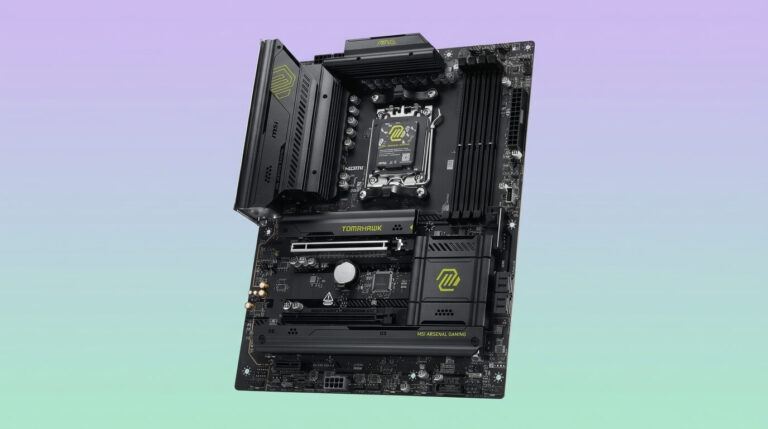
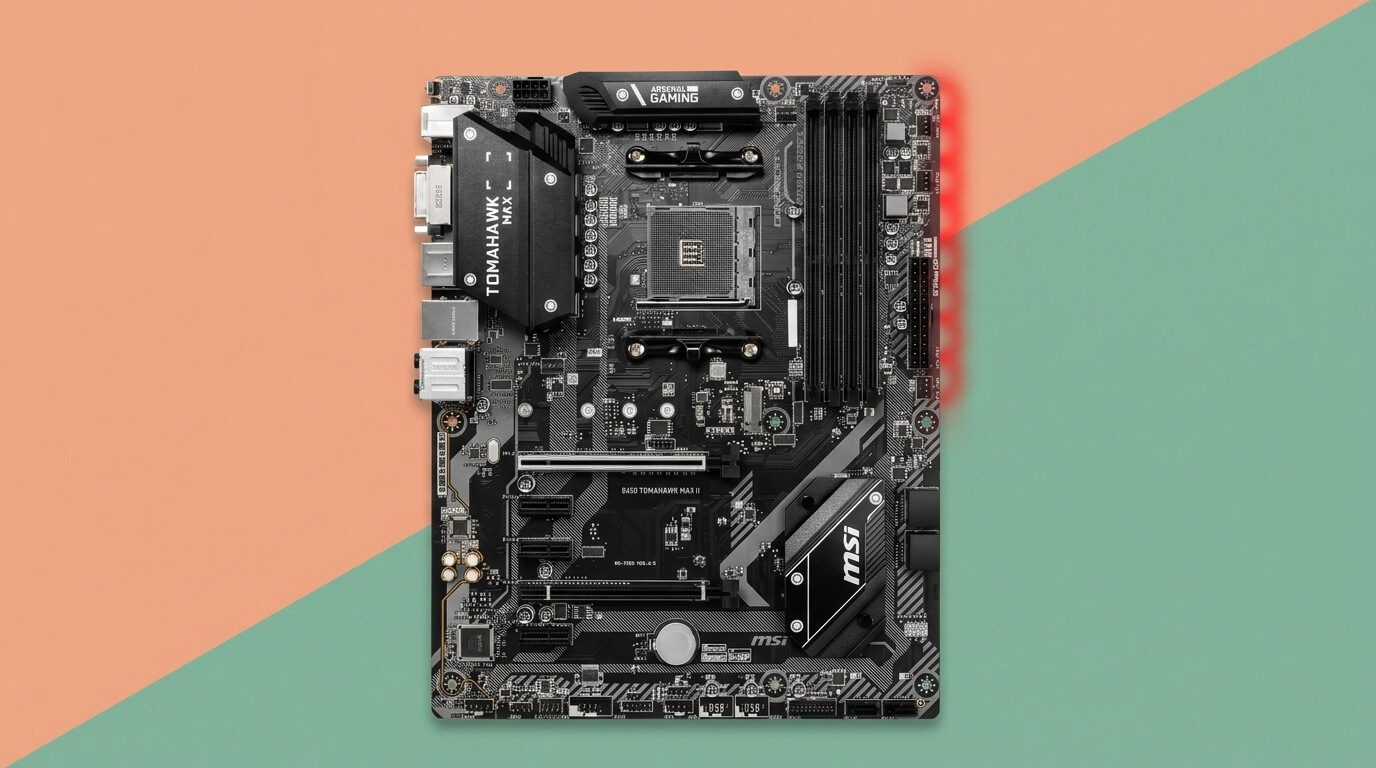
The MSI B450 TOMAHAWK MAX is a full ATX motherboard built on the AMD B450 chipset for the AM4 socket. The board supports 1st, 2nd, and 3rd Generation Ryzen processors natively, which places the Ryzen 3 3300X within its default BIOS compatibility list without requiring a BIOS update on most retail units shipped after 2019.
Four DDR4 DIMM slots run in dual-channel mode and support up to 64GB of memory, with speeds up to DDR4-4133 MHz through A-XMP OC Mode when paired with a 3rd Generation Ryzen CPU. For expansion, the board provides one PCIe 3.0 x16 slot for a discrete GPU and one PCIe 2.0 x16 slot. Storage consists of a Turbo M.2 slot running at PCIe 3.0 x4 and six SATA III ports, though SATA ports 5 and 6 become unavailable once a drive occupies the M.2 slot.
Power delivery uses an extended PWM heatsink design, which keeps VRM temperatures manageable when the Ryzen 3 3300X boosts to 4.4 GHz across all four cores. Rear I/O includes a USB 3.2 Gen 2 Type-C port, a USB 3.2 Gen 2 Type-A port, two USB 3.2 Gen 1 ports, and two USB 2.0 ports. Audio runs through the Realtek ALC892 codec at 7.1 channels, and networking uses a Realtek 8111H Gigabit LAN controller.
Compared with the ASRock B450M Steel Legend and MSI B450M Mortar MAX, the TOMAHAWK MAX offers a larger ATX form factor with a single M.2 slot rather than dual M.2 storage. Compared with the ASUS ROG Strix B450-F Gaming, it lacks a second PCIe 3.0 x16 slot for multi-GPU configurations, which is not a limitation for a single-GPU Ryzen 3 3300X build.
| Specification | Detail |
|---|---|
| Form Factor | ATX |
| Chipset | AMD B450 |
| Socket | AM4 (1st–3rd Gen Ryzen) |
| Memory | 4x DDR4, dual-channel, up to 64GB, up to 4133 MHz (OC) |
| Expansion Slots | 1x PCIe 3.0 x16, 1x PCIe 2.0 x16 |
| Storage | 1x M.2 (PCIe 3.0 x4), 6x SATA III |
| Rear USB | 1x USB 3.2 Gen 2 Type-C, 1x USB 3.2 Gen 2 Type-A, 2x USB 3.2 Gen 1, 2x USB 2.0 |
| Audio | Realtek ALC892, 7.1-channel |
| LAN | Realtek 8111H Gigabit |
Pros
- Extended PWM heatsink supports stable full-core boost on the Ryzen 3 3300X
- Native BIOS support for 3rd Generation Ryzen without a mandatory update
- Six SATA III ports for multi-drive storage builds
Cons
- Single M.2 slot limits NVMe expansion compared with dual-M.2 competitors
- Second PCIe slot runs at PCIe 2.0, restricting future multi-GPU use
ASUS TUF Gaming B450-PLUS II
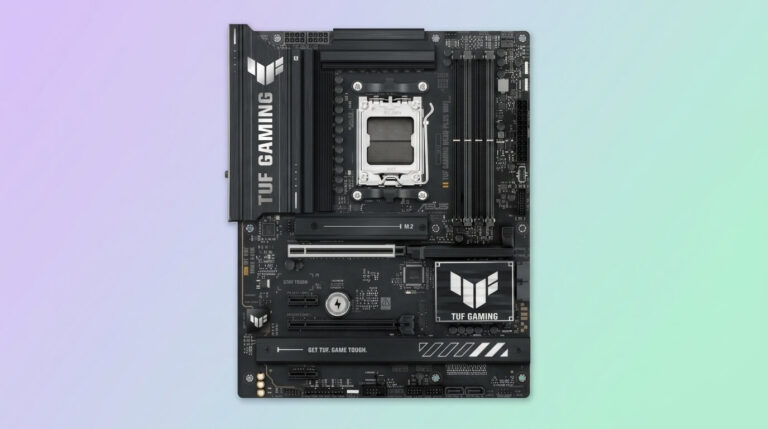
The ASUS TUF Gaming B450-PLUS II is an ATX motherboard built on the AMD B450 chipset for the AM4 socket. It supports AMD Ryzen 5000 Series, 5000 G-Series, 4000 G-Series, and 3rd/2nd/1st Generation Ryzen processors, which covers the Ryzen 3 3300X directly through the board’s standard BIOS revisions.
Four DIMM slots accommodate up to 128GB of dual-channel DDR4 memory, with overclocked speeds up to 4400 MHz. Expansion includes one PCIe 3.0 x16 slot, one PCIe 2.0 x16 slot capped at x4 bandwidth, and three PCIe 2.0 x1 slots. Storage consists of two M.2 slots and six SATA III ports, with one M.2 slot supporting drives up to Type 22110 at PCIe 3.0 x4 speeds.
The integrated Digi+ VRM regulates power delivery to the CPU using military-grade TUF chokes and capacitors rated for a wider temperature tolerance than standard components. This power design gives the Ryzen 3 3300X headroom for manual overclocking beyond its 4.4 GHz stock boost. Rear I/O includes one USB 3.2 Gen 2 Type-C port, four USB 3.2 Gen 1 ports, and two USB 2.0 ports across eight total rear USB connections. Audio uses the Realtek ALC S1200A codec at 7.1 channels, and the Realtek L8200A controller handles Gigabit LAN.
Compared with the MSI B450 TOMAHAWK MAX, the TUF Gaming B450-PLUS II supports twice the maximum RAM capacity and adds a second M.2 slot. Compared with the ASRock B450M Steel Legend, it offers a larger ATX layout with more PCIe expansion slots, at the cost of a higher typical price.
| Specification | Detail |
|---|---|
| Form Factor | ATX |
| Chipset | AMD B450 |
| Socket | AM4 (1st–3rd Gen Ryzen, Ryzen 5000/5000G/4000G) |
| Memory | 4x DDR4, dual-channel, up to 128GB, up to 4400 MHz (OC) |
| Expansion Slots | 1x PCIe 3.0 x16, 1x PCIe 2.0 x16 (max x4), 3x PCIe 2.0 x1 |
| Storage | 2x M.2, 6x SATA III |
| Rear USB | 1x USB 3.2 Gen 2 Type-C, 1x USB 3.2 Gen 2 Type-A, 4x USB 3.2 Gen 1, 2x USB 2.0 |
| Audio | Realtek ALC S1200A, 7.1-channel |
| LAN | Realtek L8200A Gigabit |
Pros
- Dual M.2 slots allow a two-drive NVMe storage configuration
- Digi+ VRM with military-grade components supports manual overclocking
- 128GB maximum memory capacity exceeds most B450 boards in this comparison
Cons
- Third PCIe x1 slots share bandwidth in some configurations, limiting simultaneous add-in card use
- Higher typical price than micro-ATX B450 alternatives with similar core specifications
ASUS ROG Strix B450-F Gaming
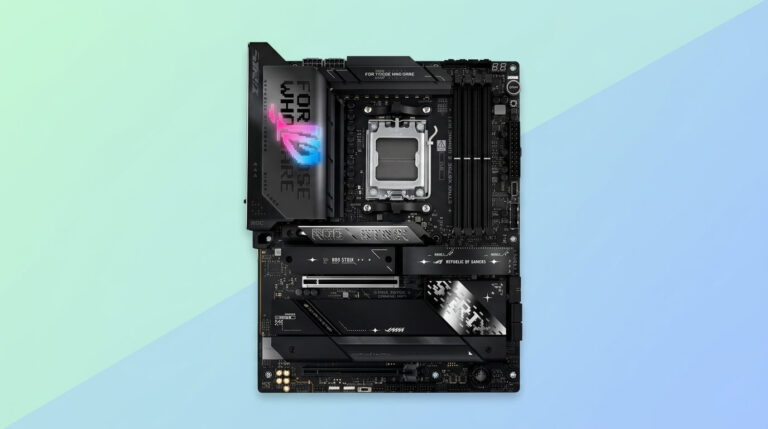
The ASUS ROG Strix B450-F Gaming is an ATX motherboard built on the AMD B450 chipset for the AM4 socket. Later BIOS revisions extend support to 3rd Generation Ryzen processors, which includes the Ryzen 3 3300X, though a BIOS update is required on boards manufactured before the AGESA update that added 3000-series support.
Four DIMM slots support up to 128GB of dual-channel DDR4 memory, with overclocked speeds up to 4400 MHz depending on the installed CPU generation. The board uses a 6+2 phase VRM managed by a 4+2 channel controller, which the Ryzen 3 3300X’s 65W TDP does not stress under stock operation. Expansion includes two PCIe 3.0 x16 slots and one PCIe 2.0 x16 slot, supporting up to three-way CrossFireX configurations for multi-GPU builds.
Storage runs through two M.2 slots and six SATA III ports. The primary M.2 slot supports SATA or PCIe 3.0 x4 modules up to 80mm, while the secondary slot supports PCIe-only modules up to 110mm; installing a drive in the second M.2 slot forces the primary PCIe x16 slot to run at x8 mode. Rear I/O includes two USB 3.2 Gen 2 ports across Type-A and Type-C, three USB 3.2 Gen 1 ports, and two USB 2.0 ports. Audio uses the SupremeFX S1220A codec at 7.1 channels with 32-bit support.
Compared with the GIGABYTE B450 AORUS Elite, the ROG Strix B450-F Gaming offers a second full-length PCIe 3.0 x16 slot for multi-GPU setups. Compared with the MSI B450 TOMAHAWK MAX, it provides two M.2 slots instead of one, though neither M.2 slot includes a factory heatsink.
| Specification | Detail |
|---|---|
| Form Factor | ATX |
| Chipset | AMD B450 |
| Socket | AM4 (BIOS update required for 3rd Gen Ryzen on early revisions) |
| Memory | 4x DDR4, dual-channel, up to 128GB, up to 4400 MHz (OC) |
| Expansion Slots | 2x PCIe 3.0 x16, 1x PCIe 2.0 x16 |
| Storage | 2x M.2, 6x SATA III |
| Rear USB | 2x USB 3.2 Gen 2 (Type-A + Type-C), 3x USB 3.2 Gen 1, 2x USB 2.0 |
| Audio | SupremeFX S1220A, 7.1-channel, 32-bit |
| VRM | 6+2 phase, 4+2 channel controller |
Pros
- Two PCIe 3.0 x16 slots support multi-GPU builds beyond a single Ryzen 3 3300X GPU pairing
- SupremeFX S1220A codec provides higher audio fidelity than standard Realtek ALC892 implementations
- Comprehensive fan control through Fan Xpert 4 software
Cons
- Requires a BIOS update on pre-2019 production units to recognize the Ryzen 3 3300X
- Neither M.2 slot includes a heatsink, requiring aftermarket cooling for sustained NVMe writes
ASRock B450M Steel Legend

The ASRock B450M Steel Legend is a micro-ATX motherboard built on the AMD B450 chipset for the AM4 socket. It supports AMD Ryzen 2000, 3000, 4000 G-Series, 5000, and 5000 G-Series desktop processors, placing the Ryzen 3 3300X within its documented compatibility range.
Four DIMM slots run in dual-channel mode with support for DDR4 speeds of 3533 MHz and above through overclocking. Expansion includes one PCIe 3.0 x16 slot, one PCIe 2.0 x16 slot, and one PCIe 2.0 x1 slot, with support for AMD Quad CrossFireX. Storage consists of two M.2 slots, an Ultra M.2 slot running at PCIe Gen3 x4 for up to 32 Gb/s transfer speeds, and a second M.2 slot limited to SATA3 mode, alongside four SATA3 ports.
Power delivery uses a six-phase digital design with 60A power chokes, which ASRock rates at three times the saturation current of standard chokes. This VRM configuration handles the Ryzen 3 3300X’s 65W TDP with margin for a mild all-core overclock. The board’s PCB uses 2oz copper layers across its inner layers for lower operating temperatures during sustained loads. Rear I/O includes a USB 3.2 Gen 2 Type-A port and a USB 3.2 Gen 2 Type-C port, both rated for 10 Gb/s transfer speeds, plus six USB 3.2 Gen 1 ports split between front and rear headers. Audio runs through the Realtek ALC892 codec with Nichicon Fine Gold audio capacitors.
Compared with the MSI B450M Mortar MAX, the Steel Legend matches the micro-ATX form factor and dual-M.2 storage layout while adding 60A power chokes and 2oz copper PCB construction for improved thermal performance. Compared with the GIGABYTE B450 AORUS Elite, it uses a smaller micro-ATX footprint at a comparable price point.
| Specification | Detail |
|---|---|
| Form Factor | Micro-ATX |
| Chipset | AMD B450 |
| Socket | AM4 (Ryzen 2000/3000/4000G/5000/5000G) |
| Memory | 4x DDR4, dual-channel, 3533 MHz+ (OC) |
| Expansion Slots | 1x PCIe 3.0 x16, 1x PCIe 2.0 x16, 1x PCIe 2.0 x1 |
| Storage | 1x Ultra M.2 (PCIe Gen3 x4), 1x M.2 (SATA3), 4x SATA3 |
| Rear USB | 1x USB 3.2 Gen 2 Type-A, 1x USB 3.2 Gen 2 Type-C, 6x USB 3.2 Gen 1 |
| Audio | Realtek ALC892, 7.1-channel, Nichicon Fine Gold capacitors |
| VRM | 6-phase digital, 60A power chokes |
Pros
- 60A power chokes and 2oz copper PCB provide thermal margin for overclocking the Ryzen 3 3300X
- Dual M.2 slots in a micro-ATX form factor, uncommon at this price tier
- 10 Gb/s USB 3.2 Gen 2 ports on both Type-A and Type-C
Cons
- Only four SATA ports, fewer than the ATX boards in this comparison
- Second M.2 slot is limited to SATA-mode drives, restricting NVMe expansion
GIGABYTE B450 AORUS Elite
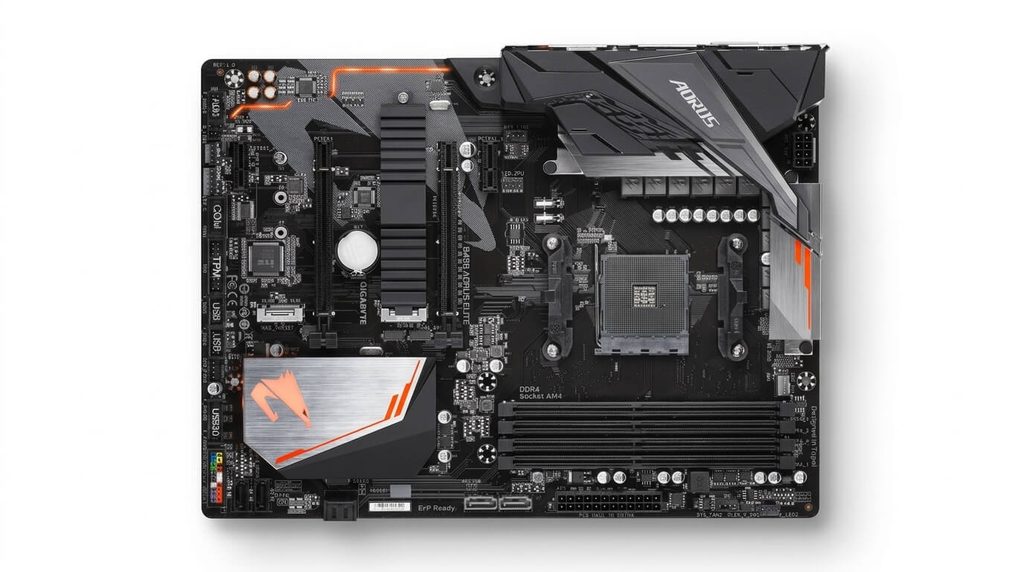
The GIGABYTE B450 AORUS Elite is an ATX motherboard built on the AMD B450 chipset for the AM4 socket. It supports AMD Ryzen 5000 Series, 5000 G-Series, and 3rd/2nd/1st Generation Ryzen processors, which covers the Ryzen 3 3300X within its native BIOS support list.
Four DIMM slots run in dual-channel, non-ECC unbuffered DDR4 mode with a maximum supported capacity of 64GB. Power delivery uses an 8+2 phase Hybrid Digital PWM design, which the Ryzen 3 3300X’s 65W TDP does not tax under stock conditions, leaving headroom for a moderate overclock. Storage includes dual Ultra-Fast NVMe PCIe Gen3 M.2 slots running at x4 and x2 speeds, with one slot covered by a thermal guard to reduce throttling during sustained transfers.
Rear I/O includes native USB 3.1 Gen 2 ports supplied directly by the B450 chipset, rated for up to 10 Gbps, alongside eight USB 2.0 ports split between rear and internal headers. RGB Fusion 2.0 software controls onboard and connected addressable lighting across multiple zones. Networking runs through a GIGABYTE Gaming LAN controller with bandwidth management to prioritize network traffic during gameplay.
Compared with the ASUS TUF Gaming B450-PLUS II, the AORUS Elite supports less maximum memory capacity, at 64GB versus 128GB. Compared with the ASRock B450M Steel Legend, it uses a full ATX form factor with dual M.2 storage and one slot protected by a thermal guard, which the Steel Legend’s second M.2 slot lacks.
| Specification | Detail |
|---|---|
| Form Factor | ATX |
| Chipset | AMD B450 |
| Socket | AM4 (1st–3rd Gen Ryzen, Ryzen 5000/5000G) |
| Memory | 4x DDR4, dual-channel, up to 64GB |
| VRM | 8+2 phase Hybrid Digital PWM |
| Storage | 2x M.2 (PCIe Gen3 x4 and x2), one with Thermal Guard |
| Rear USB | Native USB 3.1 Gen 2 (up to 10 Gbps), 4x USB 2.0 (rear) |
| Lighting | RGB Fusion 2.0, multi-zone |
| LAN | GIGABYTE Gaming LAN with bandwidth management |
Pros
- Dual M.2 slots with one thermal guard reduce NVMe throttling under sustained load
- 8+2 phase VRM provides stable power delivery for a mild Ryzen 3 3300X overclock
- RGB Fusion 2.0 supports multi-zone lighting synchronization with other GIGABYTE components
Cons
- 64GB maximum memory capacity is lower than several ATX competitors in this comparison
- Fewer native USB 3.2 Gen 2 ports than the ASRock B450M Steel Legend or ASUS boards
MSI B450M Mortar MAX

The MSI B450M Mortar MAX is a micro-ATX motherboard built on the AMD B450 chipset for the AM4 socket. It supports 1st, 2nd, and 3rd Generation Ryzen and Athlon GE processors, which places the Ryzen 3 3300X within its default compatibility range.
Four DIMM slots run in dual-channel DDR4 mode with a maximum capacity of 64GB and overclocked speeds up to 4133 MHz. Expansion includes one PCIe 3.0 x16 slot and one PCIe 2.0 x16 slot, with two-way CrossFireX support for AMD multi-GPU configurations. Storage consists of two M.2 slots: a Turbo M.2 running at PCIe Gen3 x4 for maximum NVMe performance, and a second M.2 slot at PCIe Gen2 x4, alongside four SATA III ports.
The board uses an extended heatsink design over the VRM area, which supports the Ryzen 3 3300X’s full-core 4.4 GHz boost clock without excessive thermal throttling. Rear I/O includes two USB 3.2 Gen 2 ports, six USB 3.2 Gen 1 ports, and six USB 2.0 ports across front and rear headers. Audio runs through an 8-channel HD Audio Boost implementation, and networking uses a Realtek 8111H Gigabit LAN controller.
Compared with the ASRock B450M Steel Legend, the Mortar MAX offers a Turbo M.2 slot at full PCIe 3.0 x4 speed but pairs it with a second M.2 slot limited to PCIe 2.0 x4 rather than SATA-only mode. Compared with the MSI B450 TOMAHAWK MAX, it trades the larger ATX form factor for a micro-ATX layout with an additional M.2 slot.
| Specification | Detail |
|---|---|
| Form Factor | Micro-ATX |
| Chipset | AMD B450 |
| Socket | AM4 (1st–3rd Gen Ryzen, Athlon GE) |
| Memory | 4x DDR4, dual-channel, up to 64GB, up to 4133 MHz (OC) |
| Expansion Slots | 1x PCIe 3.0 x16, 1x PCIe 2.0 x16 |
| Storage | 1x M.2 (PCIe 3.0 x4), 1x M.2 (PCIe 2.0 x4), 4x SATA III |
| Rear USB | 2x USB 3.2 Gen 2, 6x USB 3.2 Gen 1, 6x USB 2.0 |
| Audio | 8-channel HD Audio Boost |
| LAN | Realtek 8111H Gigabit |
Pros
- Turbo M.2 slot at full PCIe 3.0 x4 speed matches larger ATX boards in this comparison
- Extended VRM heatsink supports sustained full-core boost on the Ryzen 3 3300X
- Compact micro-ATX form factor fits smaller cases without sacrificing dual M.2 storage
Cons
- Only four SATA III ports, fewer than most ATX boards in this comparison
- Second M.2 slot is capped at PCIe Gen2 x4, below the PCIe 3.0 x4 speed of competing dual-M.2 boards
How To Chose Motherboard for Ryzen 3 3300X
A B450 motherboard for the Ryzen 3 3300X should provide native BIOS support for 3rd Generation Ryzen, a VRM design rated for sustained 65W operation with overclocking headroom, dual-channel DDR4 support up to at least 3200 MHz, and storage or expansion slots matching the intended build size.
BIOS compatibility is the first filter, since some B450 boards manufactured before the 3rd Generation Ryzen launch require a BIOS flash before they recognize the Ryzen 3 3300X. Boards released or revised after 2019, including the MSI B450 TOMAHAWK MAX, ASRock B450M Steel Legend, and MSI B450M Mortar MAX, list 3rd Generation Ryzen support in their default specifications. Older revisions, such as early production runs of the ASUS ROG Strix B450-F Gaming, may need a BIOS update performed with a compatible older CPU or through BIOS Flashback.
VRM quality determines how consistently a board sustains the Ryzen 3 3300X’s 4.4 GHz boost clock across all four cores and how much headroom remains for manual overclocking. A four-phase or higher VRM with adequate heatsink coverage, such as the 6-phase design on the ASRock B450M Steel Legend or the 8+2 phase design on the GIGABYTE B450 AORUS Elite, handles the processor’s 65W TDP with margin. Boards with minimal VRM cooling can still run the 3300X at stock settings but offer less consistency under an all-core overclock.
Memory support matters because the Ryzen 3 3300X benefits from higher DDR4 frequencies through Infinity Fabric bandwidth gains. Boards supporting DDR4-3200 or higher, such as the ASUS TUF Gaming B450-PLUS II and ASUS ROG Strix B450-F Gaming at up to 4400 MHz, allow memory overclocking without hitting a chipset-imposed ceiling.
Form factor and expansion needs depend on the build itself. A micro-ATX board such as the ASRock B450M Steel Legend or MSI B450M Mortar MAX suits a compact case with a single GPU and one or two NVMe drives. A full ATX board such as the ASUS TUF Gaming B450-PLUS II or ASUS ROG Strix B450-F Gaming suits builds requiring additional PCIe slots, more SATA ports, or a second GPU.