The GeForce RTX 5060 and RTX 5060 Ti connect to a motherboard through a PCI Express 5.0 x8 interface. This interface delivers the same bandwidth as a full PCIe 4.0 x16 slot, so both cards run at full speed in almost any modern AM5 or LGA 1851 motherboard with a PCIe 4.0 or PCIe 5.0 x16 slot. The RTX 5060 draws 145 W and the RTX 5060 Ti draws 180 W, and most partner cards use a single 8-pin PCIe power connector. This power draw comes from the graphics card’s own connector, not the motherboard, so motherboard selection depends on other factors.
The motherboard determines CPU compatibility, memory speed, storage options, and connectivity rather than GPU bandwidth. A B850 or X870 motherboard on AM5 pairs the RTX 5060 or 5060 Ti with Ryzen 7000, 8000, or 9000 series processors. A B860 motherboard on LGA 1851 pairs the same graphics cards with Intel Core Ultra Series 2 processors. Chipset, VRM quality, M.2 slot count, and networking features vary between these boards, and each affects the overall build differently depending on budget, case size, and CPU choice.
This guide reviews six motherboards that suit RTX 5060 and RTX 5060 Ti builds: the MSI MAG B850 Tomahawk MAX WiFi, ASUS TUF Gaming B850-Plus WiFi, Gigabyte B650 Aorus Elite AX, ASRock X870 Steel Legend WiFi, MSI MAG B860 Tomahawk WiFi, and ASRock B850I Lightning WiFi. The selection spans AM5 and LGA 1851 platforms, ATX and Mini-ITX form factors, and budget to upper-mid-range price tiers.
Each section below examines the specifications of one motherboard, explains how it works with a processor alongside the RTX 5060 or 5060 Ti, and compares it against the other boards in this roundup. A specifications table, followed by a pros and cons list, closes out each review. The final section explains how to match a motherboard to an RTX 5060 or 5060 Ti build.
Best Motherboards for Nvidia RTX 5060 & 5060 Ti Graphics Card
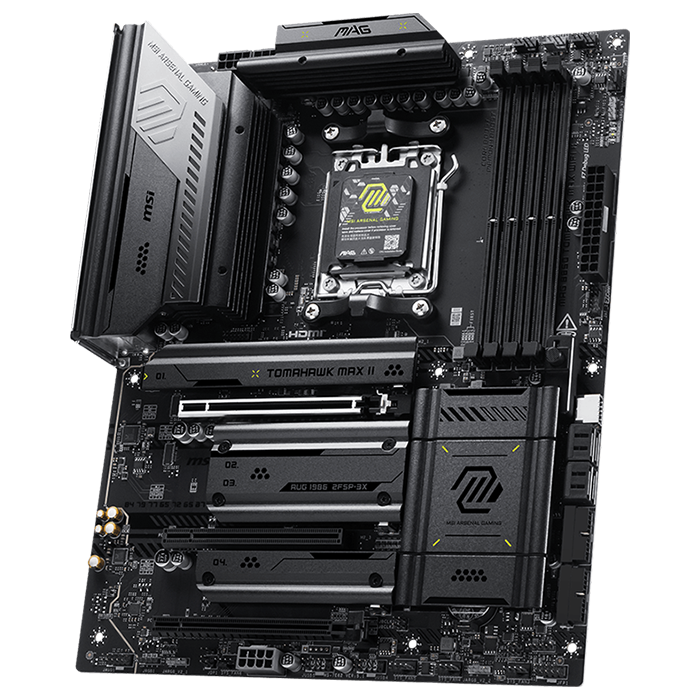
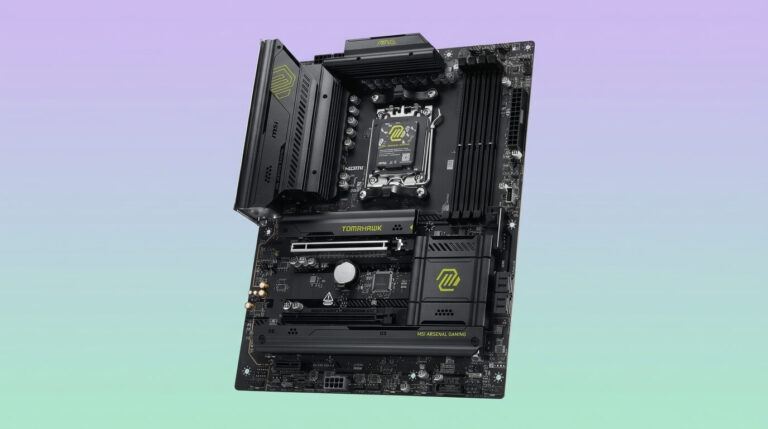
MSI MAG B850 Tomahawk MAX WiFi
CHECK PRICE
PROS
CONS
| Specification | Detail |
|---|---|
| Chipset | AMD B850 |
| Socket | AM5 |
| Form Factor | ATX |
| CPU Support | Ryzen 9000 / 8000 / 7000 Series |
| Memory | DDR5, 4 DIMMs, up to 256 GB, up to 8400+ MT/s (OC) |
| VRM | 14+2+1 Duet Rail Power System, 80 A SPS, dual 8-pin |
| PCIe Slots | 1x PCIe 5.0 x16 (primary) |
| M.2 Slots | 4 total, 2x PCIe 5.0 capable |
| LAN | 5G Ethernet |
| Wireless | Wi-Fi 7 |
| Approx. Price | ~$200 |
The MSI MAG B850 Tomahawk MAX WiFi is an ATX motherboard built on the AMD B850 chipset for the AM5 socket. It supports AMD Ryzen 9000, 8000, and 7000 series processors. The board uses a 14+2+1 Duet Rail Power System rated at 80 A per stage, fed by dual 8-pin CPU power connectors, and it sits on an 8-layer PCB made with 2oz thickened copper. Four DDR5 DIMM slots support dual-channel memory up to 256 GB, with overclocked speeds rated to 8400+ MT/s.
Storage runs through four M.2 slots, with two supporting PCIe 5.0 speeds, plus SATA ports for additional drives. Networking includes 5G LAN and Wi-Fi 7, and the rear panel carries three USB Type-C ports. The primary PCIe slot runs at PCIe 5.0 x16.
Because the RTX 5060 and RTX 5060 Ti use a PCIe 5.0 x8 interface, the Tomahawk MAX WiFi’s PCIe 5.0 x16 slot supplies more bandwidth than either card needs, leaving headroom for future GPU upgrades. The 14+2+1 VRM comfortably powers any Ryzen 9000 or 7000 series CPU paired with these mid-range graphics cards, so the board does not bottleneck CPU-side performance in games that lean on single-thread speed.
Compared with the ASUS TUF Gaming B850-Plus WiFi, the Tomahawk MAX WiFi offers one more M.2 slot but one fewer PCIe expansion slot. Compared with the Gigabyte B650 Aorus Elite AX, it supports a newer chipset with a Gen 5 GPU slot on all supported CPUs, while the Aorus Elite AX locks the GPU slot to PCIe 4.0 on the non-E B650 chipset. Compared with the ASRock X870 Steel Legend WiFi, the Tomahawk MAX WiFi costs less but lacks USB4 support.
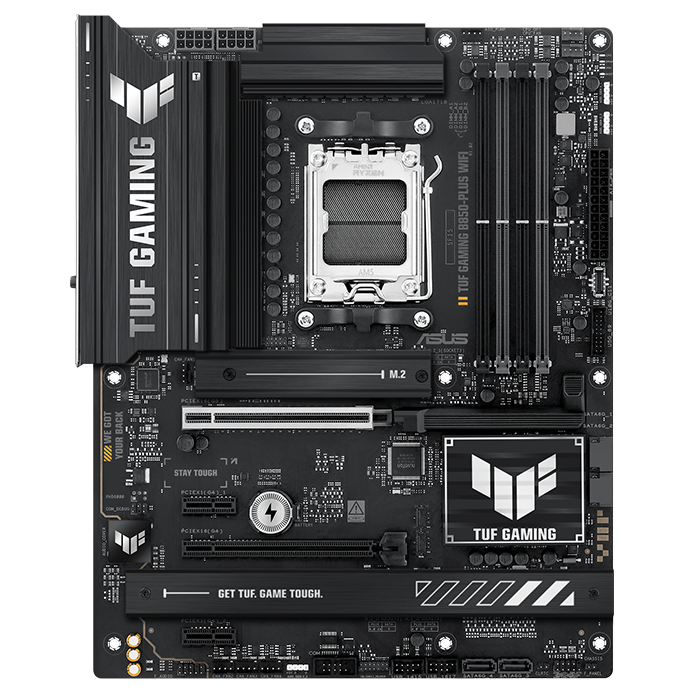
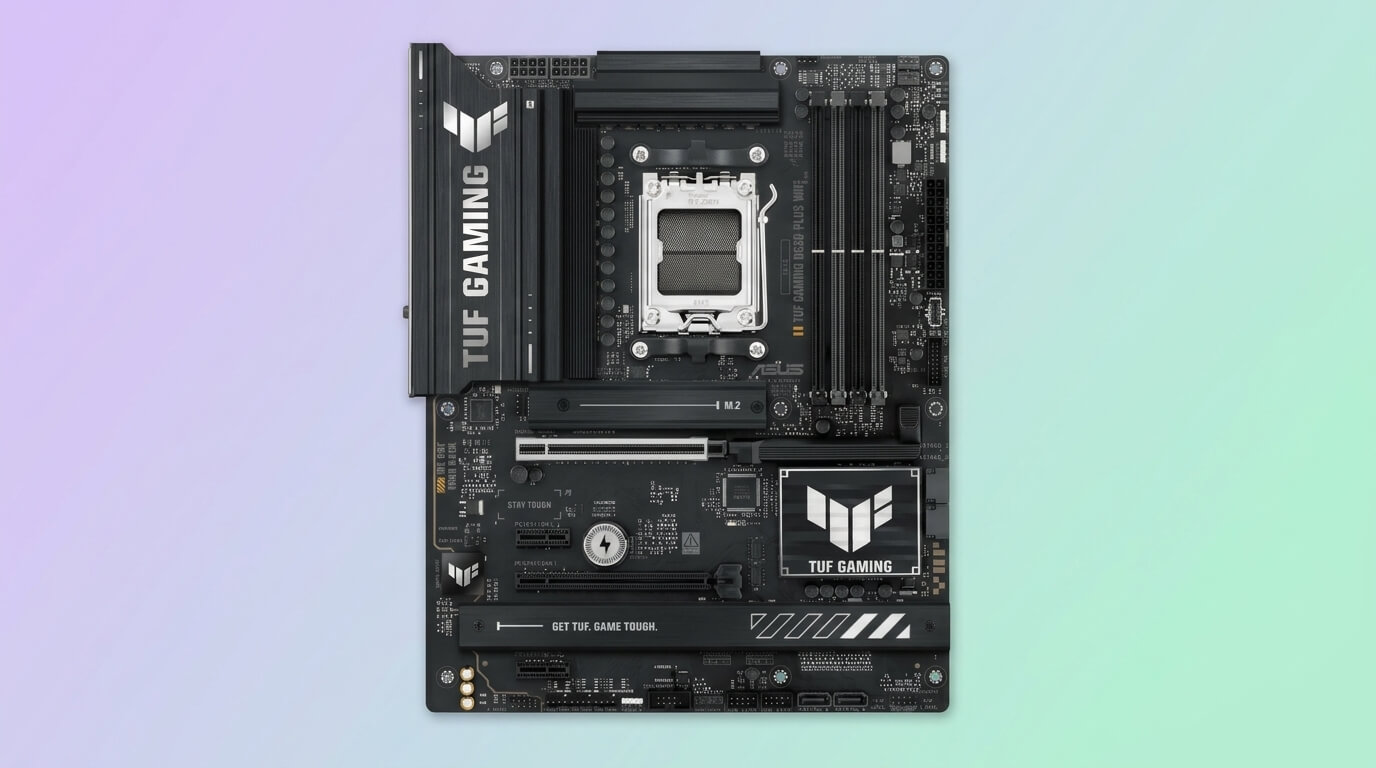
ASUS TUF Gaming B850-Plus WiFi
CHECK PRICE
PROS
CONS
| Specification | Detail |
|---|---|
| Chipset | AMD B850 |
| Socket | AM5 |
| Form Factor | ATX |
| CPU Support | Ryzen 9000 / 8000 / 7000 Series |
| Memory | DDR5, 4 DIMMs, dual channel, AMD EXPO/Intel XMP support |
| VRM | 14+2+1 DrMOS, 80 A stages, 8-layer PCB |
| PCIe Slots | 1x PCIe 5.0 x16, 1x PCIe 4.0 x16 (x4 mode), 2x PCIe 4.0 x1 |
| M.2 Slots | 3 total (1x PCIe 5.0 x4, 2x PCIe 4.0 x4) |
| LAN | 2.5G Ethernet |
| Wireless | Wi-Fi 7 |
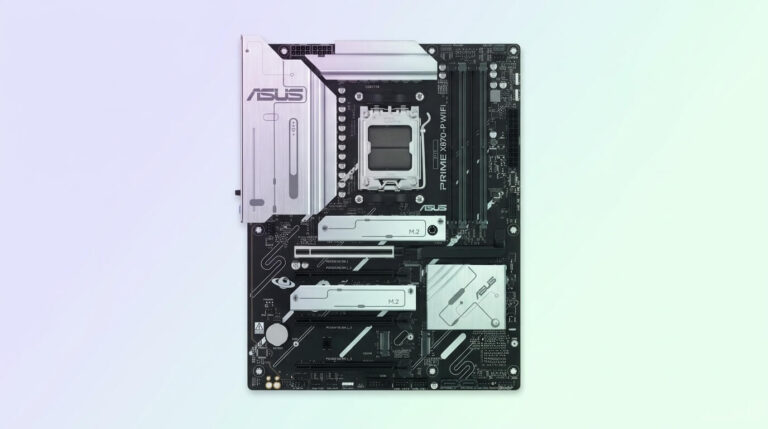
The ASUS TUF Gaming B850-Plus WiFi is an ATX motherboard on the AMD B850 chipset for the AM5 socket. It supports Ryzen 9000, 8000, and 7000 series processors and runs a 14+2+1 power design with 80 A DrMOS stages across an 8-layer PCB, fed by 8+8 pin ProCool connectors. The primary PCIe slot runs at PCIe 5.0 x16 with Ryzen 9000 and 7000 series CPUs and drops to PCIe 4.0 x16 with Ryzen 8000 series APUs. A second full-length slot and two PCIe 4.0 x1 slots bring the total to four PCIe slots.
Storage includes three M.2 slots: one PCIe 5.0 x4 slot and two PCIe 4.0 x4 slots, alongside four SATA 6Gb/s ports. Networking covers Wi-Fi 7 and 2.5G Ethernet, and the rear panel includes a USB 20Gbps Type-C port with a Thunderbolt (USB4) header for front-panel expansion.
The RTX 5060 and RTX 5060 Ti fit the primary PCIe 5.0 x16 slot and receive more lanes than their PCIe 5.0 x8 interface requires. The board’s 80 A DrMOS VRM supports Ryzen 9000 series CPUs at stock and moderate overclocked settings, matching well with either GPU in a balanced gaming build.
Compared with the MSI MAG B850 Tomahawk MAX WiFi, the TUF Gaming B850-Plus WiFi provides one extra PCIe expansion slot but one fewer M.2 slot, and it adds a Thunderbolt (USB4) header that the Tomahawk MAX WiFi lacks. Compared with the Gigabyte B650 Aorus Elite AX, it supports PCIe 5.0 on the GPU slot with Ryzen 9000 and 7000 CPUs, a capability the B650 chipset does not offer. Compared with the ASRock B850I Lightning WiFi, it offers a full ATX layout with more PCIe slots and SATA ports.
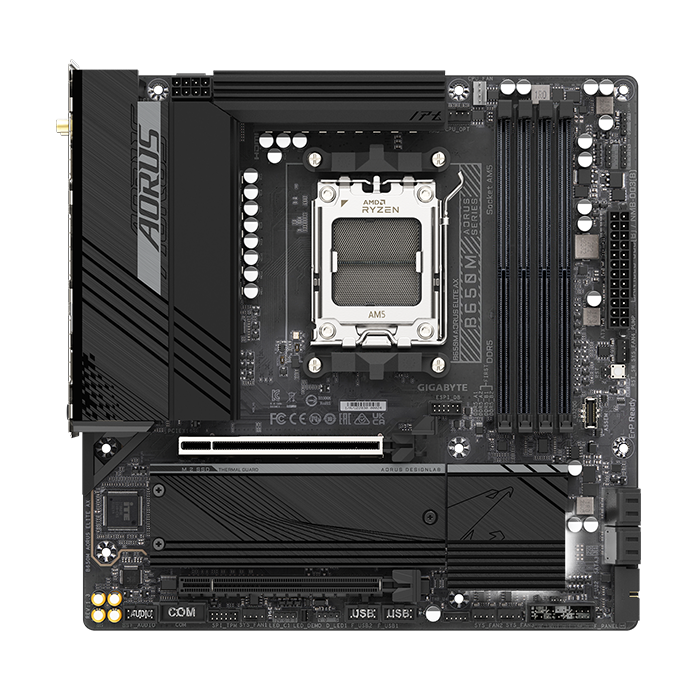
Gigabyte B650 Aorus Elite AX
CHECK PRICE
PROS
CONS
| Specification | Detail |
|---|---|
| Chipset | AMD B650 |
| Socket | AM5 |
| Form Factor | ATX |
| CPU Support | Ryzen 9000 / 8000 / 7000 Series |
| Memory | DDR5, 4 DIMMs, dual channel, AMD EXPO/Intel XMP support |
| VRM | Twin 14+2+1 phase digital VRM |
| PCIe Slots | 1x PCIe 4.0 x16 (CPU) |
| M.2 Slots | 1x PCIe 5.0 x4 (CPU) + PCIe 4.0 M.2 slots (chipset) |
| SATA | 4x SATA 6Gb/s with RAID 0/1/10 |
| LAN | 2.5G Ethernet |
| Wireless | Wi-Fi 6E, Bluetooth 5.3 |
The Gigabyte B650 Aorus Elite AX is an ATX motherboard on the AMD B650 chipset for the AM5 socket. It supports Ryzen 9000, 8000, and 7000 series processors through a twin 14+2+1 phase digital VRM design. Four DDR5 DIMM slots provide dual-channel memory with AMD EXPO and Intel XMP support. The primary PCIe slot connects directly to the CPU and runs at PCIe 4.0 x16, since the B650 chipset does not extend PCIe 5.0 to the GPU slot the way the pricier B650E chipset does.
Storage includes a PCIe 5.0 x4 M.2 slot alongside PCIe 4.0 M.2 slots, plus four SATA 6Gb/s ports with RAID 0, 1, and 10 support. Networking runs through Wi-Fi 6E and Bluetooth 5.3, paired with 2.5G Ethernet. Audio uses a Realtek codec with 7.1-channel output.
The RTX 5060 and RTX 5060 Ti operate at full PCIe 4.0 x16 bandwidth in this board’s primary slot, which exceeds the PCIe 5.0 x8 interface both cards use. The CPU-connected M.2 slot supports PCIe 5.0 SSDs even though the GPU slot itself stays at Gen 4, giving builders fast primary storage without needing the pricier B650E tier.
Compared with the MSI MAG B850 Tomahawk MAX WiFi and ASUS TUF Gaming B850-Plus WiFi, the Aorus Elite AX uses the older B650 chipset and Wi-Fi 6E instead of Wi-Fi 7, and its GPU slot stays at PCIe 4.0 regardless of installed CPU. Compared with the ASRock X870 Steel Legend WiFi, it lacks USB4 and runs a lower-bandwidth chipset interconnect. Its VRM design matches the Tomahawk MAX WiFi’s phase count, giving it comparable power delivery despite the older chipset.
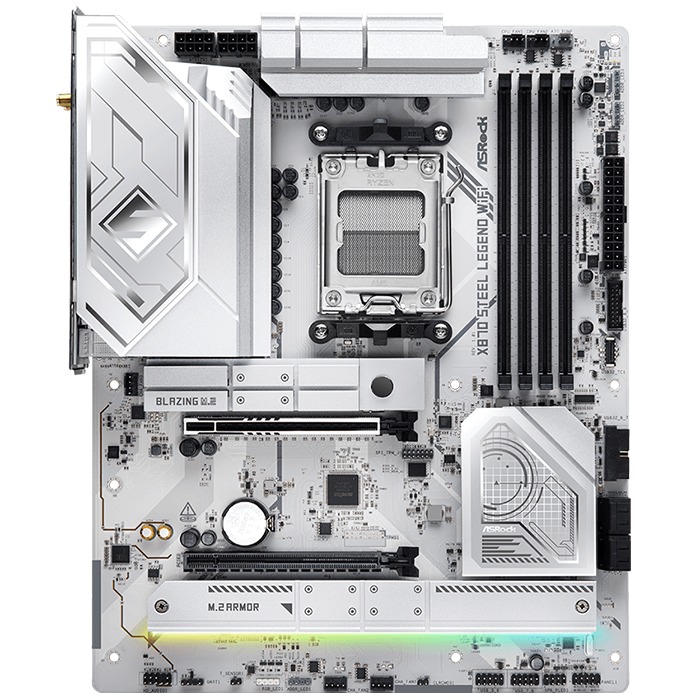
ASRock X870 Steel Legend WiFi
CHECK PRICE
PROS
CONS
| Specification | Detail |
|---|---|
| Chipset | AMD X870 |
| Socket | AM5 |
| Form Factor | ATX |
| CPU Support | Ryzen 9000 / 8000 / 7000 Series |
| Memory | DDR5, 4 DIMMs, up to 256 GB, up to 8000+ MT/s (OC) |
| VRM | 14+2+1 phase, 80 A Dr.MOS, dual 8-pin EPS |
| PCIe Slots | 1x PCIe 5.0 x16, 1x PCIe 4.0 x16 (x4 mode) |
| M.2 Slots | 3 total (1x PCIe 5.0 x4, 2x PCIe 4.0 x4) |
| LAN | 2.5G Ethernet |
| Wireless | Wi-Fi 7, Bluetooth 5.4 |
| USB | USB4 (40 Gb/s) |
| Approx. Price | From ~$170 |
The ASRock X870 Steel Legend WiFi is an ATX motherboard on the AMD X870 chipset for the AM5 socket. It supports Ryzen 9000, 8000, and 7000 series processors through a 14+2+1 phase VRM rated at 80 A per Dr.MOS stage, powered by two 8-pin EPS connectors. Four DDR5 DIMM slots support memory up to 256 GB, with overclocked speeds rated to 8000+ MT/s.
The primary PCIe slot runs at PCIe 5.0 x16 with Ryzen 9000 and 7000 series CPUs, dropping to Gen 4 x8 or x4 with Ryzen 8000 series APUs depending on model. A second PCIe 4.0 x16 slot runs at x4 mode. Storage covers three M.2 slots: one Blazing M.2 at PCIe 5.0 x4 and two Hyper M.2 slots at PCIe 4.0 x4, plus four SATA 6Gb/s ports. The board includes USB4 ports at 40 Gb/s, Wi-Fi 7, Bluetooth 5.4, and 2.5G LAN.
The RTX 5060 and RTX 5060 Ti run at full bandwidth in the PCIe 5.0 x16 slot, and the X870 chipset’s higher-bandwidth Promontory 21 chip-to-CPU link keeps USB4 and networking traffic from competing with GPU lanes. The 14+2+1 80 A VRM gives this board more overclocking headroom for the CPU than the B850-based boards in this list, which matters more for CPU-bound titles than for the mid-range GPUs themselves.
Compared with the MSI MAG B850 Tomahawk MAX WiFi and ASUS TUF Gaming B850-Plus WiFi, the X870 Steel Legend WiFi adds USB4 and a chipset with a dedicated high-speed I/O controller, at a higher price than base B850 boards. Compared with the Gigabyte B650 Aorus Elite AX, it supports PCIe 5.0 on the GPU slot across supported CPUs, where the Aorus Elite AX stays at PCIe 4.0. Compared with the ASRock B850I Lightning WiFi, it offers a full ATX layout with more PCIe and M.2 slots.
MSI MAG B860 Tomahawk WiFi
CHECK PRICE
PROS
CONS
| Specification | Detail |
|---|---|
| Chipset | Intel B860 |
| Socket | LGA 1851 |
| Form Factor | ATX |
| CPU Support | Intel Core Ultra Series 2 |
| Memory | DDR5, 4 DIMMs, up to 256 GB, up to 9200+ MT/s (OC) |
| VRM | 12+1+1+1 Duet Rail Power System, 60 A SPS, dual 8-pin |
| PCIe Slots | 1x PCIe 5.0 x16, 1x PCIe 4.0 x4, 1x PCIe 4.0 x1 |
| M.2 Slots | 3 total (1x PCIe 5.0 x4, 2x PCIe 4.0 x4) |
| LAN | Intel Killer 5G Ethernet |
| Wireless | Wi-Fi 7 |
| USB | Thunderbolt 4 |
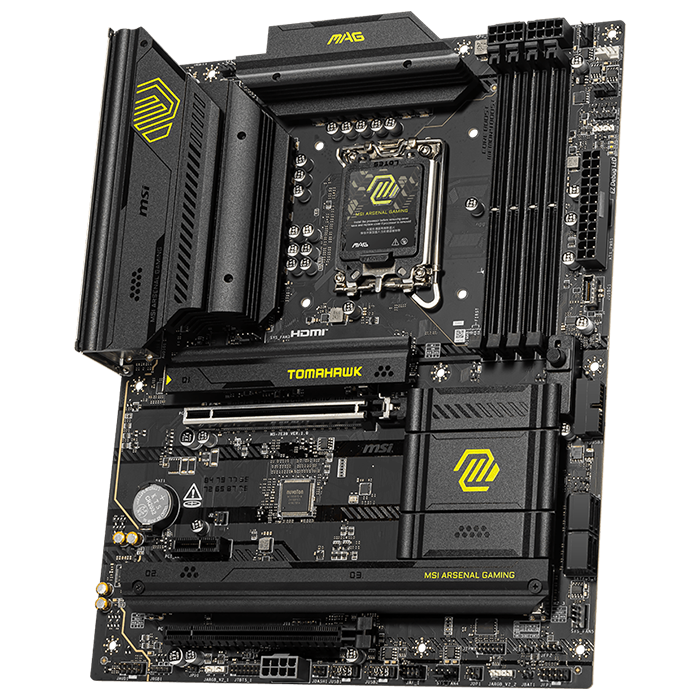
The MSI MAG B860 Tomahawk WiFi is an ATX motherboard on the Intel B860 chipset for the LGA 1851 socket. It supports Intel Core Ultra Series 2 processors through a 12+1+1+1 Duet Rail Power System rated at 60 A per SPS stage, fed by dual 8-pin CPU power connectors, on a 6-layer PCB with 2oz thickened copper. Four DDR5 DIMM slots support memory up to 256 GB, with overclocked speeds rated to 9200+ MT/s.
The primary PCIe slot runs at PCIe 5.0 x16, delivering 128 GB/s of bandwidth. A second PCIe 4.0 x4 slot and a PCIe 4.0 x1 slot round out expansion. Storage covers three M.2 slots, with one Lightning Gen 5 x4 slot and two Gen 4 slots, plus SATA ports for additional drives. Networking includes Intel Killer 5G LAN and Wi-Fi 7, and the rear panel includes a Thunderbolt 4 port alongside USB 3.2 Gen 2 ports.
The RTX 5060 and RTX 5060 Ti run at full bandwidth in the PCIe 5.0 x16 slot, matching the same lane headroom available on the AM5 boards in this list. This board is the only Intel-platform option in the roundup, so it fits builds centered on Intel Core Ultra Series 2 processors rather than AMD Ryzen chips.
Compared with the MSI MAG B850 Tomahawk MAX WiFi, the B860 Tomahawk WiFi uses a lighter VRM (12+1+1+1 at 60 A versus 14+2+1 at 80 A) because Intel’s Core Ultra Series 2 platform draws less sustained current than high-end Ryzen 9000 chips. Compared with the ASRock X870 Steel Legend WiFi, it matches USB-C bandwidth through Thunderbolt 4 instead of USB4, and both protocols reach 40 Gb/s. Compared with the ASRock B850I Lightning WiFi, it offers a full ATX layout with three PCIe slots against one.
ASRock B850I Lightning WiFi
CHECK PRICE
PROS
CONS
| Specification | Detail |
|---|---|
| Chipset | AMD B850 |
| Socket | AM5 |
| Form Factor | Mini-ITX (170 x 170 mm) |
| CPU Support | Ryzen 9000 / 8000 / 7000 Series |
| Memory | DDR5, 2 DIMMs, up to 128 GB, up to 8200+ MT/s (OC) |
| VRM | 10+1+1 phase, Renesas RAA229620 controller |
| PCIe Slots | 1x PCIe 5.0 x16 |
| M.2 Slots | 2 total (1x PCIe 5.0 x4, 1x PCIe 4.0 x4) |
| SATA | 2x SATA 6Gb/s |
| LAN | 2.5G Ethernet |
| Wireless | Wi-Fi 6E, Bluetooth 5.2 |
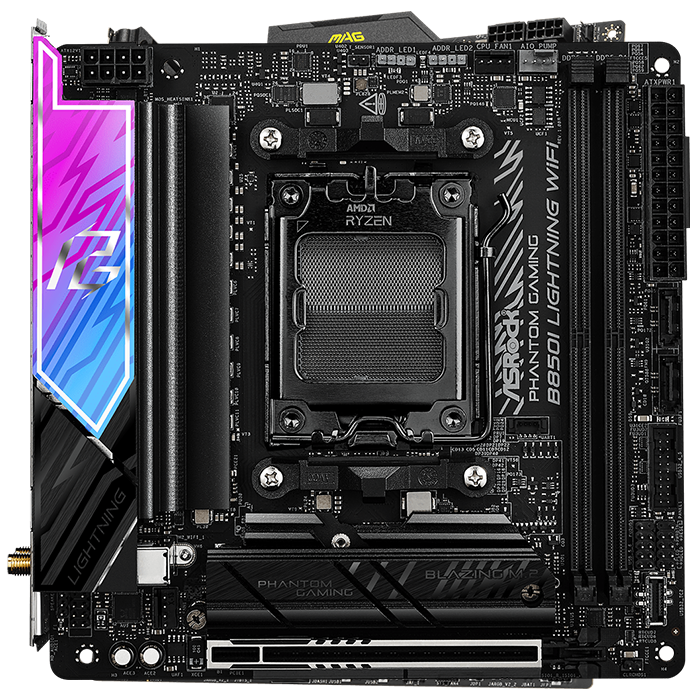
The ASRock B850I Lightning WiFi is a Mini-ITX motherboard measuring 170 x 170 mm, built on the AMD B850 chipset for the AM5 socket. It supports Ryzen 9000, 8000, and 7000 series processors through a 10+1+1 phase power design, with ten Renesas smart power stages dedicated to the CPU core and a Renesas RAA229620 PWM controller managing the array. Two DDR5 DIMM slots support dual-channel memory up to 128 GB, with a 64 GB single-DIMM capacity and overclocked speeds rated to 8200+ MT/s.
The single PCIe slot runs at PCIe 5.0 x16. Storage covers two M.2 slots: a Blazing M.2 slot at PCIe 5.0 x4 and a Hyper M.2 slot at PCIe 4.0 x4, plus two SATA 6Gb/s ports. Networking includes Wi-Fi 6E and Bluetooth 5.2, paired with 2.5G Ethernet. The rear panel offers HDMI 2.1 output and a USB 10Gbps Type-C port that supports DisplayPort 1.2 alt mode.
The RTX 5060 and RTX 5060 Ti fit this board’s single PCIe 5.0 x16 slot at full bandwidth, and both cards’ compact card lengths and single 8-pin power connectors suit the tight clearances typical of Mini-ITX cases. Because the board has only one expansion slot, builders should confirm case clearance for the graphics card before assembly, since no second slot exists for a riser or add-in card.
Compared with the four ATX boards in this list, the B850I Lightning WiFi trades PCIe and M.2 slot count for a compact footprint suited to small-form-factor builds. Its 10+1+1 VRM design offers less phase count than the 14+2+1 designs on the B850 and X870 ATX boards, which matters for high-end Ryzen 9000 CPUs but suits mainstream chips paired with an RTX 5060 or 5060 Ti. It is priced close to $10 above its B650I Lightning WiFi predecessor, which sells near $199.
How to Choose a Motherboard For RTX 5060 & 5060 Ti
Choosing a motherboard for the RTX 5060 or RTX 5060 Ti depends on the CPU platform rather than the GPU, because both cards use a PCI Express 5.0 x8 interface that runs at full bandwidth in any modern PCIe 4.0 or PCIe 5.0 x16 slot. This removes GPU bandwidth as a deciding factor and shifts the decision toward chipset, VRM capability, storage, and form factor.
The CPU determines chipset and socket first. An AM5 motherboard with a B650, B850, or X870 chipset pairs the RTX 5060 or 5060 Ti with Ryzen 7000, 8000, or 9000 series processors, while an LGA 1851 motherboard with a B860 chipset pairs the same graphics cards with Intel Core Ultra Series 2 processors. Selecting the CPU platform narrows the motherboard choice before any GPU-related specification comes into play.
VRM quality should match the target CPU rather than the graphics card, since the RTX 5060 and 5060 Ti draw their own power directly from the power supply through an 8-pin connector. A 14+2+1 phase design with 80 A stages, as found on the MSI MAG B850 Tomahawk MAX WiFi, ASUS TUF Gaming B850-Plus WiFi, and ASRock X870 Steel Legend WiFi, suits high-core-count Ryzen 9000 CPUs. A lighter VRM, such as the 10+1+1 design on the ASRock B850I Lightning WiFi, suits mainstream CPUs in space-constrained builds.
Storage and connectivity needs point to specific slot counts. Builders who plan multiple NVMe drives benefit from boards with four M.2 slots, such as the Tomahawk MAX WiFi, while builders who need USB4 or Thunderbolt 4 should look to the X870 Steel Legend WiFi or the MSI MAG B860 Tomahawk WiFi. Case size determines form factor last: ATX boards fit standard mid-tower and full-tower cases, while a Mini-ITX board such as the B850I Lightning WiFi fits small-form-factor builds where a compact case would not accommodate a larger PCB.