
Table of Contents
The Intel Core i5-9400F is a six-core, six-thread desktop processor built on the Coffee Lake architecture. It runs at a 2.9 GHz base clock, reaches 4.1 GHz under Intel Turbo Boost Technology 2.0, and carries a 65 W TDP. The processor uses the FCLGA1151 socket, supports dual-channel DDR4-2666 memory, and contains 9 MB of Intel Smart Cache. The i5-9400F has a locked multiplier and no integrated graphics, so it requires a discrete graphics card and a motherboard with LGA1151 support.
The i5-9400F is compatible with Intel 300-series chipsets, including B360, H370, B365, and Z390. Each chipset changes the available PCIe lanes, USB configuration, storage options, and overclocking behavior of the memory subsystem, even though the CPU’s core clock remains locked on every chipset. A Z390 board unlocks memory overclocking and adds extra USB 3.1 Gen2 connectivity, while B365 boards focus on standard connectivity at a lower cost.
This article reviews six LGA1151 motherboards suited to the i5-9400F: the MSI MPG Z390 Gaming Pro Carbon, ASUS ROG Strix B365-F Gaming, ASRock B365 Phantom Gaming 4, MSI B365M PRO-VDH, GIGABYTE B365M DS3H, and ASUS Prime B365M-A. Each section explains the board’s specifications, how the board functions with the i5-9400F, and how it compares with the other boards covered here.
The comparison covers chipset capability, memory support, storage interfaces, expansion slots, and connectivity, since these attributes determine day-to-day usability with a six-core, non-overclockable processor such as the i5-9400F. A dedicated section at the end explains how to choose among these boards based on budget, form factor, and feature requirements.
THE SHORTLIST
This guide, at a glance
Compare the products covered below, then explore the strengths, limitations, and specifications that matter to you.
 Check current priceView on Amazon: MSI MPG Z390 Gaming Pro Carbon (opens in a new tab)
- Check current priceView on Amazon: ASUS ROG Strix B365-F Gaming (opens in a new tab)
- Check current priceView on Amazon: ASRock B365 Phantom Gaming 4 (opens in a new tab)
- Check current priceView on Amazon: MSI B365M PRO-VDH (opens in a new tab)
- Check current priceView on Amazon: GIGABYTE B365M DS3H (opens in a new tab)
- Check current priceView on Amazon: ASUS Prime B365M-A (opens in a new tab)
Purchase links open Amazon. Confirm the exact model, price, availability, and seller terms before ordering.
MSI MPG Z390 Gaming Pro Carbon
Pricing and availability on Amazon
Pros & cons
Strengths
- Chipset capability: The Z390 chipset provides more PCI-E lanes and higher-speed memory support than the B365 boards in this comparison.
- Storage flexibility: Dual M.2 slots with Optane support and six SATA ports allow multiple fast-storage configurations.
- Multi-GPU support: Three PCI-E x16 slots support 2-way SLI or 3-way CrossFire for future graphics card upgrades.
Limitations
- Higher cost: The Z390 chipset costs more than a B365 board, and the i5-9400F cannot use the chipset’s CPU overclocking headroom due to its locked multiplier.
- ATX size requirement: The full ATX form factor needs a mid-tower or larger case, unlike the Micro-ATX boards covered later in this article.
Review notes
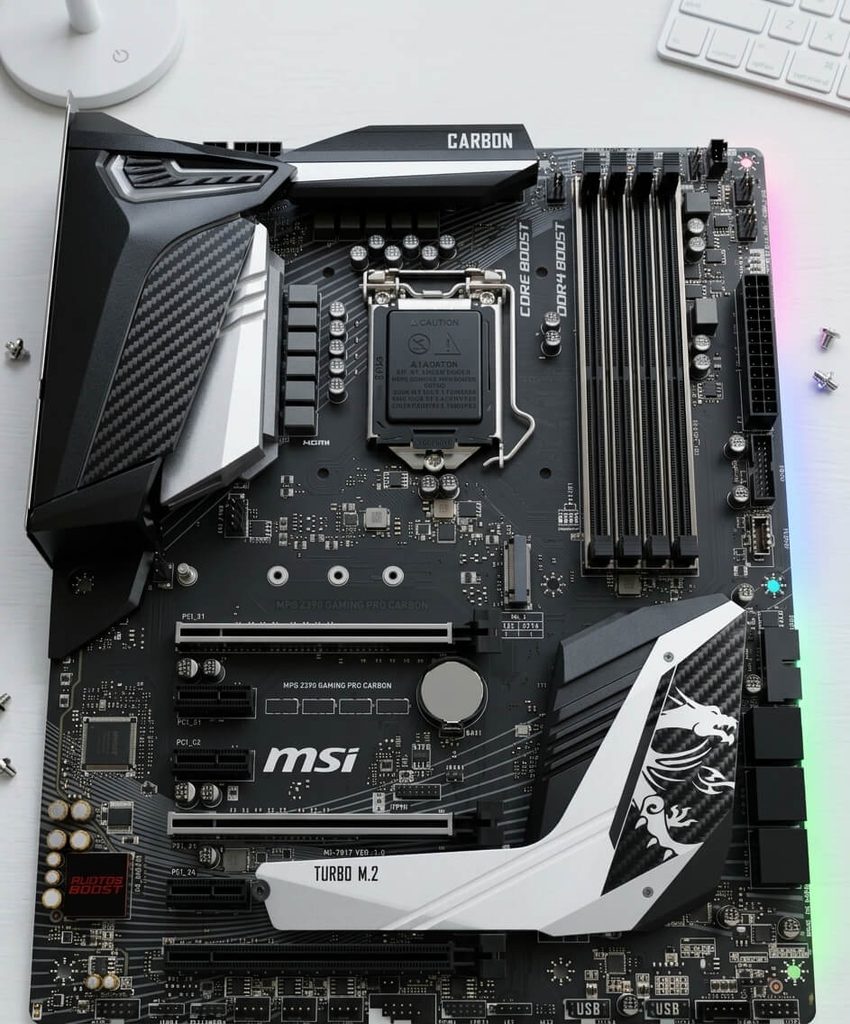
The MSI MPG Z390 Gaming Pro Carbon is an ATX motherboard built on the Intel Z390 chipset for the LGA1151 socket. It supports 9th and 8th Generation Intel Core, Pentium Gold, and Celeron processors, which includes the i5-9400F. The board uses four DDR4 DIMM slots in dual-channel mode, supports memory speeds up to DDR4-4400 (OC), and accepts a maximum of 128 GB of RAM.
The i5-9400F runs on the Z390 chipset without restriction, since Z390 boards accept every LGA1151 processor from the 8th and 9th Generation lineup. Because the i5-9400F has a locked multiplier, it cannot use the Z390 chipset’s CPU overclocking support, but it can still benefit from the board’s memory overclocking headroom and from the five doubled power phases MSI assigns to the CPU core for stable voltage delivery under sustained six-core loads.
Storage on this board includes two M.2 slots that support Intel Optane Memory technology and six SATA 6Gb/s ports, with RAID 0, 1, 5, and 10 support across the available drives. Expansion includes three PCI-E 3.0 x16 slots, which support 2-way SLI or 3-way CrossFire, plus three PCI-E x1 slots. Connectivity includes USB 3.1 Gen2 Type-A and Type-C ports, USB 3.1 Gen1 ports, and an Intel I219-V Gigabit LAN controller. Audio runs through a Realtek ALC1220P codec paired with MSI Audio Boost 4 and Nahimic 3 software.
Compared with the five B365-based boards in this article, the Z390 chipset on this board provides more PCI-E lanes, a higher maximum memory frequency, and multi-GPU support that the B365 boards lack. This makes the MPG Z390 Gaming Pro Carbon the strongest choice among the six boards for a builder who wants Z390-tier connectivity and future upgrade flexibility with the i5-9400F, even though the CPU itself cannot use the chipset’s core overclocking features.
Specs & configuration
| Specification | MSI MPG Z390 Gaming Pro Carbon |
|---|---|
| Chipset | Intel Z390 |
| Socket | LGA 1151 |
| Form Factor | ATX |
| Memory | 4x DDR4 DIMM, dual channel, up to 4400 MHz (OC), max 128 GB |
| Expansion Slots | 3x PCI-E 3.0 x16, 3x PCI-E x1 |
| Storage | 2x M.2 (Optane ready), 6x SATA 6Gb/s, RAID 0/1/5/10 |
| USB | USB 3.1 Gen2 Type-A/Type-C, USB 3.1 Gen1, USB 2.0 |
| LAN | Intel I219-V Gigabit LAN |
| Audio | Realtek ALC1220P, Audio Boost 4 |
| Multi-GPU | 2-way SLI / 3-way CrossFire |
ASUS ROG Strix B365-F Gaming
Pricing and availability on Amazon
Pros & cons
Strengths
- Audio quality: The SupremeFX S1220A codec with Sonic Studio III provides higher-end onboard audio than the standard Realtek codecs used on several other B365 boards in this comparison.
- Cooling control: Fan Xpert 4 software with GPU-temperature sensing supports dynamic fan calibration during sustained loads.
- RGB ecosystem: Aura Sync lighting and a 3D-printing-friendly RGB mount support broader lighting customization.
Limitations
- No multi-GPU support: The B365 chipset does not support SLI or multi-card CrossFire configurations.
- No CPU overclocking benefit: Since the i5-9400F has a locked multiplier, the board’s overclocking-oriented VRM design provides thermal headroom rather than a clock-speed increase.
Review notes
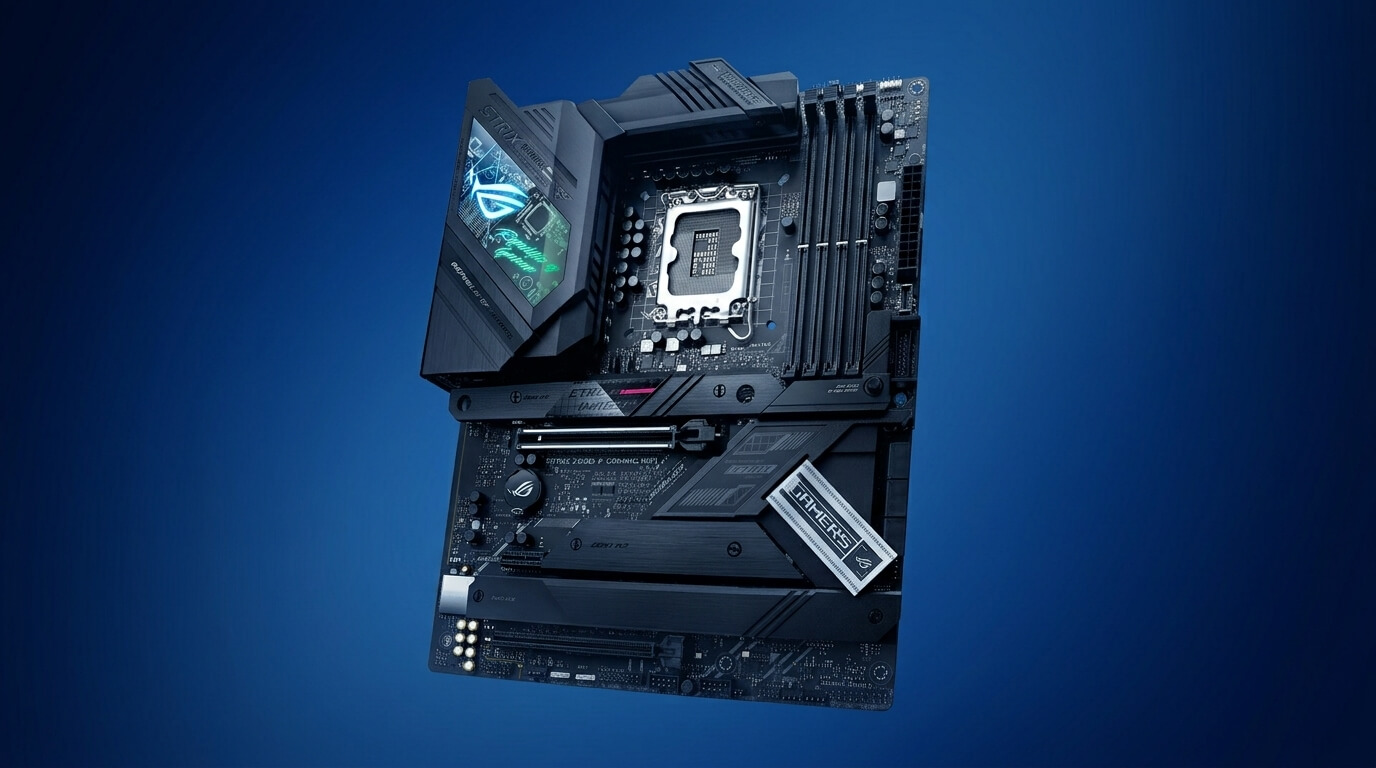
The ASUS ROG Strix B365-F Gaming is an ATX motherboard built on the Intel B365 chipset for the LGA1151 socket. It supports 9th and 8th Generation Intel Core, Pentium Gold, and Celeron processors, which includes the i5-9400F. The board uses four DDR4 DIMM slots in dual-channel mode with support for DDR4-2666, DDR4-2400, and DDR4-2133 speeds, and a maximum capacity of 64 GB.
The i5-9400F runs on this board within the B365 chipset’s standard operating range, since the CPU’s locked multiplier and 65 W TDP fall well within the board’s Digi+ VRM design. The Digi+ voltage-regulator module delivers stable power to the CPU core, and MSI-style thermal pads on the power stage help the board sustain six-core workloads without throttling.
Storage includes dual M.2 slots and SATA 6Gb/s ports, and networking runs through an Intel I219-V Gigabit Ethernet controller paired with ASUS GameFirst V traffic-prioritization software. Audio uses a SupremeFX S1220A codec with Sonic Studio III software for output tuning. The board includes Aura Sync RGB lighting with a 3D-printing-friendly mount, and Fan Xpert 4 software provides GPU-temperature-aware fan control across the board’s fan headers.
Compared with the ASRock B365 Phantom Gaming 4, GIGABYTE B365M DS3H, and ASUS Prime B365M-A, all of which also use the B365 chipset, the ROG Strix B365-F Gaming differentiates itself through its ATX size, its SupremeFX audio codec, and its RGB ecosystem integration. Compared with the MSI Z390 board, it lacks multi-GPU support and the higher memory-overclocking ceiling, but it costs less while still supporting the i5-9400F at full specification.
Specs & configuration
| Specification | ASUS ROG Strix B365-F Gaming |
|---|---|
| Chipset | Intel B365 |
| Socket | LGA 1151 |
| Form Factor | ATX |
| Memory | 4x DDR4 DIMM, dual channel, up to 2666 MHz, max 64 GB |
| Storage | Dual M.2, SATA 6Gb/s |
| USB | USB 3.1 Gen2 |
| LAN | Intel I219-V Gigabit Ethernet |
| Audio | SupremeFX S1220A, Sonic Studio III |
| RGB | Aura Sync |
ASRock B365 Phantom Gaming 4
Pricing and availability on Amazon
Pros & cons
Strengths
- Dual M.2 storage: Two Ultra M.2 slots, both running at PCIe Gen3 x4, support two fast NVMe drives simultaneously.
- CrossFireX support: AMD Quad CrossFireX compatibility on the dual PCI-E x16 slots exceeds the single-GPU-only layout of some competing B365 boards.
- Component quality: ASRock Super Alloy components, including 50A power chokes and Nichicon capacitors, support long-term durability under sustained CPU loads.
Limitations
- No SLI support: The B365 chipset and board layout do not support NVIDIA SLI configurations.
- Standard audio codec: The Realtek ALC1200 codec offers fewer tuning features than the SupremeFX codec used on the ASUS ROG Strix B365-F Gaming.
Review notes
The ASRock B365 Phantom Gaming 4 is an ATX motherboard built on the Intel B365 chipset for the LGA1151 socket. It supports 9th and 8th Generation Intel Core processors, which includes the i5-9400F, and uses four DDR4 DIMM slots in dual-channel mode with support up to DDR4-2666 and a maximum capacity of 64 GB.
The i5-9400F operates on this board within its standard 65 W power envelope. ASRock’s Digi Power design and Super Alloy component set, which includes 50A power chokes and Nichicon 12K Black Caps, supply steady voltage to the CPU core during sustained six-core workloads such as video encoding or compilation tasks.
Expansion includes two PCI-E 3.0 x16 slots (single at x16, dual at x16/x4) and two PCI-E 3.0 x1 slots, with AMD Quad CrossFireX support. Storage includes six SATA3 ports and two Ultra M.2 slots, one running at PCIe Gen3 x4 and the other supporting both PCIe Gen3 x4 and SATA3 modes. Connectivity includes two USB 3.1 Gen2 ports (Type-A and Type-C) and six USB 3.1 Gen1 ports. Audio runs through a Realtek ALC1200 codec with 7.1-channel output and DTS Connect support, and networking uses an Intel Gigabit LAN controller.
Compared with the ASUS ROG Strix B365-F Gaming, the Phantom Gaming 4 offers a second Ultra M.2 slot and CrossFireX support on its dual x16 slots, which the ASUS board does not list. Compared with the GIGABYTE B365M DS3H and ASUS Prime B365M-A, both of which use the compact Micro-ATX form factor, the Phantom Gaming 4 provides a full ATX layout with more expansion slots at a similar B365 price tier.
Specs & configuration
| Specification | ASRock B365 Phantom Gaming 4 |
|---|---|
| Chipset | Intel B365 |
| Socket | LGA 1151 |
| Form Factor | ATX |
| Memory | 4x DDR4 DIMM, dual channel, up to 2666 MHz, max 64 GB |
| Expansion Slots | 2x PCI-E 3.0 x16, 2x PCI-E 3.0 x1 |
| Storage | 6x SATA3, 2x Ultra M.2 (PCIe Gen3 x4) |
| USB | 2x USB 3.1 Gen2 (Type-A/Type-C), 6x USB 3.1 Gen1 |
| LAN | Intel Gigabit LAN |
| Audio | Realtek ALC1200, 7.1 CH, DTS Connect |
| Multi-GPU | AMD Quad CrossFireX |
MSI B365M PRO-VDH
Pricing and availability on Amazon
Pros & cons
Strengths
- Compact footprint: The Micro-ATX size fits smaller cases while retaining four DIMM slots and a full set of SATA ports.
- Storage capacity: Six SATA 6Gb/s ports plus a Turbo M.2 slot support multiple drives in a budget-tier board.
- Budget positioning: The board targets cost-conscious i5-9400F builds without sacrificing core connectivity.
Limitations
- Limited USB speed: The board uses USB 3.1 Gen1 rather than the Gen2 ports found on the ASUS ROG Strix B365-F Gaming and ASRock B365 Phantom Gaming 4.
- Single M.2 slot: Only one M.2 slot is available, compared with the two Ultra M.2 slots on the ASRock B365 Phantom Gaming 4.
Review notes
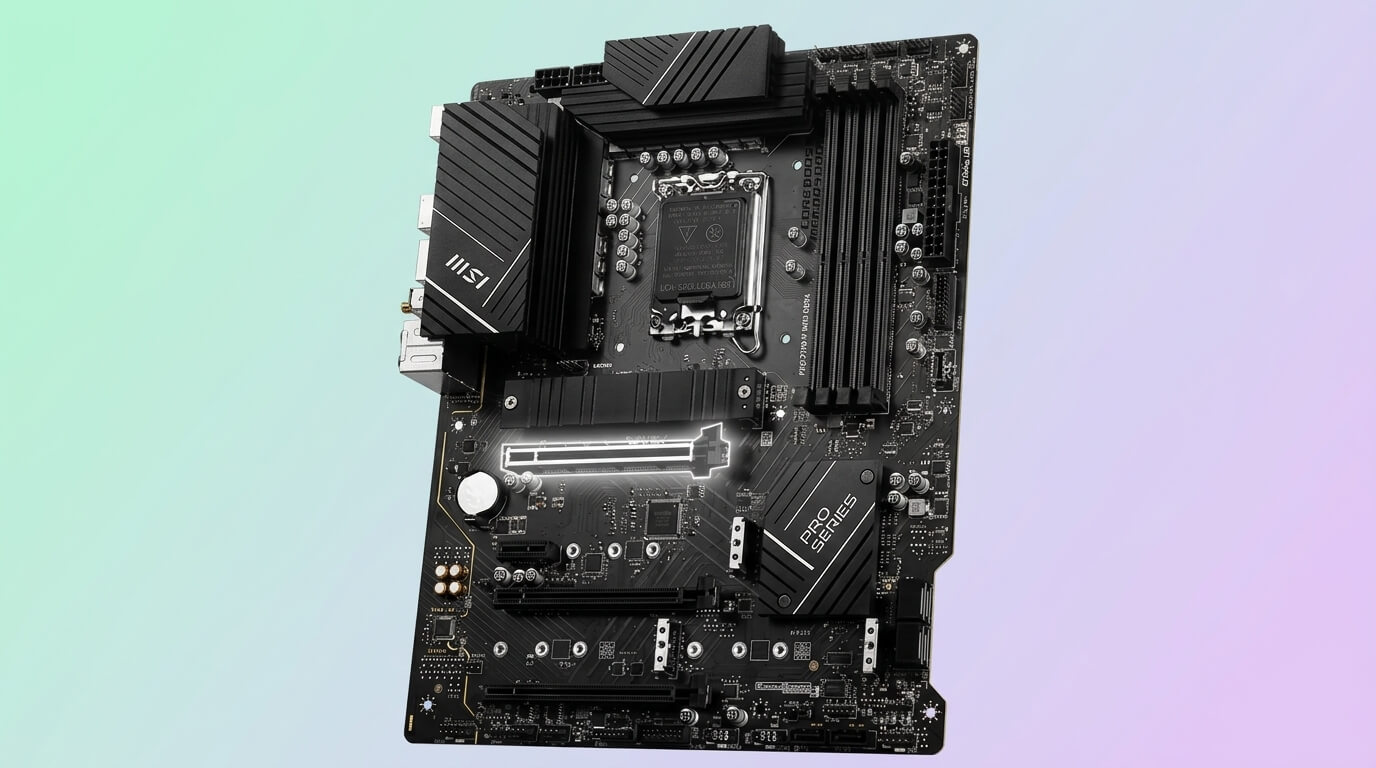
The MSI B365M PRO-VDH is a Micro-ATX motherboard built on the Intel B365 chipset for the LGA1151 socket. It supports 9th and 8th Generation Intel Core, Pentium Gold, and Celeron processors, which includes the i5-9400F, and measures 24.4 cm by 24.4 cm. The board uses four DDR4 DIMM slots in dual-channel mode with support up to DDR4-2666 and a maximum capacity of 64 GB.
The i5-9400F runs on this board within its standard 65 W thermal envelope, since the Micro-ATX PRO-VDH targets standard desktop use rather than overclocking. MSI’s Core Boost power-delivery design and DDR4 Boost memory layout support stable operation of the CPU’s six cores during typical desktop, office, and light gaming workloads.
Storage includes six SATA 6Gb/s connectors and a Turbo M.2 slot for NVMe or SATA-based SSDs. Rear connectivity includes two USB 3.1 Gen1 ports, a USB 3.1 Gen1 Type-C port, and USB 2.0 ports, alongside VGA, HDMI, and DVI-D video outputs, which apply only to processors with integrated graphics and remain unused with the i5-9400F. Networking runs through an onboard Gigabit LAN controller, and audio uses an integrated HD audio codec.
Compared with the GIGABYTE B365M DS3H and ASUS Prime B365M-A, the two other Micro-ATX B365 boards in this comparison, the B365M PRO-VDH offers a comparable feature set at a similar budget tier, with a single M.2 slot and six SATA ports matching the general specification level of its Micro-ATX competitors. Compared with the ATX boards covered earlier, it trades expansion slots and multi-GPU support for a smaller footprint suited to compact builds.
Specs & configuration
| Specification | MSI B365M PRO-VDH |
|---|---|
| Chipset | Intel B365 |
| Socket | LGA 1151 |
| Form Factor | Micro-ATX (24.4 x 24.4 cm) |
| Memory | 4x DDR4 DIMM, dual channel, up to 2666 MHz, max 64 GB |
| Storage | 6x SATA 6Gb/s, 1x M.2 (Turbo M.2) |
| USB | USB 3.1 Gen1, USB 3.1 Gen1 Type-C, USB 2.0 |
| LAN | Onboard Gigabit LAN |
| Audio | Integrated HD audio |
| Video Outputs | VGA, HDMI, DVI-D (iGPU-dependent) |
GIGABYTE B365M DS3H
Pricing and availability on Amazon
Pros & cons
Strengths
- Storage flexibility: Six SATA III ports with RAID 0/1/5/10 support and an Optane-ready M.2 slot cover a range of storage configurations.
- Networking: The GIGABYTE 8118 Gaming LAN controller with bandwidth management targets more consistent network performance under load.
- Firmware redundancy: GIGABYTE DualBIOS protects against firmware corruption during BIOS updates.
Limitations
- Fewer expansion slots: One PCI-E x16, one x4, and one x1 slot provide less expansion room than the ATX boards in this comparison.
- Standard audio codec: The Realtek ALC887 codec offers fewer features than the SupremeFX codec used on the ASUS ROG Strix B365-F Gaming.
Review notes
The GIGABYTE B365M DS3H is a Micro-ATX motherboard built on the Intel B365 chipset for the LGA1151 socket. It supports 9th and 8th Generation Intel Core processors, which includes the i5-9400F, and uses four DDR4 DIMM slots in dual-channel, non-ECC, unbuffered mode with support up to DDR4-2666 and a maximum capacity of 64 GB.
The i5-9400F operates on this board within its 65 W power envelope through GIGABYTE’s hybrid digital PWM power design, which is built for the Ultra Durable component standard. Smart Fan 5 provides multiple temperature sensors and hybrid fan headers with fan-stop control, which helps regulate cooling during sustained six-core workloads.
Expansion includes one PCI-E x16 slot, one PCI-E x4 slot, and one PCI-E x1 slot. Storage includes six SATA III ports with RAID 0, 1, 5, and 10 support, plus one M.2 slot running at PCIe Gen3 x4 with SATA interface support and Intel Optane Memory readiness. Networking uses the GIGABYTE 8118 Gaming LAN controller with bandwidth-management software, and audio runs through a Realtek ALC887 codec. The board includes RGB Fusion support for external RGB LED strips in seven colors and uses GIGABYTE’s DualBIOS design for firmware redundancy.
Who it suits
Compared with the MSI B365M PRO-VDH and ASUS Prime B365M-A, the B365M DS3H distinguishes itself through its Gaming LAN controller, RAID support across its six SATA ports, and DualBIOS redundancy. Compared with the ATX B365 boards covered earlier, it offers a smaller footprint with fewer expansion slots, which fits builders who do not need multiple add-in cards alongside the i5-9400F’s discrete graphics card.
Specs & configuration
| Specification | GIGABYTE B365M DS3H |
|---|---|
| Chipset | Intel B365 |
| Socket | LGA 1151 |
| Form Factor | Micro-ATX |
| Memory | 4x DDR4 DIMM, dual channel, up to 2666 MHz, max 64 GB |
| Expansion Slots | 1x PCI-E x16, 1x PCI-E x4, 1x PCI-E x1 |
| Storage | 6x SATA III (RAID 0/1/5/10), 1x M.2 (PCIe Gen3 x4, Optane ready) |
| LAN | GIGABYTE 8118 Gaming LAN |
| Audio | Realtek ALC887 |
| RGB | RGB Fusion (7-color LED strip support) |
ASUS Prime B365M-A
Pricing and availability on Amazon
Pros & cons
Strengths
- Dual M.2 storage: Two M.2 slots with Intel Optane Memory readiness exceed the single M.2 slot found on the MSI B365M PRO-VDH and GIGABYTE B365M DS3H.
- Slot reinforcement: The SafeSlot-reinforced PCI-E x16 slot adds physical durability for heavier graphics cards.
- Component protection: ASUS 5X Protection III covers power delivery, memory, and I/O circuits against damage.
Limitations
- Single PCI-E x16 slot: Only one full-length expansion slot is available, compared with the multi-slot layouts on the ATX boards in this comparison.
- Standard networking: The Realtek 1Gb Ethernet controller lacks the bandwidth-management software bundled with the GIGABYTE 8118 Gaming LAN controller.
Review notes
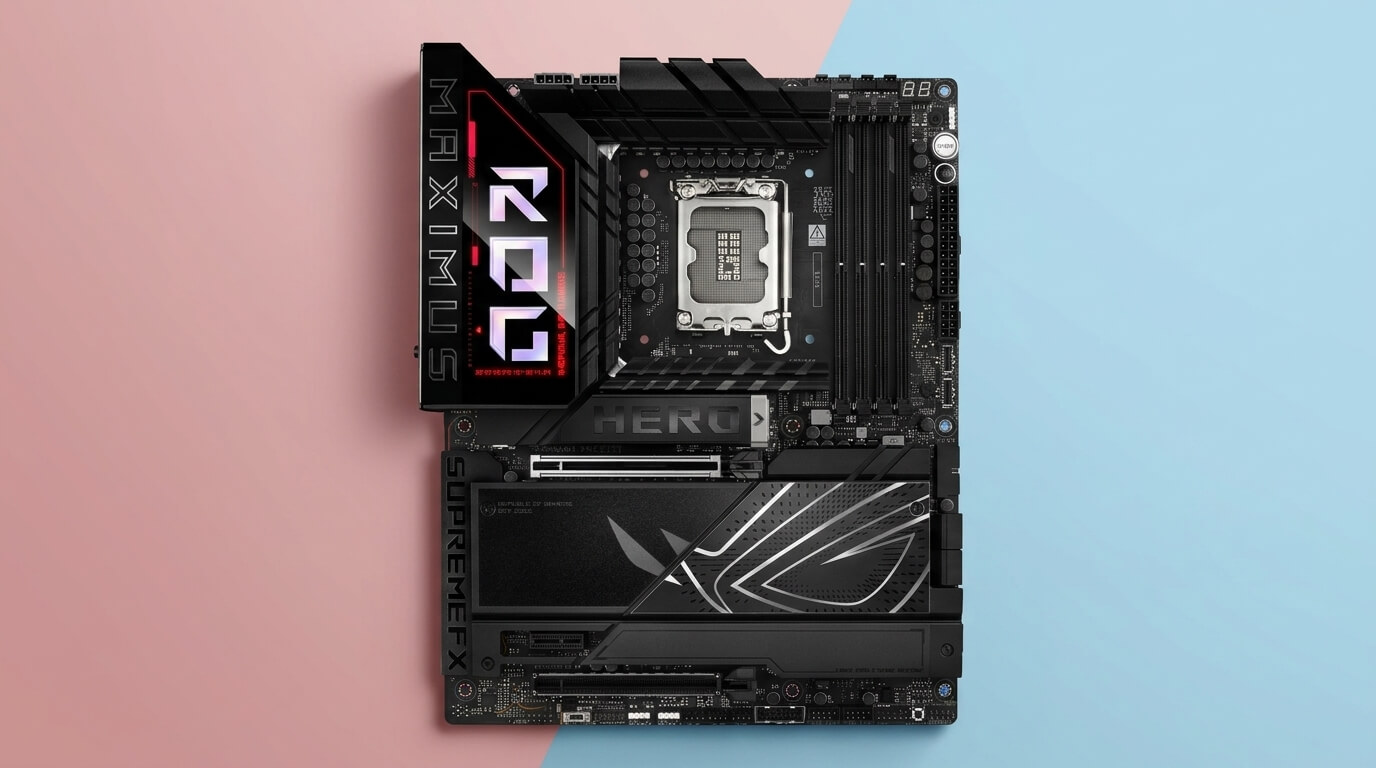
The ASUS Prime B365M-A is a Micro-ATX motherboard built on the Intel B365 chipset for the LGA1151 socket. It supports 9th and 8th Generation Intel Core i7, Core i5, Core i3, Pentium Gold, and Celeron processors, which includes the i5-9400F, and measures 24.4 cm by 21.8 cm. The board uses four DDR4 DIMM slots in dual-channel, non-ECC mode with support up to DDR4-2666 and a maximum capacity of 64 GB.
The i5-9400F runs on this board within its 65 W thermal envelope through the ASUS 5X Protection III hardware safeguard set, which covers component-level protection for the power delivery, memory, and I/O circuits. The SafeSlot-reinforced PCI-E x16 slot provides additional physical support for heavier discrete graphics cards paired with the CPU.
Expansion includes one PCI-E 3.0 x16 slot and two PCI-E 3.0 x1 slots. Storage includes six SATA 6Gb/s ports and two M.2 slots with Intel Optane Memory support. Rear connectivity includes four USB 3.1 Gen1 Type-A ports and one USB 3.1 Gen1 Type-C port, alongside D-Sub, HDMI 1.4, and DVI-D video outputs, which apply only to processors with integrated graphics and remain unused with the i5-9400F. Audio runs through a Realtek ALC887/897 codec with 8-channel output, and networking uses a Realtek 1Gb Ethernet controller.
Compared with the GIGABYTE B365M DS3H, the Prime B365M-A offers a second M.2 slot but a single PCI-E x16 slot rather than a three-slot layout, and it uses Realtek networking rather than a dedicated gaming LAN controller. Compared with the MSI B365M PRO-VDH, it matches the six SATA ports but adds a second M.2 slot and ASUS’s SafeSlot reinforcement, positioning it as a comparable Micro-ATX option for an i5-9400F build that prioritizes dual-M.2 storage over gaming-oriented networking.
Specs & configuration
| Specification | ASUS Prime B365M-A |
|---|---|
| Chipset | Intel B365 |
| Socket | LGA 1151 |
| Form Factor | Micro-ATX (24.4 x 21.8 cm) |
| Memory | 4x DDR4 DIMM, dual channel, up to 2666 MHz, max 64 GB |
| Expansion Slots | 1x PCI-E 3.0 x16, 2x PCI-E 3.0 x1 |
| Storage | 6x SATA 6Gb/s, 2x M.2 (Optane ready) |
| USB | 4x USB 3.1 Gen1 Type-A, 1x USB 3.1 Gen1 Type-C |
| LAN | Realtek 1Gb Ethernet |
| Audio | Realtek ALC887/897, 8-channel |
How To Chose Motherboard for i5 9400F
Choose a motherboard for the i5-9400F by matching the chipset, form factor, and storage configuration to the build’s purpose, since the CPU’s locked multiplier removes CPU overclocking as a selection factor. A B365 chipset board, such as the ASRock B365 Phantom Gaming 4, GIGABYTE B365M DS3H, ASUS Prime B365M-A, MSI B365M PRO-VDH, or ASUS ROG Strix B365-F Gaming, covers the i5-9400F’s full specification at a lower cost than a Z390 board. A Z390 board, such as the MSI MPG Z390 Gaming Pro Carbon, adds multi-GPU support, higher memory-overclocking headroom, and more PCI-E lanes, which benefit builders who plan future graphics card or expansion upgrades.
Form factor determines case compatibility and expansion room. An ATX board, such as the MSI MPG Z390 Gaming Pro Carbon, ASUS ROG Strix B365-F Gaming, or ASRock B365 Phantom Gaming 4, provides more PCI-E slots and DIMM spacing, which suits a mid-tower or full-tower case. A Micro-ATX board, such as the MSI B365M PRO-VDH, GIGABYTE B365M DS3H, or ASUS Prime B365M-A, fits smaller cases while retaining four DIMM slots and standard SATA and M.2 storage.
Storage and connectivity requirements narrow the choice further. A build that needs two NVMe drives benefits from a dual-M.2 board, such as the ASRock B365 Phantom Gaming 4 or ASUS Prime B365M-A, rather than a single-M.2 board, such as the MSI B365M PRO-VDH or GIGABYTE B365M DS3H. A build that prioritizes onboard audio quality benefits from the SupremeFX codec on the ASUS ROG Strix B365-F Gaming, while a build that prioritizes network throughput benefits from the GIGABYTE 8118 Gaming LAN controller on the B365M DS3H. Since the i5-9400F has no integrated graphics, every board in this comparison requires a discrete graphics card regardless of chipset or form factor.
JOIN THE CONVERSATION
Leave a comment
Have a question or something to add? Share it with our editorial team. Comments are reviewed privately and are not published automatically.