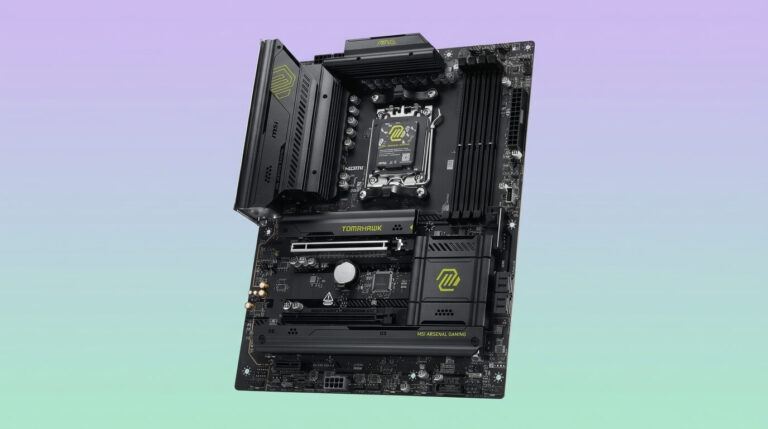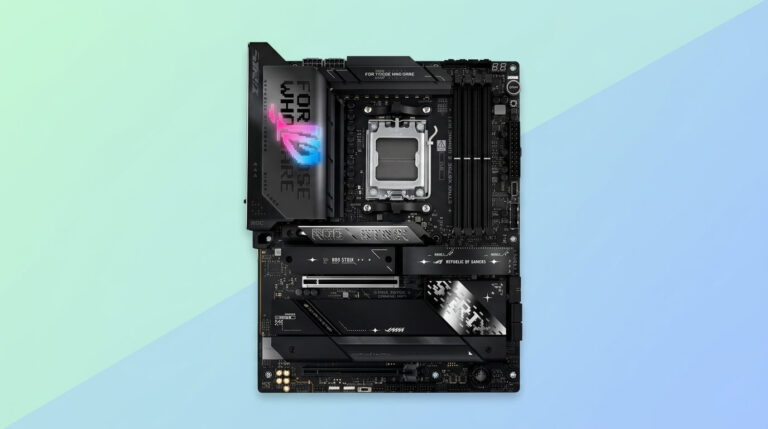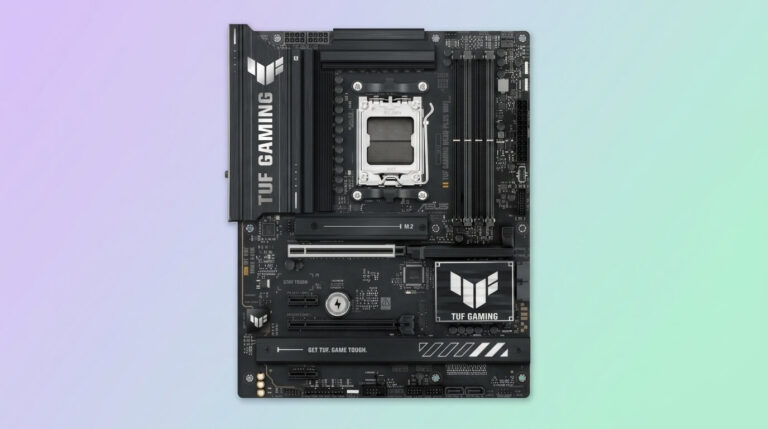
The Intel Core i5-10400F is a six-core, twelve-thread processor from the 10th Gen Comet Lake family, built on the LGA1200 socket without an integrated GPU. Selecting a compatible motherboard requires matching the socket, chipset, and power delivery to this processor’s non-overclockable, non-K design.
LGA1200 motherboards fall into several chipset tiers: H410 and B460 target entry-level budgets, B560 and H570 add memory overclocking and PCIe 4.0 support for 11th Gen upgrades, and Z490/Z590 target CPU overclocking that the i5-10400F cannot use. Because the i5-10400F has a locked multiplier, a B460 or B560 board delivers the same core gaming and productivity performance as a Z-series board at a lower cost.
This guide reviews six LGA1200 motherboards suited to the i5-10400F: five B560 boards spanning micro-ATX and ATX form factors, and one B460 board for buyers prioritizing lower cost over memory-overclocking headroom. Each review covers the board’s specifications, its behavior with the i5-10400F specifically, and how it compares with the other boards in this guide.
The final section explains how to choose among these motherboards based on chipset, power delivery, memory support, storage, connectivity, and form factor.
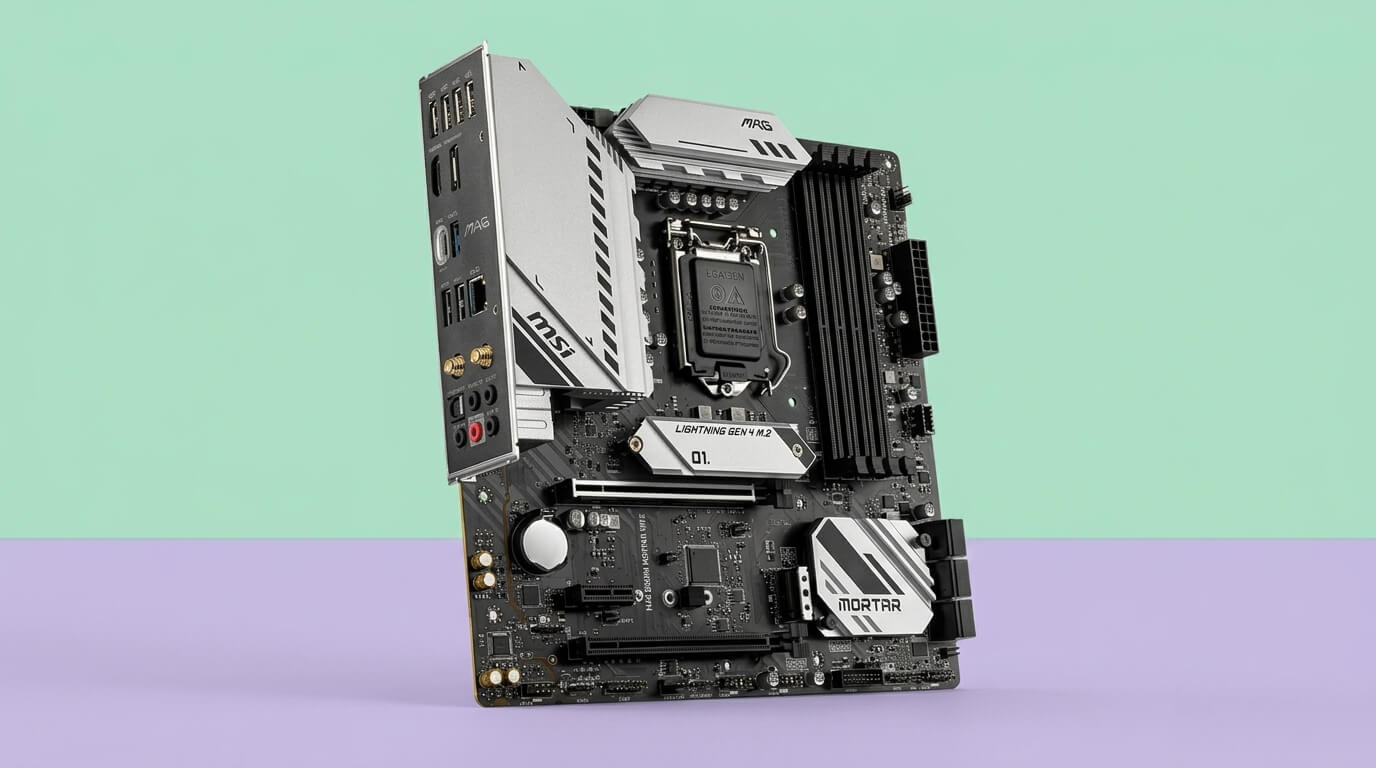
MSI MAG B560M Mortar WiFi
The MSI MAG B560M Mortar WiFi is a micro-ATX motherboard built on the Intel B560 chipset for LGA1200 processors. It supports 4 DIMMs of dual-channel DDR4 memory at up to DDR4-5066 (OC) and provides one M.2 Gen4 x4 slot alongside one M.2 Gen3 x4 slot. The board uses 8+4 pin power connectors with Core Boost technology to sustain CPU power loads, and an extended VRM heatsink with 7W/mK thermal pads manages heat dissipation. A 6-layer PCB with 2 oz. thickened copper improves heat dissipation and reliability, and MSI’s Steel Armor reinforces the PCIe slots with extra solder points to support heavier graphics cards.
Connectivity includes a 2.5Gbps LAN controller and a USB 3.2 Gen 2×2 Type-C port rated for 20Gb/s transfers, alongside Wi-Fi 6E on the WiFi variant. Display output runs through HDMI and DisplayPort, active only with a processor that includes integrated graphics.
With the i5-10400F, the MAG B560M Mortar WiFi runs the primary PCIe x16 slot and the M.2 Gen4 slot at PCIe 3.0 speeds, because 10th Gen Comet Lake CPUs do not supply PCIe 4.0 lanes; PCIe 4.0 bandwidth activates only with an 11th Gen CPU installed later. The i5-10400F’s locked multiplier means the board’s overclocking-oriented VRM cooling functions mainly as thermal headroom rather than a requirement, while B560’s memory-overclocking support still lets DDR4 kits run above the CPU’s native 2666MHz speed via XMP.
Compared with the ASUS TUF Gaming B560-PLUS WiFi and GIGABYTE B560 AORUS Pro AX, the MAG B560M Mortar WiFi uses a smaller micro-ATX footprint and a single M.2 Gen4 slot rather than dual or triple M.2 Gen4 storage. Compared with the MSI B560M PRO-VDH WiFi, it adds a second full-speed M.2 slot and stronger PCIe slot reinforcement.
The following table summarizes the core specifications of the MSI MAG B560M Mortar WiFi.
| Specification | Detail |
|---|---|
| Chipset | Intel B560 |
| Socket | LGA1200 (10th/11th Gen Intel Core) |
| Form factor | Micro-ATX |
| Memory | 4x DDR4 DIMM, dual channel, up to DDR4-5066 (OC) |
| Storage | 1x M.2 Gen4 x4, 1x M.2 Gen3 x4, SATA 6Gb/s ports |
| Expansion slots | PCIe 4.0 x16, PCIe 3.0 x1 |
| Networking | 2.5Gbps LAN, Wi-Fi 6E (WiFi variant) |
| USB | USB 3.2 Gen 2×2 Type-C (20Gb/s), USB 3.2 Gen 2, USB 3.2 Gen 1 |
| Display outputs | HDMI 2.0b, DisplayPort 1.4 |
| Power connectors | 8-pin + 4-pin CPU power |
Pros:
- Storage bandwidth: A dedicated M.2 Gen4 x4 slot supports future high-speed NVMe SSDs.
- PCIe reinforcement: Steel Armor slots add solder-point reinforcement for heavier graphics cards.
- Networking: Onboard 2.5Gbps LAN and Wi-Fi 6E cover wired and wireless needs without add-in cards.
- Cooling: An extended VRM heatsink and thermal pads keep power delivery temperatures stable under sustained load.
Cons:
- PCIe 4.0 inactive with the i5-10400F: The M.2 Gen4 slot and primary PCIe slot run at Gen3 speeds until an 11th Gen CPU is installed.
- Single full-size PCIe x16 slot: Multi-card expansion options are limited compared with ATX alternatives.
- No CPU overclocking headroom needed: The board’s overclocking-focused VRM design exceeds what the locked-multiplier i5-10400F requires.
ASUS TUF Gaming B560-PLUS WiFi
The ASUS TUF Gaming B560-PLUS WiFi is an ATX motherboard on the Intel B560 chipset for LGA1200 processors. It uses 8+1 DrMOS power stages, PCIe 4.0 support, DDR4 memory up to 5000MHz (OC), dual M.2 slots with a flexible heatsink, HDMI 2.0, DisplayPort 1.4, 2.5Gb Ethernet, and Thunderbolt 4 header support. The board carries 4 memory slots supporting up to 128GB of DDR4 in dual-channel mode, 6 SATA 6Gb/s ports, and 2 M.2 ports, with Intel Optane support.
The VRM combines high-side and low-side MOSFETs and drivers into single DrMOS packages, and ProCool power connectors are built to tight tolerances for flush contact with PSU power lines, reducing hotspots. A large, high-mass heatsink covers the VRM and choke areas for heat dissipation, and a flexible M.2 heatsink extends coverage across more M.2 slots.
With the i5-10400F installed, the primary PCIe x16 slot and PCIe 4.0-rated M.2 slot operate at PCIe 3.0 speeds, since 10th Gen CPUs do not expose PCIe 4.0 lanes to the chipset-adjacent slot. Memory overclocking through B560 still applies, letting DDR4 kits exceed the i5-10400F’s native 2666MHz ceiling when XMP is enabled. The 8+1 DrMOS VRM provides more sustained current capacity than the i5-10400F’s 65W TDP requires, which benefits users planning a future CPU upgrade rather than the 10400F itself.
Compared with the GIGABYTE B560 AORUS Pro AX, the TUF Gaming B560-PLUS WiFi uses fewer VRM phases (8+1 versus 12+1) and two M.2 slots versus three. Compared with the ASRock B560 Steel Legend, it includes onboard Wi-Fi 6 rather than a Wi-Fi-ready M.2 Key-E slot requiring a separate module.
The table below lists the ASUS TUF Gaming B560-PLUS WiFi’s core specifications.
| Specification | Detail |
|---|---|
| Chipset | Intel B560 |
| Socket | LGA1200 (10th/11th Gen Intel Core) |
| Form factor | ATX |
| Memory | 4x DDR4 DIMM, dual channel, up to DDR4-5000 (OC), max 128GB |
| Storage | 2x M.2 (PCIe 4.0 capable), 6x SATA 6Gb/s |
| Expansion slots | PCIe 4.0 x16 (11th Gen), PCIe 3.0 x16 (10th Gen), PCIe 3.0 x1 |
| Networking | Realtek 2.5Gb Ethernet, Intel Wi-Fi 6 |
| USB | USB 3.2 Gen 2 Type-A/Type-C, front USB 3.2 Gen 1 Type-C, Thunderbolt 4 header |
| Display outputs | HDMI 2.0, DisplayPort 1.4 |
| VRM | 8+1 DrMOS power stages |
Pros:
- Full ATX layout: Additional PCIe slots and expansion room compared with micro-ATX boards in this guide.
- Power delivery quality: DrMOS stages and ProCool connectors reduce hotspots under sustained load.
- Thunderbolt 4 header: Adds an upgrade path for Thunderbolt add-in cards not present on several competing boards.
- Balanced cooling: VRM, PCH, and flexible M.2 heatsinks cover all major heat sources.
Cons:
- PCIe 4.0 unavailable with the i5-10400F: Both the primary slot and PCIe 4.0 M.2 slot run at Gen3 speeds until an 11th Gen CPU is installed.
- Larger footprint: ATX sizing requires a mid-tower or larger case, unlike the micro-ATX boards in this guide.
- Two M.2 slots only: Fewer NVMe slots than the triple M.2 layout on the GIGABYTE B560 AORUS Pro AX.
GIGABYTE B560 AORUS Pro AX
The GIGABYTE B560 AORUS Pro AX is an ATX motherboard on the Intel B560 chipset for LGA1200 processors. It supports dual-channel non-ECC unbuffered DDR4 across 4 DIMMs, uses a direct 12+1 phase digital VRM solution with 50A DrMOS, and includes triple ultra-fast NVMe PCIe 4.0/3.0 x4 M.2 slots with thermal guards. Networking runs through onboard Intel Wi-Fi 6 802.11ax with Bluetooth 5 and Intel 2.5GbE LAN, and the rear panel includes a SuperSpeed USB 3.2 Gen2x2 Type-C port delivering up to 20Gb/s.
The digital PWM controller with Smart Power Stages provides 50A of power from each phase, for a total of 400A, and pairs with tantalum polymer capacitors and solid-pin CPU power connectors for stability under load. The fully covered thermal design uses high-coverage MOSFET and integrated molding heatsinks to improve airflow and heat exchange. The board provides 6 SATA 6Gb/s connectors and 6 USB 3.2 Gen 1 ports, four of which sit on the back panel.
With the i5-10400F, the 12+1 phase VRM operates well below its rated capacity, since the CPU’s 65W TDP demands far less current than the 400A design ceiling supports; this headroom benefits future CPU upgrades more than the 10400F itself. As with other B560 boards in this guide, the primary PCIe x16 slot and Gen4-rated M.2 slots run at PCIe 3.0 speeds with a 10th Gen CPU installed, while B560’s memory-overclocking support still allows DDR4 kits to exceed the i5-10400F’s native 2666MHz ceiling.
Compared with the ASUS TUF Gaming B560-PLUS WiFi, the AORUS Pro AX offers a third M.2 slot and roughly 50% more VRM phases. Compared with the ASRock B560 Steel Legend, it includes onboard Wi-Fi 6 as a standard feature rather than requiring a separate M.2 Key-E module.
The table below summarizes the GIGABYTE B560 AORUS Pro AX’s core specifications.
| Specification | Detail |
|---|---|
| Chipset | Intel B560 |
| Socket | LGA1200 (10th/11th Gen Intel Core) |
| Form factor | ATX |
| Memory | 4x DDR4 DIMM, dual channel, max 128GB |
| Storage | 3x M.2 (PCIe 4.0/3.0 x4) with thermal guards, 6x SATA 6Gb/s |
| Expansion slots | PCIe 4.0 x16, additional PCIe slots |
| Networking | Intel Wi-Fi 6 802.11ax, Intel 2.5GbE LAN |
| USB | USB 3.2 Gen2x2 Type-C (20Gb/s), USB 3.2 Gen1 Type-C, USB 3.2 Gen1 |
| VRM | Direct 12+1 phase digital VRM, 50A DrMOS |
| Audio | 120dB Hi-Res audio |
Pros:
- Triple M.2 storage: Three PCIe M.2 slots with thermal guards exceed the dual-M.2 layout on most other boards in this guide.
- VRM headroom: A 12+1 phase, 400A-rated power design provides substantial thermal margin under sustained CPU load.
- Networking: Intel Wi-Fi 6 and Intel 2.5GbE LAN are both standard, without requiring add-in cards.
- Audio quality: 120dB Hi-Res audio output exceeds the audio codecs used on most competing boards.
Cons:
- VRM capacity exceeds i5-10400F requirements: The 400A power design is built for higher-TDP CPUs than the 65W i5-10400F.
- PCIe 4.0 unavailable with the i5-10400F: M.2 Gen4 slots and the primary PCIe slot run at Gen3 speeds until an 11th Gen CPU is installed.
- ATX footprint: Requires a larger case than the micro-ATX boards in this guide.
ASRock B560 Steel Legend
The ASRock B560 Steel Legend is an ATX motherboard on the Intel B560 chipset for LGA1200 processors. It uses a 10-phase Dr.MOS power design and supports DDR4 memory up to 4800MHz (OC), with one PCIe 4.0 x16 slot, one PCIe 3.0 x16 slot, two PCIe 3.0 x1 slots, and an M.2 Key-E slot for a Wi-Fi module. The board supports 4 DDR4 DIMM slots in dual-channel mode with a maximum system memory capacity of 128GB, plus XMP 2.0 support and 15-micron gold DIMM slot contacts.
The Dr.MOS integrated power stage design delivers higher current per phase than traditional discrete MOSFETs, improving thermal results, and ASRock’s premium 60A power chokes raise saturation current for more stable Vcore delivery. Storage runs through 3x M.2 slots (one PCIe 4.0 x4, two PCIe 3.0 x4/x2) plus 6 SATA connectors, and the rear panel includes 4x USB 3.2 10Gbps ports, 2x USB 2.0 ports, and a USB-C port supporting 20Gb/s transfers. Audio runs through 7.1-channel HD Nahimic audio, and networking uses Realtek 2.5Gb/s LAN.
The Steel Legend does not include onboard Wi-Fi; the M.2 Key-E slot accepts a separate Wi-Fi/Bluetooth module, unlike the WiFi-branded boards elsewhere in this guide. With the i5-10400F, the 10-phase VRM comfortably handles the CPU’s 65W TDP with margin to spare, and the primary PCIe x16 slot together with the PCIe 4.0-rated M.2 slot run at Gen3 speeds, since the i5-10400F does not supply PCIe 4.0 lanes. Memory overclocking above the CPU’s native 2666MHz ceiling remains available through B560’s XMP support.
Compared with the MSI MAG B560M Mortar WiFi and MSI B560M PRO-VDH WiFi, the Steel Legend offers an ATX form factor with three M.2 slots rather than two. Compared with the ASUS TUF Gaming B560-PLUS WiFi and GIGABYTE B560 AORUS Pro AX, it requires a separate Wi-Fi module purchase to add wireless connectivity.
The following table lists the ASRock B560 Steel Legend’s core specifications.
| Specification | Detail |
|---|---|
| Chipset | Intel B560 |
| Socket | LGA1200 (10th/11th Gen Intel Core) |
| Form factor | ATX |
| Memory | 4x DDR4 DIMM, dual channel, up to DDR4-4800 (OC), max 128GB |
| Storage | 1x M.2 PCIe 4.0 x4, 2x M.2 PCIe 3.0, 6x SATA 6Gb/s |
| Expansion slots | 1x PCIe 4.0 x16, 1x PCIe 3.0 x16, 2x PCIe 3.0 x1 |
| Networking | Realtek 2.5Gb LAN; Wi-Fi requires separate M.2 Key-E module |
| USB | USB 3.2 Gen2x2 Type-C (20Gb/s), USB 3.2 Gen2 10Gbps, USB 3.2 Gen1, USB 2.0 |
| VRM | 10-phase Dr.MOS power design, 60A chokes |
| Audio | 7.1-channel HD Nahimic audio |
Pros:
- Storage flexibility: Three M.2 slots, including one PCIe 4.0 x4 slot, exceed the dual-M.2 layout on the micro-ATX boards in this guide.
- Power delivery: A 10-phase Dr.MOS design with 60A chokes provides ample current headroom for the i5-10400F’s 65W TDP.
- Fast rear USB-C: A 20Gb/s USB 3.2 Gen2x2 Type-C port matches the fastest USB implementations in this guide.
- Component build quality: Gold-plated DIMM contacts and an all-metal I/O panel add durability.
Cons:
- No onboard Wi-Fi: Wireless connectivity requires purchasing and installing a separate M.2 Key-E module.
- PCIe 4.0 unavailable with the i5-10400F: The Gen4 M.2 slot and primary PCIe slot run at Gen3 speeds until an 11th Gen CPU is installed.
- No CPU overclocking benefit: The 10-phase VRM’s overclocking capability is unused with the locked-multiplier i5-10400F.
MSI B560M PRO-VDH WiFi
The MSI B560M PRO-VDH WiFi is a micro-ATX motherboard on the Intel B560 chipset for LGA1200 processors, positioned as a budget-oriented option. It supports 4 DIMMs of dual-channel DDR4 memory at up to DDR4-5200 (OC), up to 128GB total, along with 6 SATA III ports, 2 M.2 slots, one PCIe 4.0 x16 slot, and two PCIe 3.0 x1 slots. Wi-Fi 6 (802.11ax) and a 2.5 Gigabit Ethernet port cover both wireless and wired networking.
PCIe Steel Armor slots add extra solder points and an EMI-shielding steel shell for durability, and M.2 Shield Frozr with Frozr AI Cooling manages SSD and system thermals. The rear panel includes 2 USB 3.2 Gen 2 10Gbps Type-A ports plus multiple USB 3.2 Gen 1 5Gbps ports, and display output runs through HDMI, DisplayPort, and VGA depending on the installed CPU’s integrated graphics. User reports note a single full-size PCIe x16 slot, a smaller number of fan and RGB headers than higher-tier MSI boards, and no pre-installed I/O shield.
With the i5-10400F, the board’s single PCIe 4.0-rated x16 slot and its M.2 Gen4-capable slot run at PCIe 3.0 speeds, matching the pattern seen across all B560 boards paired with a 10th Gen CPU. The B560 chipset’s memory-overclocking support still lets DDR4 modules exceed the i5-10400F’s native 2666MHz ceiling. Because the i5-10400F’s 65W TDP places a modest load on the VRM, the PRO-VDH WiFi’s simpler power delivery is adequate for this specific CPU, even though it lacks the phase count of the AORUS Pro AX or TUF Gaming B560-PLUS.
Compared with the MSI MAG B560M Mortar WiFi, the PRO-VDH WiFi omits the extended VRM heatsink and drops from dual PCIe slots to a single PCIe x16 slot. Compared with the ASRock B560 Steel Legend and GIGABYTE B560 AORUS Pro AX, it offers two M.2 slots rather than three and a smaller, micro-ATX form factor.
The table below summarizes the MSI B560M PRO-VDH WiFi’s core specifications.
| Specification | Detail |
|---|---|
| Chipset | Intel B560 |
| Socket | LGA1200 (10th/11th Gen Intel Core) |
| Form factor | Micro-ATX |
| Memory | 4x DDR4 DIMM, dual channel, up to DDR4-5200 (OC), max 128GB |
| Storage | 2x M.2, 6x SATA III |
| Expansion slots | 1x PCIe 4.0 x16, 2x PCIe 3.0 x1 |
| Networking | Wi-Fi 6 (802.11ax), 2.5 Gigabit Ethernet |
| USB | 2x USB 3.2 Gen 2 (10Gb/s), USB 3.2 Gen 1 (5Gb/s) ports |
| Display outputs | HDMI, DisplayPort, VGA |
| Cooling | M.2 Shield Frozr, Frozr AI Cooling |
Pros:
- Cost-efficient B560 entry point: Delivers B560’s memory-overclocking support at a lower price than higher-tier boards in this guide.
- Onboard Wi-Fi 6: Built-in wireless removes the need for a separate module, unlike the ASRock B560 Steel Legend.
- M.2 SSD cooling: M.2 Shield Frozr protects storage from thermal throttling despite the board’s budget positioning.
- Compact footprint: Micro-ATX sizing fits smaller cases while retaining full B560 feature support.
Cons:
- Single PCIe x16 slot: Multi-card or expansion-card flexibility is limited compared with every other board in this guide.
- Fewer headers: Fan, RGB, and USB headers are reduced relative to the MAG series and ATX boards covered here.
- No pre-installed I/O shield: Installation requires an additional step not needed on several competing boards.
MSI MAG B460M Mortar WiFi
The MSI MAG B460M Mortar WiFi is a micro-ATX motherboard on the Intel B460 chipset for LGA1200 processors, one generation below the B560 boards covered in this guide. It supports 4 DIMMs of dual-channel DDR4 memory, with a native ceiling of DDR4-2933 for Core i7/i9 processors or DDR4-2666 for Core i5 processors, and provides 2 M.2 slots plus 6 SATA 6Gbps ports. Expansion includes one PCIe 3.0 x1 slot alongside PCIe x16 slots, and RAID 0, 1, 5, and 10 are supported for SATA storage devices.
Networking runs through Realtek 2.5Gb LAN and Intel Wi-Fi 6, and the rear panel provides 4x USB 3.2 and 2x USB 2.0 ports alongside HDMI and DisplayPort outputs. An all-metal extended heatsink covers the VRM to enlarge the heat dissipation surface, and the memory circuit is isolated on a reserved section of the board for signal stability. Unlike the B560 boards in this guide, the B460 chipset does not support memory overclocking or 11th Gen CPU compatibility.
The i5-10400F is a Core i5 processor, so on this board its DDR4 memory runs at a native ceiling of 2666MHz regardless of the installed RAM kit’s rated speed, since B460 does not unlock XMP profiles above the CPU’s native support. This is the primary practical difference from the B560 boards reviewed above, all of which allow memory overclocking past 2666MHz with the same i5-10400F installed. Because the i5-10400F lacks integrated graphics and a locked multiplier, the B460 chipset’s lack of CPU overclocking support has no practical effect on this specific pairing, and the board’s VRM comfortably handles the CPU’s 65W TDP.
Compared with the five B560 boards in this guide, the MAG B460M Mortar WiFi is the only option that caps memory speed at 2666MHz with the i5-10400F and cannot accept an 11th Gen CPU upgrade later. It otherwise matches the MSI MAG B560M Mortar WiFi’s dual-M.2 storage, 2.5Gb LAN, and Wi-Fi 6 connectivity.
The following table lists the MSI MAG B460M Mortar WiFi’s core specifications.
| Specification | Detail |
|---|---|
| Chipset | Intel B460 |
| Socket | LGA1200 (10th Gen Intel Core only) |
| Form factor | Micro-ATX |
| Memory | 4x DDR4 DIMM, dual channel, up to DDR4-2933 (i7/i9) or DDR4-2666 (i5), max 128GB |
| Storage | 2x M.2 (PCIe 3.0 x4), 6x SATA 6Gbps, RAID 0/1/5/10 |
| Expansion slots | PCIe x16 slots, 1x PCIe 3.0 x1 |
| Networking | Realtek 2.5Gb LAN, Intel Wi-Fi 6 |
| USB | 4x USB 3.2, 2x USB 2.0 |
| Display outputs | HDMI, DisplayPort |
| CPU compatibility | 10th Gen Intel Core, Pentium, Celeron only (no 11th Gen) |
Pros:
- Lower cost than B560 boards: Delivers comparable connectivity and storage to the MAG B560M Mortar WiFi at a reduced price point.
- Strong VRM for its tier: The all-metal extended heatsink and Core Boost power design handle the i5-10400F’s 65W TDP with margin.
- Wi-Fi 6 and 2.5Gb LAN included: Matches the networking of pricier B560 boards in this guide.
- RAID support: SATA RAID 0, 1, 5, and 10 are available, unaffected by the chipset generation.
Cons:
- Memory capped at 2666MHz with the i5-10400F: B460 does not permit memory overclocking, unlike every B560 board in this guide.
- No 11th Gen upgrade path: The chipset does not support 11th Gen Core processors, limiting future CPU upgrades.
- No PCIe 4.0 support: M.2 slots run at PCIe 3.0 x4 regardless of the installed CPU.
How To Chose Motherboard for i5 10400F
Choose a motherboard for the i5-10400F by matching the LGA1200 socket to a B460 or B560 chipset, since the CPU’s locked multiplier removes any benefit from Z-series overclocking chipsets. B560 adds memory overclocking above the CPU’s native 2666MHz DDR4 speed and preserves an upgrade path to 11th Gen Core processors; B460 costs less but caps memory at 2666MHz and cannot accept an 11th Gen CPU later.
Confirm the form factor fits the target case: ATX boards such as the ASUS TUF Gaming B560-PLUS WiFi, GIGABYTE B560 AORUS Pro AX, and ASRock B560 Steel Legend need a mid-tower or larger case, while the micro-ATX MSI MAG B560M Mortar WiFi, MSI B560M PRO-VDH WiFi, and MSI MAG B460M Mortar WiFi fit smaller builds. VRM phase count matters less for the i5-10400F than for higher-TDP CPUs, since its 65W rating stays well within the power delivery capacity of every board reviewed here; a 6-phase or higher DrMOS/Dr.MOS design is sufficient.
Match storage and connectivity needs to actual use: buyers planning a fast NVMe SSD benefit from a board with a PCIe 4.0 M.2 slot ready for a future 11th Gen upgrade, even though that slot runs at PCIe 3.0 speeds with the i5-10400F installed today. Buyers who need onboard wireless should select a WiFi-branded board, since the ASRock B560 Steel Legend requires a separate M.2 Key-E module for Wi-Fi. Confirm that 2.5Gb Ethernet, sufficient SATA ports, and the required display outputs (HDMI or DisplayPort, since the i5-10400F has no integrated graphics of its own to output through) are present before finalizing a choice.